
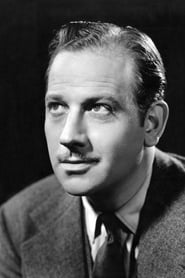
Melvyn Douglas
Actor
Born: April 5, 1901 in Macon, Georgia, USA Died: August 4, 1981 Active: 1931-1981 Birth Name: Melvyn Edouard Hesselberg
Films
2 films
About Melvyn Douglas
American actor: five decades, from the early 1930s through the early 1980s. Born Melvyn Edouard Hesselberg, he began his career on Broadway before transitioning to Hollywood films, where he quickly established himself as a sophisticated leading man known for his urbane charm and naturalistic acting style. Douglas achieved remarkable longevity in show business, successfully transitioning from romantic leads to character roles as he aged. He won two Academy Awards for Best Supporting Actor for his performances in 'Hud' (1963) and 'Being There' (1979), cementing his status as one of Hollywood's most respected character actors. Beyond his film work, Douglas maintained an active stage career and was deeply involved in politics, running for Congress as a liberal Democrat. His marriage to actress Helen Gahagan Douglas, who later became a congresswoman, placed him at the center of Hollywood's political scene during the Red Scare era.
The Craft
On Screen
Melvyn Douglas was known for his naturalistic, understated acting style that brought authenticity and sophistication to his roles. He possessed a distinctive voice and manner that conveyed intelligence and refinement, making him particularly effective in portraying educated, upper-class characters. His technique emphasized subtlety over theatrics, allowing him to excel in both comedic and dramatic roles. Douglas had the rare ability to transition seamlessly between leading man roles in his younger years and complex character parts in his later career, always maintaining a consistent level of professionalism and depth in his performances.
Milestones
- Academy Award for Best Supporting Actor for 'Hud' (1963)
- Academy Award for Best Supporting Actor for 'Being There' (1979)
- Broadway debut in 'A Free Soul' (1928)
- Film debut in 'The Old Way' (1931)
- Golden Globe for 'Being There' (1979)
- Tony Award nomination for 'The Best Man' (1960)
Best Known For
Iconic Roles
Must-See Films
Accolades
Won
- Academy Award for Best Supporting Actor - 'Hud' (1963)
- Academy Award for Best Supporting Actor - 'Being There' (1979)
- Golden Globe Award for Best Supporting Actor - 'Being There' (1979)
- National Board of Review Award for Best Actor - 'Hud' (1963)
- New York Film Critics Circle Award for Best Actor - 'Hud' (1963)
Nominated
- Academy Award nomination for Best Actor - 'I Never Sang for My Father' (1970)
- Academy Award nomination for Best Supporting Actor - 'The Candidate' (1972)
- Tony Award nomination for Best Actor - 'The Best Man' (1960)
- BAFTA nomination for Best Supporting Actor - 'Being There' (1979)
- Emmy Award nomination - 'The Senator' (1967)
Special Recognition
- Hollywood Walk of Fame star (1960)
- American Film Institute Life Achievement Award recipient (1977)
- Kennedy Center Honors (1980)
- Screen Actors Guild Life Achievement Award (posthumous nomination)
Working Relationships
Worked Often With
Studios
Why They Matter
Impact on Culture
Melvyn Douglas significantly impacted American cinema by helping define the sophisticated, intellectual leading man of the 1930s and 1940s. His ability to transition successfully from romantic leads to complex character roles set a precedent for actors seeking longevity in Hollywood. Douglas's performances in films like 'Ninotchka' helped establish the romantic comedy genre, while his later work in 'Hud' and 'Being There' demonstrated the power of character-driven storytelling. His political activism during the Hollywood blacklist era made him an important figure in the industry's resistance to McCarthyism, contributing to the eventual liberalization of Hollywood politics.
Lasting Legacy
Melvyn Douglas's legacy endures through his remarkable body of work that spans multiple generations of American cinema. He is remembered as one of Hollywood's most versatile and respected character actors, capable of bringing depth and authenticity to any role. His two Academy Awards for Best Supporting Actor, won 16 years apart, demonstrate his sustained excellence and adaptability as an actor. Douglas's influence extends beyond his performances to his role as a political activist who stood against the blacklist, helping preserve artistic freedom in Hollywood. His work continues to be studied by actors and film scholars as examples of sophisticated, nuanced screen acting.
Who They Inspired
Douglas influenced generations of actors through his naturalistic acting style and his successful career transitions. His ability to maintain relevance and critical acclaim from the 1930s through the 1980s provided a model for career longevity in Hollywood. Many character actors, including Jack Warden and Martin Balsam, cited Douglas as an inspiration for their approach to supporting roles. His work with directors like Ernst Lubitsch and Hal Ashby helped establish techniques for blending comedy with drama that continue to influence filmmakers today. Douglas's political courage during the McCarthy era inspired subsequent generations of artists to speak out on social and political issues.
Off Screen
Melvyn Douglas was married twice, first to actress and politician Helen Gahagan from 1931 until her death in 1980, and later to Ilka Chase from 1980 until his death in 1981. He had two children with Gahagan: Peter, who became a film producer, and Mary Helen. Douglas was deeply involved in liberal politics and was an outspoken critic of McCarthyism during the Red Scare. He served in the U.S. Army Air Forces during World War II, reaching the rank of major. His wife Helen Gahagan Douglas ran for the U.S. Senate in 1950 but was defeated by Richard Nixon in a campaign marked by anti-communist rhetoric.
Education
Attended Macon Central High School, studied at the University of Chicago for one year, trained at the Goodman School of Drama in Chicago
Family
- Helen Gahagan (1931-1980, her death)
- Ilka Chase (1980-1981, his death)
Did You Know?
- He was born Melvyn Edouard Hesselberg but changed his name early in his career
- He was fluent in French and German, which helped him in international productions
- He served as a major in the U.S. Army Air Forces during World War II
- His wife Helen Gahagan Douglas was nicknamed 'the Pink Lady' by Richard Nixon during her Senate campaign
- He was one of the few actors to win Academy Awards in both the 1960s and 1970s
- He appeared in over 100 films and television shows during his career
- He was a founding member of the Committee for the First Amendment, which opposed the Hollywood blacklist
- His final film 'Ghost Story' (1981) was released posthumously
- He taught acting at the Actors Studio in New York
- He was a cousin of the famous composer Edward MacDowell
In Their Own Words
Acting is not about being someone different. It's finding the similarity in what is apparently different, then finding myself in there.
The important thing in acting is to laugh and cry. If I have to cry, I think of my sex life. If I have to laugh, I think of my sex life.
I've never been a star, only an actor. I've had a very good life, a very good career.
Politics is show business for ugly people.
The only thing I ever wanted to be was an actor. I never wanted to be a star.
Frequently Asked Questions
Who was Melvyn Douglas?
American with credits in this catalog. He won two Academy Awards for Best Supporting Actor and was respected for his naturalistic acting style and political activism.
What films is Melvyn Douglas best known for?
Titles linked here include Hud (1963), Being There (1979).
When was Melvyn Douglas born and when did he die?
Born April 5, 1901; died August 4, 1981.
What awards did Melvyn Douglas win?
Douglas won two Academy Awards for Best Supporting Actor for 'Hud' (1963) and 'Being There' (1979), along with a Golden Globe for 'Being There'. He also received multiple Oscar nominations and was honored with the American Film Institute Life Achievement Award in 1977.
What was Melvyn Douglas's acting style?
Douglas was known for his naturalistic, understated acting style characterized by sophistication and authenticity. He excelled at portraying educated, upper-class characters with subtlety and intelligence, transitioning seamlessly from romantic leads to complex character roles throughout his career.
Was Melvyn Douglas involved in politics?
Yes, Douglas was actively involved in liberal politics and was an outspoken critic of McCarthyism. His wife Helen Gahagan Douglas served as a congresswoman and ran for U.S. Senate, and Douglas supported progressive causes throughout his life.
How did Melvyn Douglas's career evolve over time?
Douglas began as a romantic leading man in the 1930s, successfully transitioned to character roles in the 1950s and 1960s, and achieved his greatest critical acclaim in his later years, winning both of his Academy Awards after age 60.