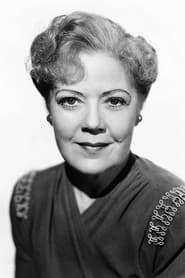
Spring Byington
Actor
Born: October 17, 1886 in Colorado Springs, Colorado, USA Died: September 7, 1971 Active: 1927-1967 Birth Name: Spring Dell Byington
Films
2 films

About Spring Byington
Spring Byington was one of Hollywood's most beloved character actresses, known for her warm, maternal presence on screen for over four decades. Born in 1886, she began her career on Broadway before transitioning to films in the early 1930s, quickly establishing herself as a reliable supporting actress. Her breakthrough came in 1933 with her role as the mother in 'Little Women,' which typecast her in maternal roles that would define her career. Throughout the 1930s and 1940s, she appeared in over 80 films, working with major studios and starring alongside Hollywood's biggest names. She earned an Academy Award nomination for Best Supporting Actress for 'The Story of Vernon and Irene Castle' in 1939. In the 1950s, she successfully transitioned to television, starring as the matriarch in the popular sitcom 'December Bride.' Her career continued into the 1960s with numerous guest appearances on television shows, cementing her status as one of America's favorite screen mothers.
The Craft
On Screen
Byington was renowned for her natural, warm, and authentic portrayal of maternal figures. Her acting style was characterized by a gentle, understated approach that made her characters feel like real mothers rather than caricatures. She possessed a unique ability to convey wisdom, compassion, and humor simultaneously, often serving as the moral center of her films. Her performances were marked by subtle facial expressions and a comforting voice that could switch from nurturing to stern in an instant. Unlike many character actors of her era, she avoided theatrical mannerisms, instead bringing a genuine quality to every role that made audiences feel they were watching their own mothers on screen.
Milestones
- Broadway debut in 'The Little Riddle' (1925)
- Film debut in 'Poker Faces' (1930)
- Academy Award nomination for 'The Story of Vernon and Irene Castle' (1939)
- Star of TV sitcom 'December Bride' (1954-1959)
- Hollywood Walk of Fame star (1960)
- Final film appearance in 'The Young Runaways' (1968)
Best Known For
Iconic Roles
Must-See Films
Accolades
Won
- Hollywood Walk of Fame Star (1960)
- TV Land Award for Favorite Mom from a Classic TV Series (2004, posthumous for 'December Bride')
Nominated
- Academy Award for Best Supporting Actress - 'The Story of Vernon and Irene Castle' (1939)
- Primetime Emmy Award for Best Continuing Performance by an Actress in a Leading Role in a Dramatic Series - 'December Bride' (1957)
Special Recognition
- Star on Hollywood Walk of Fame at 6509 Hollywood Boulevard
- Inducted into the Colorado Women's Hall of Fame (2015, posthumous)
Working Relationships
Worked Often With
Studios
Why They Matter
Impact on Culture
Spring Byington had a profound impact on American cinema and television by defining the archetype of the wise, loving mother figure during Hollywood's Golden Age. Her performances helped establish the maternal character as a crucial element in family-oriented films, influencing how motherhood was portrayed in popular culture for decades. She broke ground by proving that character actresses could become household names and carry their own television series with 'December Bride.' Her work contributed to the development of the family sitcom genre on television. Byington's ability to blend warmth with strength helped challenge the one-dimensional portrayal of mothers in early Hollywood, paving the way for more complex maternal characters in later decades.
Lasting Legacy
Spring Byington's legacy endures as one of Hollywood's most recognizable and beloved character actresses. She appeared in over 100 films and television shows during her 40-year career, becoming synonymous with the ideal American mother. Her influence can be seen in subsequent generations of actresses who specialize in maternal roles. The success of 'December Bride' demonstrated that character actresses could headline television series, opening doors for similar performers. Her films remain popular on classic movie channels, introducing new generations to her unique charm and talent. The annual TV Land Award she received posthumously testifies to her lasting impact on American popular culture and the enduring affection audiences feel for her portrayals.
Who They Inspired
Spring Byington influenced generations of character actors by proving that supporting roles could be just as memorable and beloved as leading parts. Her naturalistic acting style inspired future performers to bring authenticity to maternal roles rather than resorting to stereotypes. Many actresses who followed in her footsteps, including Eve Arden and Mary Wickes, cited Byington as an influence on their career choices. Television producers used her success in 'December Bride' as a model for developing shows around established character actresses. Her ability to seamlessly transition from film to television demonstrated versatility that many older actors would later emulate. Directors frequently referenced her performances when casting mother roles, using her work as the gold standard for warmth and authenticity.
Off Screen
Spring Byington was known for her unconventional personal life and independent spirit. She married twice, first to Roy Del Ruth in 1920, though the marriage was annulled after just one year. Her second marriage to Morton Lowry in 1924 also ended in divorce in 1932. Despite these marital setbacks, she maintained a positive outlook and focused on raising her two daughters, Phyllis and Lois, as a single mother. She was known for her liberal political views and was an early supporter of civil rights and women's rights. In her later years, she lived in a Hollywood apartment and enjoyed gardening and painting. Her home was known as a gathering place for young actors seeking advice and mentorship.
Education
University of Colorado Boulder (attended but did not graduate), studied at the American Academy of Dramatic Arts in New York
Family
- Roy Del Ruth (1920-1921, annulled)
- Morton Lowry (1924-1932, divorced)
Did You Know?
- She was named 'Spring' because she was born on a spring morning
- She was a distant cousin of President James K. Polk
- She was one of the first established film stars to successfully transition to television stardom
- She was a skilled painter and had several art exhibitions in Los Angeles
- She was a vegetarian long before it became fashionable
- She learned to fly an airplane in the 1930s
- She was an avid bridge player and often hosted celebrity bridge games
- She turned down the role of Aunt Bee in 'The Andy Griffith Show'
- She was a lifelong Democrat and actively campaigned for Adlai Stevenson
- She spoke fluent French and often vacationed in Paris
In Their Own Words
I've played so many mothers, I feel like I've raised half of Hollywood.
Being a character actress is wonderful. You get to work forever and nobody cares how old you are.
I never wanted to be a star. I just wanted to be a good actress and a good mother.
Television has been wonderful for me. I get to be in people's homes every week, like a real family member.
The secret to playing mothers is to remember that every mother was once a young woman with dreams of her own.
Frequently Asked Questions
Who was Spring Byington?
Beloved American character actress known for her warm, maternal roles in films and television during Hollywood's Golden Age. She appeared in over 100 productions between 1927 and 1967, earning an Academy Award nomination and starring in the popular TV sitcom 'December Bride'.
What films is Spring Byington best known for?
Titles linked here include Little Women (1933), The Story of Vernon and Irene Castle (1939).
When was Spring Byington born and when did she die?
Born October 17, 1886; died September 7, 1971.
What awards did Spring Byington win?
She received an Academy Award nomination for Best Supporting Actress for 'The Story of Vernon and Irene Castle' (1939) and earned a Primetime Emmy nomination for 'December Bride' in 1957. She was honored with a star on the Hollywood Walk of Fame in 1960.
What was Spring Byington's acting style?
Byington was known for her natural, warm, and authentic portrayal of maternal figures. Her acting style was characterized by gentle understatement, avoiding theatrical mannerisms in favor of genuine emotion that made her characters feel like real mothers rather than caricatures.
Did Spring Byington have children?
Yes, she had two daughters, Phyllis and Lois, from her marriage to Morton Lowry. She raised them as a single mother after her divorce in 1932 while building her successful acting career.
How did Spring Byington transition from film to television?
Byington successfully transitioned to television in the 1950s by starring in 'December Bride,' which ran for five seasons and made her one of the first established film stars to headline a TV sitcom. This transition extended her career and introduced her to a new generation of fans.
What was Spring Byington's real name?
Her birth name was Spring Dell Byington. She kept her real name throughout her career, as her unique given name 'Spring' was already memorable and distinctive enough for Hollywood.