Films
1 film
About Violet Wong
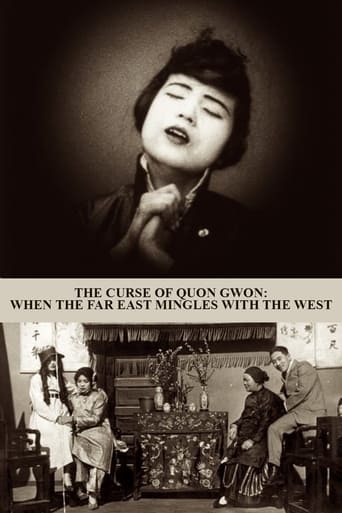
Violet Wong appeared in what is widely considered the first Chinese-American feature film ever made, 'The Curse of Quon Gwon: When the Far East Mingles with the West' in 1916. She was part of the Wong family of filmmakers, with her sister Marion E. Wong directing and producing this silent film that explored the cultural tensions between traditional Chinese values and American assimilation. Violet in this ambitious project, which was created at a time when Asian representation in Hollywood was virtually nonexistent and typically limited to stereotypical portrayals by white actors in yellowface. The film was shot in Oakland, California, and represented a rare authentic portrayal of Chinese-American life during the silent era. Unfortunately, like many films from this period, 'The Curse of Quon Gwon' was thought to be lost for decades until portions of it were rediscovered in the 2000s, bringing renewed attention to Violet Wong and her family's contributions to cinema history. Her brief but significant appearance in this film places her among the earliest Chinese-American performers in Hollywood history.
The Craft
On Screen
While specific details about Violet Wong's acting style are lost due to the limited survival of her film work, she likely employed the exaggerated gestures and expressive techniques typical of silent era acting, adapted to portray authentic Chinese-American characters rather than stereotypes.
Milestones
- Appeared in 'The Curse of Quon Gwon: When the Far East Mingles with the West' (1916), considered the first Chinese-American feature film
- Part of the Wong family of early Chinese-American filmmakers
- Contributed to authentic Asian representation in silent era cinema
Best Known For
Iconic Roles
Must-See Films
Accolades
Special Recognition
- Recognized as part of Chinese-American cinema history
- Featured in film restoration projects and retrospectives on early Asian-American cinema
Working Relationships
Worked Often With
Studios
Why They Matter
Impact on Culture
Violet Wong's contribution to cinema, though brief, represents a crucial moment in film history as one of the earliest Chinese-American actresses to appear in a feature film created by and for Chinese-Americans. Her appearance in 'The Curse of Quon Gwon' challenged the prevailing Hollywood practice of using white actors in yellowface for Asian roles, offering instead an authentic representation of Chinese-American characters and stories. The film itself is historically significant as possibly the first Chinese-American feature film ever made, predating other notable Asian-American cinema milestones by decades. Violet and her family's work demonstrated that Chinese-Americans could create their own cinematic narratives outside the Hollywood system, paving the way for future generations of Asian-American filmmakers and performers.
Lasting Legacy
Violet Wong's legacy lies in her participation in what is now recognized as a landmark achievement in Asian-American cinema history. Though her filmography consists of only one known film, its historical significance cannot be overstated. The rediscovery of portions of 'The Curse of Quon Gwon' has brought renewed attention to the Wong family's contributions, with Violet being remembered as one of the first Chinese-American actresses in feature films. Her work serves as an important reminder of the long-standing presence of Asian-Americans in cinema and their early efforts to create authentic representations of their communities on screen.
Who They Inspired
While direct evidence of Violet Wong's influence on other performers is limited due to the historical obscurity of her work, her participation in early Chinese-American cinema represents an important precedent for Asian-American representation in film. The Wong family's efforts to create authentic Chinese-American stories likely inspired later generations of Asian-American filmmakers who sought to tell their own stories outside mainstream Hollywood channels.
Off Screen
Violet Wong was part of the Wong family of filmmakers in early 20th century California. Her sister Marion E. Wong was the director and producer of 'The Curse of Quon Gwon,' making them one of the first families of Chinese-American cinema. The family was involved in creating authentic representations of Chinese-American life at a time when such portrayals were extremely rare in American film.
Did You Know?
- 'The Curse of Quon Gwon' is considered by film historians to be the first Chinese-American feature film ever made
- The film was directed by Violet Wong's sister, Marion E. Wong, who established her own production company
- The film was thought to be completely lost for nearly 90 years until film reels were discovered in the basement of a Chinese-American family
- Only portions of the original film survive today, with some reels held at the Academy Film Archive
- The film was produced in Oakland, California, not Hollywood, reflecting the independent nature of early Chinese-American filmmaking
- Violet Wong was part of a family filmmaking enterprise that predated most other Asian-American film production by decades
- The film's title reflects the cultural fusion themes that were central to the Chinese-American experience
- Marion E. Wong founded the Mandarin Film Company specifically to produce this film
Frequently Asked Questions
Who was Violet Wong?
Screen credits include what is considered the first Chinese-American feature film, 'The Curse of Quon Gwon: When the Far East Mingles with the West' in 1916. She was part of the Wong family of early filmmakers who created authentic representations of Chinese-American life during the silent era.
What films is Violet Wong best known for?
Titles linked here include The Curse of Quon Gwon: When the Far East Mingles with the West (1916).
When was Violet Wong born and when did she die?
Unfortunately, specific birth and death dates for Violet Wong are not available in historical records, which is common for many early film actors, particularly those from minority communities whose contributions were not thoroughly documented at the time.
What awards did Violet Wong win?
Violet Wong did not receive formal awards during her lifetime, as recognition for Asian-American contributions to early cinema came many decades later. Her legacy is now honored through film preservation efforts and historical recognition of her role in Chinese-American cinema.
What was Violet Wong's acting style?
While specific details about Violet Wong's acting style are limited due to the loss of most of her film work, she likely employed the expressive, gesture-based techniques typical of silent era acting, but with the unique distinction of portraying authentic Chinese-American characters rather than the stereotypical roles common in mainstream Hollywood films of the period.