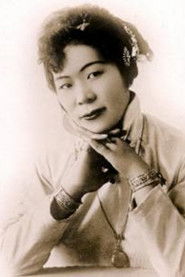

The Curse of Quon Gwon: When the Far East Mingles with the West
"Marion Wong's surviving reels of Chinese-American drama."
Keys: Space play/pause · ←/→ 10s · F fullscreen · M mute · </> speed
About this film
The Curse of Quon Gwon is the oldest known Chinese-American film and one of the earliest American silent features made by a woman. Only two reels of the film survive, and no intertitles are known to exist, making it difficult to parse out the exact plot. An article in the July 17.
Cast & crew
More Drama films
View all →






More about this film
About the production
Release dateFormal premiere in 1917, likely late 1916 for initial screenings
Box officeFinancial failure - no distributor purchased the film, resulting in minimal to no theatrical earnings
ProductionChinese-American Film Company
Filmed inOakland, California, San Francisco Bay Area
Marion E. Wong established the Chinese-American Film Company specifically to produce the production, making her one of the first Chinese-American women to found a film production company. The film was shot with an all-Chinese cast, revolutionary for its time when Chinese roles were typically played by white actors in yellowface. Production took place over several months in 1916 with Wong serving as director, writer, producer, and actress. The film was reportedly shot on location in Oakland's Chinatown and surrounding areas, utilizing authentic Chinese-American settings rather than studio backlots.
Themes
Cultural assimilation and identity conflictTraditional values versus modernizationSupernatural beliefs in a modern worldChinese-American immigrant experienceFamily dynamics across cultural divides
Themes & topics
Chinese-AmericanCultural assimilationFamily curseSupernaturalImmigrationCultural identityEast meets WestSilent filmLost filmEarly cinemaAsian-American cinemaCultural conflictTraditional vs modernFamily dramaHistorical significance
Historical background
The Curse of Quon Gwon: When the Far East Mingles with the West (1916) reached screens through Chinese-American Film Company. Exhibitors of the time built silent-era bills that mixed shorts, features, and live acts, so a clear premise helped The Curse of Quon Gwon: When the Far East Mingles with the West travel between cities and exchange markets.
Why this film matters
Archivists and revival programmers still cite The Curse of Quon Gwon: When the Far East Mingles with the West (1916) when tracing studio habits, casting pools, and the visual rhetoric audiences once took for granted. Even modest surviving prints help map how The Curse of Quon Gwon: When the Far East Mingles with the West fit beside competing releases of its day.
Making of
The production of The Curse of Quon Gwon was a remarkable achievement against formidable odds. Marion E. Wong, a recent graduate of high school, decided to create a film that would authentically represent Chinese-American life without resorting to the caricatures prevalent in Hollywood at the time. She convinced her family to invest in the project, with her husband serving as cinematographer. The film was made with a completely Chinese cast and crew, virtually unprecedented in 1916. Wong not only directed but also wrote the screenplay and acted in the film. The production faced numerous challenges, including securing equipment on a limited budget and finding locations that could authentically represent Chinese-American life. The surviving footage suggests a professional approach to filmmaking, with careful composition and lighting techniques that indicate Wong had studied contemporary cinema. The film's post-production process would have included creating intertitles, but none of these survive, making it impossible to know the exact dialogue or scene descriptions. After completing the film, Wong struggled to find distributors willing to take a chance on an authentic Chinese-American story without the expected stereotypes, leading to the film's commercial failure despite its artistic merits.
What critics said
Trade coverage around 1916 discussed The Curse of Quon Gwon: When the Far East Mingles with the West for pacing, clarity, and program fit rather than blockbuster grosses. Later writers value it as evidence of period style and as a reference point beside other films from the same era.
Did you know?
- This is the oldest known Chinese-American feature film ever made, predating other Asian-American cinema by decades
- Marion E. Wong was only 21 years old when she directed the production, making her one of the youngest feature film directors of the silent era
- The film was lost for nearly 90 years until its rediscovery in 2004 in the basement of a Chinese-American family's home
- The two surviving reels were found in a deteriorating condition and required extensive restoration by the Academy Film Archive
- No intertitles survive with the film, making the exact dialogue and narrative details impossible to determine definitively
- The film was rejected by distributors specifically because it didn't include the racial stereotypes that audiences expected in Chinese-themed films of the era
- Marion E. Wong founded her own production company, the Chinese-American Film Company, specifically to make the production
- The film was only screened publicly three times during its initial release: once at its premiere and twice more before disappearing
- The Academy Film Archive preserved the film in 2005, and it was added to the National Film Registry in 2006 for its cultural significance
- The cast included Wong's own sister-in-law Violet Wong in the leading role, showcasing family involvement in the production
- Contemporary advertisements described it as 'the first and only Chinese picture made in America by Chinese company'
- The film's failure reportedly discouraged Marion E. Wong from pursuing further filmmaking projects
Awards & recognition
- Added to the National Film Registry in 2006 for being culturally, historically, or aesthetically significant
Visual style
The surviving footage of The Curse of Quon Gwon demonstrates competent and thoughtful cinematography for its time. The film appears to have been shot using available natural light in many scenes, creating authentic atmospheres in the Chinese-American settings. The camera work shows understanding of contemporary cinematic techniques, including varied shot compositions and movement that enhance the storytelling. Interior scenes utilize careful lighting to create mood and focus attention on the actors. The cinematography successfully captures the visual details of Chinese-American life in the 1910s, from traditional clothing to household objects and architectural elements. The film's visual style appears more naturalistic than many Hollywood productions of the era, avoiding the artificial lighting and staging common in studio films. The camera work suggests a documentary-like attention to authentic details, particularly in scenes showing Chinese cultural practices and environments. Despite the fragmentary nature of what survives, the cinematography reveals Marion E. Wong's sophisticated visual sense and her ability to use the camera to tell stories with emotional depth and cultural specificity.
Innovations
The Curse of Quon Gwon represents several significant technical achievements for its time and context. Marion E. Wong demonstrated sophisticated understanding of film language and narrative construction, particularly impressive given her youth and limited resources. The film's use of location shooting rather than studio sets was relatively advanced for an independent production of this era. The surviving footage shows competent use of editing techniques to create dramatic tension and emotional impact. The film's creation by an all-Chinese cast and crew was technically groundbreaking in an industry dominated by white practitioners. The preservation of the surviving nitrate film stock presented significant technical challenges, requiring specialized restoration processes to prevent further deterioration and make the footage accessible for modern viewing. The Academy Film Archive's preservation work involved cleaning, repairing, and creating safety copies of the deteriorating nitrate material, ensuring the film's survival for future generations. The film's technical quality, despite its independent status and limited budget, demonstrates Wong's commitment to professional filmmaking standards.
Music
As a silent film, The Curse of Quon Gwon would have been accompanied by live musical performances during its original screenings. The specific musical selections or original compositions used are unknown, as no documentation survives about the film's musical accompaniment. Typical practice for films of this era would have included a pianist or small orchestra providing background music, possibly using popular pieces of the time or classical selections appropriate to the film's mood. Given the film's Chinese-American themes, it's possible that traditional Chinese music may have been incorporated into the score, though this would have been unusual for American theaters of the period. Modern screenings of the surviving fragments typically feature newly composed scores or carefully selected period music that complements the film's cultural context. The Academy Film Archive's preservation work has not included recreating the original musical accompaniment, as no information survives about what was used during the film's initial screenings.
Famous quotes
No direct quotes survive due to the loss of intertitles and the film's silent nature
Memorable scenes
- Surviving footage shows what appears to be a traditional Chinese wedding ceremony, with authentic costumes and rituals rarely captured in American films of the era
- A dramatic scene featuring the supernatural manifestation of the curse, with visual effects that were sophisticated for an independent production
- Domestic scenes showing Chinese-American family life, providing rare visual documentation of how Chinese households maintained traditions in America
- Outdoor scenes filmed in Oakland's Chinatown, capturing the architectural and cultural details of early Chinese-American communities
What audiences thought
The audience reception of The Curse of Quon Gwon during its initial release was minimal due to its extremely limited theatrical run. The film was screened only three times publicly, suggesting it reached very few viewers. Contemporary audience reactions are not documented, likely because the film never achieved wide distribution. The lack of distributor interest indicates that industry professionals believed mainstream audiences would not be interested in an authentic Chinese-American story without the expected stereotypes. Modern audiences have had limited opportunities to view the film due to its fragmentary survival, but those who have seen the preserved portions at special screenings and film festivals have responded with fascination and appreciation for its historical significance. The film's rediscovery has generated considerable excitement within Asian-American communities and film preservation circles, with many expressing pride in this evidence of early Chinese-American filmmaking achievement. The surviving footage has been featured in documentary programs and museum exhibitions, where it has been received as an important cultural artifact.
Film connections
Influenced by
- Contemporary Hollywood melodramas
- Chinese traditional folklore and mythology
- D.W. Griffith's narrative film techniques
- Early American independent cinema
- Chinese theatrical traditions
This film influenced
- Later Asian-American independent films
- Modern Chinese-American cinema
- Contemporary films exploring cultural assimilation
- Documentaries about early Asian-American history
Film restoration
Partially preserved - Only two of the original reels survive (approximately 35 minutes of footage). The film was considered lost until its rediscovery in 2004 in the basement of a Chinese-American family's home in Oakland. The Academy Film Archive preserved the surviving nitrate material in 2005 through a complex restoration process. The film was selected for the National Film Registry in 2006, recognizing its cultural significance despite its incomplete state. No intertitles survive with the footage, making complete understanding of the narrative impossible. The preserved elements are stored at the Academy Film Archive and occasionally screened at special events and film festivals. The surviving footage represents one of the earliest examples of Chinese-American cinema and remains a priceless artifact of film history.
Where to watch
- The Academy Film Archive maintains the preserved footage for research and special screenings
- Occasionally screened at film festivals specializing in restored or historically significant films
- Featured in documentary programs about Asian-American cinema history
- Available for viewing at the Academy of Motion Picture Arts and Sciences' Margaret Herrick Library by appointment
- Excerpts may be included in educational programs about early American cinema