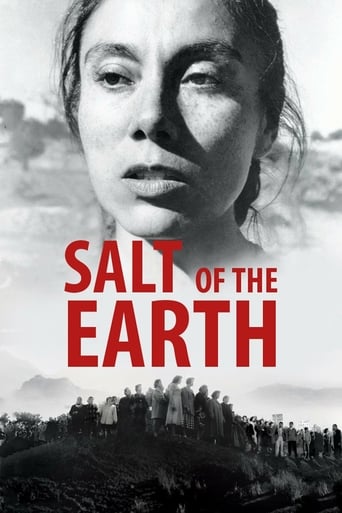
Films
1 film
About Virginia Jencks
American union organizer and activist who became known for her powerful performance as Esperanza Quintero in the controversial 1954 film 'Salt of the Earth.' Unlike traditional Hollywood actors, Jencks was not a professional performer but was cast due to her real-life experience as the wife of Clinton Jencks, a union organizer involved in the Empire Zinc Strike that inspired the film. Her role in the movie was essentially a dramatized version of her own experiences during the 1950-1951 strike against the Empire Zinc Company in Grant County, New Mexico. The film, directed by blacklisted filmmaker Herbert J. Biberman, was one of the first American films to feature a feminist perspective and was itself subject to blacklisting and suppression during the McCarthy era. Jencks' authentic portrayal of a Mexican-American woman finding her voice and leadership during the labor struggle brought remarkable realism and emotional depth to the production. After the film's release, she continued her activism alongside her husband, facing government persecution including Clinton's conviction and imprisonment under the Smith Act. Virginia Jencks' contribution to cinema represents a unique intersection of political activism and artistic expression during one of Hollywood's most repressive periods.
The Craft
On Screen
Naturalistic and authentic performance rooted in real-life experience, bringing genuine emotional depth to the role of a woman awakening to her own power during a labor struggle
Milestones
- Starred in 'Salt of the Earth' (1954) as Esperanza Quintero
- Brought authentic union organizer perspective to film
- Participated in
- Helped create a landmark film about labor and women's rights
Best Known For
Iconic Roles
Must-See Films
Accolades
Special Recognition
- Recognized as a figure in politically engaged cinema
- Honored in labor history for her contributions to workers' rights through film
Working Relationships
Worked Often With
Studios
Why They Matter
Impact on Culture
Virginia Jencks' performance in 'Salt of the Earth' had a profound cultural impact as it represented one of the first times a working-class woman of Mexican-American heritage was portrayed as a central protagonist in American cinema. Her authentic portrayal helped break stereotypes and brought attention to the intersection of labor rights and women's emancipation. The film itself became a symbol of resistance against McCarthyism and Hollywood blacklisting, with Jencks embodying the spirit of artistic and political courage. Her contribution demonstrated the power of non-professional actors bringing real-life experience to dramatic roles, influencing later independent and political cinema movements.
Lasting Legacy
Virginia Jencks' legacy lies in her unique contribution to American cinema as both an activist and performer. Her role in 'Salt of the Earth' has become a touchstone for scholars studying political cinema, feminist film, and the Hollywood blacklist era. The film, once suppressed, is now recognized as a masterpiece of socially engaged filmmaking, with Jencks' performance cited as a key element of its power and authenticity. Her story represents the important but often overlooked contributions of ordinary people to extraordinary moments in film history, particularly those who used cinema as a tool for social change.
Who They Inspired
Virginia Jencks influenced later generations of filmmakers and actors by demonstrating the power of authentic, politically engaged performance. Her work prefigured later movements in cinema that emphasized casting real people to play roles similar to their own lives. The film's eventual rediscovery and recognition as a classic of political cinema has inspired contemporary filmmakers interested in social justice themes and authentic storytelling. Her example showed that powerful performances could come from outside the traditional Hollywood system, paving the way for more diverse casting and storytelling approaches in independent cinema.
Off Screen
Virginia Jencks was married to Clinton Jencks, a prominent union organizer and labor leader who was deeply involved in the Empire Zinc Strike. Together they faced significant persecution during the McCarthy era, including Clinton's conviction under the Smith Act for alleged communist activities. The couple remained committed to their political beliefs and continued their activism throughout their lives. Virginia supported her husband through his imprisonment and continued to advocate for workers' rights and social justice long after the film's release.
Education
Information not publicly available
Family
- Clinton Jencks (1940s-2005)
Did You Know?
- Virginia Jencks was not a professional actress but a real-life union organizer
- She was chosen for the role because the character was based on her actual experiences
- Her husband Clinton Jencks also appeared in the film, playing himself
- The film was blacklisted and not shown in most American theaters for years
- The filmmakers were all part of the 'Hollywood Ten' or otherwise blacklisted
- The film was financed by the International Union of Mine, Mill and Smelter Workers
- During filming, the production faced harassment from anti-communist groups
- The film was preserved in the National Film Registry in 1992
- Virginia's performance was praised for its authenticity despite her lack of acting experience
- The film was shot on location in New Mexico where the real strike occurred
In Their Own Words
"We're not going to be slaves anymore" - as Esperanza Quintero in Salt of the Earth
"I don't want to be a hero. I just want to be a human being" - character dialogue reflecting the film's humanist themes
Frequently Asked Questions
Who was Virginia Jencks?
American union organizer and activist who became known for her starring role as Esperanza Quintero in the controversial 1954 film 'Salt of the Earth.' She was not a professional actress but was cast due to her real-life experiences during the Empire Zinc Strike that inspired the film.
What films is Virginia Jencks best known for?
Titles linked here include Salt of the Earth (1954).
When was Virginia Jencks born and when did she die?
Born 1925; died 2005.
What awards did Virginia Jencks win?
Virginia Jencks did not receive traditional acting awards, as 'Salt of the Earth' was blacklisted and largely suppressed during its initial release. However, the film was later recognized for its cultural significance and was added to the National Film Registry in 1992.
What was Virginia Jencks' acting style?
Virginia Jencks' acting style was completely naturalistic and authentic, rooted in her real-life experiences as a union organizer's wife. Her performance brought genuine emotional depth to the role, avoiding theatrical techniques in favor of honest, grounded portrayal of a woman's awakening to her own power.