
Elvira Pagã
Actor
- Active
- 1949-1949
Films 1
About Elvira Pagã
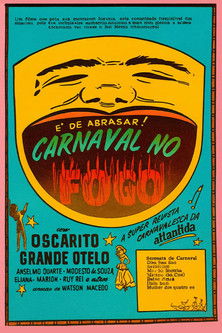
Elvira Pagã was a Brazilian actress and entertainer associated with the late-1940s popular cinema scene, remembered primarily for her appearance in the musical comedy Carnaval no Fogo (1949). She emerged during a period when Brazilian screen entertainment often blended carnival spectacle, radio-inspired celebrity culture, and revue-style performance, and her screen work reflects that glamorous, publicity-driven milieu. Available documentation about her film career is limited, suggesting that she was not a long-running studio contract performer but rather a personality whose visibility came through a small number of screen appearances and broader popular-culture notoriety. As with several performers of the era, much of her public identity was shaped by her image, stage presence, and association with nightlife and carnival culture more than by an extensive filmography. Because surviving film records are sparse, many details of her broader life remain difficult to verify from standard reference sources. What is clear is that she occupies a small but distinctive place in Brazilian classic cinema history as part of the colorful constellation of performers connected to postwar entertainment film. Her name continues to surface in film databases and historical references as a figure from the period's vibrant popular performance culture.
More about Elvira Pagã
On screen
Her screen persona appears to have been rooted in glamour, presence, and show-business appeal rather than in an extensively documented dramatic technique. In the kinds of productions associated with carnival and musical comedy, performers like Pagã typically relied on expressive movement, visual charisma, and a polished stage manner. Specific critical descriptions of her acting are not readily available, so her style can best be characterized as performance-oriented and image-conscious, aligned with the lively revue atmosphere of Brazilian entertainment cinema in the late 1940s.
In film history
Elvira Pagã's cultural importance lies less in a large filmography than in her presence within the glamour and spectacle of late-1940s Brazilian entertainment cinema. Performers like her helped bridge the worlds of carnival, stage revue, radio fame, and motion pictures, giving audiences the sense that film was an extension of contemporary popular nightlife. In that sense, she belongs to a generation of entertainers whose value was tied to persona, modernity, and sensual visual appeal as much as to narrative acting. Her appearance in Carnaval no Fogo connects her to a key cultural tradition in Brazilian cinema: the use of carnival as a cinematic engine for music, comedy, and star display. Even with limited surviving documentation, she remains a recognizable name for researchers of mid-century Brazilian screen culture and performance history.
Later reputation
Her legacy is that of a minor but intriguing figure in classic Brazilian cinema, remembered for a specific on-screen presence rather than a long list of films. For historians, she illustrates how many performers of the period moved between entertainment forms and left only fragmentary traces in the archival record. That scarcity itself makes her interesting, because it highlights how much mid-century film history depends on posters, cast lists, and a few surviving prints or references. Her name persists in film databases as part of the broader history of carnival-themed Brazilian productions and the era's star system. In a wider sense, she stands for the many performers whose work contributed to the texture of national cinema even when fame was brief.
Influence
There is no clear evidence that Elvira Pagã directly mentored major later performers, but her career reflects a broader influence pattern common to entertainers of her era. By participating in carnival-centered popular cinema, she helped normalize the crossover between stage celebrity and screen performance that later Brazilian entertainers continued to follow. Her screen persona would have reinforced the value of glamour, musicality, and public image in popular film culture. As a result, her influence is best understood indirectly, through the traditions of performance and spectacle she participated in rather than through documented personal mentorship.
Off screen
Reliable public biographical information about Elvira Pagã's personal life is limited in standard film-reference sources. Because of that scarcity, details about marriages, family relationships, and private biography cannot be stated confidently here without risking inaccuracy. She is best understood today primarily through her screen credit and her place within Brazilian popular entertainment culture rather than through a fully documented celebrity biography. If additional archival or Brazilian-language sources are consulted, more detail about her personal background may be recoverable.
Credits
- Appeared in the Brazilian film Carnaval no Fogo (1949), the principal screen credit associated with her in classic-cinema records
- Became part of the postwar Brazilian popular-entertainment milieu connected to carnival, revue, and musical performance
- Represents the kind of personality-driven performer who appeared in mid-century Brazilian cinema as much for glamour and public image as for a large body of film roles
Roles
- Performer in Carnaval no Fogo (1949)
Films
- Carnaval no Fogo (1949)
Notes
- She is chiefly documented in film history for Carnaval no Fogo (1949).
- Her career record is very brief in standard classic-cinema databases, which makes her a rare and somewhat elusive historical figure.
- She is associated with the Brazilian entertainment world of carnival and musical spectacle.
- Her screen identity appears to have been as much about persona and visibility as about a long dramatic filmography.
- Because her biographical details are sparse, she is a useful example of how many vintage performers survive in the record only through a single film credit.
- Her name continues to appear in movie databases even when fuller personal documentation is unavailable.
Questions
Who was Elvira Pagã?
Elvira Pagã was a Brazilian actress and entertainer best known in film history for appearing in Carnaval no Fogo (1949). She is remembered as part of the mid-century Brazilian popular-performance world that blended cinema, carnival, and stage entertainment. Her surviving screen record is brief, but her name remains associated with classic Brazilian entertainment culture.
What films is Elvira Pagã best known for?
She is best known for Carnaval no Fogo (1949), which is the principal film credit associated with her in classic-cinema records. At present, that film is the clearest surviving marker of her screen career. Additional film appearances may exist in archival or regional sources, but they are not widely documented in standard references.
When was Elvira Pagã born and when did she die?
Her birth and death dates are not readily verifiable from the standard classic-cinema sources available here. Because of that, it is safest to list both as unknown rather than risk inaccurate details. More specialized Brazilian archival research may be required to identify them confidently.
What awards did Elvira Pagã win?
No major awards or nominations are readily documented for Elvira Pagã in the available classic-cinema references. Her historical significance comes more from her participation in popular entertainment cinema than from a formal awards record. If awards existed, they are not commonly preserved in the mainstream filmographies consulted here.
What was Elvira Pagã's acting style?
Her style appears to have been aligned with glamour-driven, performance-heavy entertainment cinema rather than highly documented dramatic realism. In carnival and musical-comedy contexts, that usually meant expressive movement, polished screen presence, and a strong visual persona. Specific critical analyses of her technique are scarce, so this characterization is necessarily general.
What is Elvira Pagã's legacy in film history?
Her legacy is that of a small but memorable figure in Brazilian classic cinema, preserved mainly through a single notable film credit and the cultural world around it. She represents the many performers whose importance lay in contributing to the texture of an era, even when their filmographies were short. For historians, she is a reminder of the many glamorous, briefly documented personalities who shaped popular cinema.