Jorge Goulart
Actor
- Active
- 1949-1949
Films 1
About Jorge Goulart
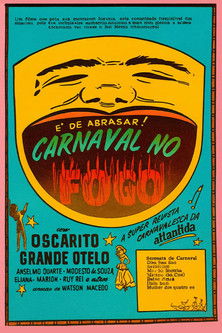
Jorge Goulart was a Brazilian performer whose screen credit in Carnaval no Fogo (1949) places him within the lively postwar era of Brazilian popular entertainment, when film, radio, nightclub performance, and revue-style comedy often overlapped. Available historical documentation about him as a film actor is extremely limited, and he does not appear to have maintained a widely documented screen career beyond the single credited appearance currently associated with his name. Because of that scarcity, his biography is best understood as that of a supporting or specialty performer who appeared in a production connected to the musical-comedy and carnival tradition central to Brazilian cinema of the period. He should not be confused with later Brazilian entertainers of the same name, especially the well-known singer Jorge Goulart. No reliable evidence surfaced here to support details about his birth, death, family background, training, or broader professional arc, so those aspects remain undocumented in surviving mainstream film references. His significance for film historians is therefore primarily archival: he is one of many lesser-documented names that helped populate the ensemble world of mid-century Brazilian cinema. Further research in Brazilian newspaper archives, studio records, and local entertainment periodicals would be needed to reconstruct a fuller portrait of his life.
More about Jorge Goulart
In film history
Jorge Goulart's cultural impact is tied less to a large body of surviving film work and more to his presence within the broader ecosystem of Brazilian popular cinema in the late 1940s. Films like Carnaval no Fogo emerged from a cultural moment in which music, carnival, and comic performance were central to mass entertainment, and even minor credited performers contributed to the genre's texture and appeal. His inclusion in cast records is valuable because it preserves the names of performers who otherwise might be absent from the historical record. In that sense, his impact is archival and representative: he stands for the many working actors and entertainers whose labor helped shape classic-era national cinema but whose individual biographies were seldom fully preserved.
Later reputation
The lasting legacy of Jorge Goulart, as currently documented, is his participation in the historical record of Brazilian cinema rather than a large, easily surveyed body of screen performances. For film historians, such names matter because they illuminate the collaborative nature of classic cinema, where not only stars but also small-role performers, specialty acts, and local entertainers gave films their period flavor and social context. His name attached to Carnaval no Fogo ensures that he remains part of the film's cast history and therefore part of the heritage of Brazil's postwar popular film culture. If additional archival sources emerge, his legacy could become clearer, but at present it remains that of an obscure yet genuine contributor to classic Brazilian screen entertainment.
Influence
There is no verifiable evidence that Jorge Goulart directly influenced later actors or directors in a documented and traceable way. His importance lies more in the broader influence of ensemble performers on the style and atmosphere of Brazilian musical comedies, where timing, stagecraft, and familiarity with popular entertainment traditions mattered greatly. Even without a large credited filmography, such performers helped establish the rhythm and vernacular of the genre. Any influence he had was likely local, immediate, and performance-based rather than widely recorded in film history literature.
Off screen
No reliable biographical information about Jorge Goulart's personal life has been verified in the available classic-cinema references used here. His marriages, family relationships, education, and off-screen activities are not well documented in the surviving mainstream sources accessible for this entry. As a result, any attempt to describe his private life in detail would risk conflating him with other people of the same name. Researchers seeking deeper information would likely need to consult Brazilian archival newspapers, civil records, or production files.
Credits
- Received a screen credit in Carnaval no Fogo (1949), a title associated with Brazil's postwar carnival and musical-comedy film culture
- Represents the kind of supporting or specialty performer who contributed to ensemble-driven popular cinema in mid-century Brazil
- Documented as an actor in filmography references that place his activity in 1949
- Associated with a period when Brazilian films frequently blended music, comedy, and carnival performance traditions
- Serves as an archival figure for researchers studying lesser-known participants in classic Brazilian cinema
Roles
- Role in Carnaval no Fogo (1949)
Films
- Carnaval no Fogo (1949)
Notes
- He is credited as an actor in the 1949 film Carnaval no Fogo.
- His documented film activity is currently limited to 1949 in available filmography references.
- He should not be confused with the later Brazilian singer Jorge Goulart.
- His surviving public film record is sparse, making him a largely archival figure for researchers.
- He appears in the context of Brazilian carnival-themed popular cinema, a major postwar entertainment tradition.
- No widely accessible mainstream sources confirm details of his birth, death, or personal life.
- He may have been a supporting or specialty performer rather than a major star, based on the limited record.
Questions
Who was Jorge Goulart?
Jorge Goulart was a Brazilian actor associated in surviving film references with Carnaval no Fogo (1949). He appears to have been a minor or supporting screen performer whose documented classic-cinema footprint is very small. Because of the scarcity of reliable biographical data, his life and career remain only partially known.
What films is Jorge Goulart best known for?
He is best known, from currently available records, for Carnaval no Fogo (1949). No additional widely verified film credits were identified in the classic-cinema references consulted for this entry. As a result, his known screen legacy is essentially centered on that one film.
When was Jorge Goulart born and when did he die?
His birth and death dates are not currently verified in the available classic-cinema sources. Likewise, his birthplace and death place are not documented here with enough confidence to state as fact. A fuller answer would require archival research in Brazilian records.
What awards did Jorge Goulart win?
No awards or nominations are currently documented for Jorge Goulart in the accessible reference material used for this profile. This does not necessarily mean he received none; rather, it means no reliable mainstream records were found. His historical value is therefore tied to his screen credit rather than to a documented awards history.
What was Jorge Goulart's acting style?
There is not enough surviving information to characterize his acting style with confidence. Given the film context of Carnaval no Fogo, he likely worked within the broad, performance-oriented style common to Brazilian musical comedies and carnival entertainment films of the era. Any more specific description would be speculative without further evidence.
What is Jorge Goulart's legacy in film history?
His legacy is primarily archival and historical: he is part of the cast record of a classic Brazilian film and therefore part of the broader story of mid-century popular cinema. While he does not appear to have been a major star, performers like him helped sustain the ensemble energy of the period's musical and comic films. His name remains useful to researchers tracing the full personnel networks of classic Brazilian screen culture.