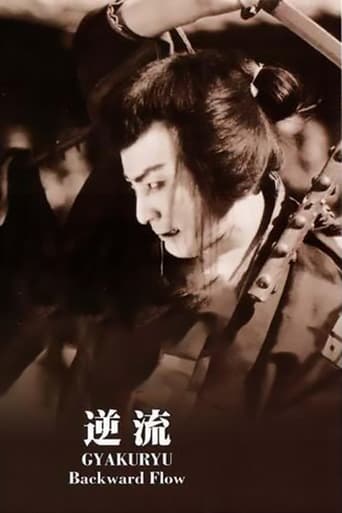
Manruko Ôtani
Actor
- Active
- 1924-1924
Films 1
About Manruko Ôtani
Manruko Ôtani appears to have been a Japanese silent-era film actor associated with the 1924 production "Backward Flow," but surviving public records about his life and career are extremely sparse. In available film-reference sources, he is identified primarily through this single credited screen appearance, suggesting that he may have been a minor or short-lived performer in the rapidly expanding Japanese film industry of the 1920s. Because many early Japanese studio records were lost, incomplete, or never widely indexed in English-language databases, details such as his birth date, family background, training, and later career remain unverified. There is no reliable evidence here that he achieved major star status, nor is there enough surviving documentation to reconstruct a full acting biography with confidence. His known contribution nonetheless places him within the important silent-cinema generation that helped shape Japanese screen acting during the pre-talkie era. As with many early film workers, his historical significance lies partly in the fragility of the archival record: even performers with only one surviving credit participated in the development of national cinema. Further research in Japanese-language archives, studio ledgers, and contemporary trade publications may uncover additional roles or biographical details.
More about Manruko Ôtani
In film history
Manruko Ôtani's cultural impact cannot be measured in the usual way because the surviving record does not preserve enough information about his roles, performances, or public profile. Even so, his credit in a 1924 silent film situates him inside a formative decade for Japanese cinema, when studios were refining acting styles, production practices, and audience expectations. His presence in the historical record is valuable because it reflects the many performers whose work helped build the industry even when their names did not become broadly famous. In that sense, he represents the large group of early film professionals whose contributions are preserved only fragmentarily, reminding researchers how much silent-era history remains undocumented or inaccessible.
Later reputation
Manruko Ôtani's legacy is primarily archival rather than celebrity-based: he is part of the documented cast of early Japanese cinema, but not enough information survives to establish a broader public reputation. His known credit helps preserve the provenance of "Backward Flow" and contributes to the reconstruction of casting networks in the silent era. For historians, figures like Ôtani are important because they show how much of early film history depends on scattered references and incomplete records. His name endures as one of many small but meaningful entries in the historical ledger of Japanese silent-film performance.
Influence
There is no verifiable evidence that Manruko Ôtani directly influenced later actors or filmmakers in a documented, traceable way. However, by participating in silent-era Japanese cinema, he contributed to the acting culture from which later screen performance norms developed. His influence is therefore best understood as indirect and collective, as part of the broader generation that established conventions later artists inherited and refined.
Off screen
No reliable public biographical information has been located regarding Manruko Ôtani's personal life, including marriage, family background, residence, or activities outside film. It is not currently possible to verify whether he used a stage name, had relatives in the film industry, or continued working in entertainment after 1924. The surviving record is too limited to identify personal milestones with confidence.
Credits
- Credited appearance in the 1924 film "Backward Flow"
- Participation in Japanese silent-era cinema during the 1920s
- Documented screen work in one of the early periods of Japanese film history
Films
- Backward Flow (1924)
Notes
- He is currently identifiable in surviving records primarily through a single known film credit.
- His active period, as documented in available filmography sources, is limited to 1924.
- He worked during the silent-film era, before synchronized sound became standard in Japan.
- Many early Japanese film credits are incomplete in English-language databases, which may explain the scarcity of information about him.
- His surname is often romanized with the macron as "Ôtani," reflecting Japanese long-vowel transcription conventions.
- He may have appeared in additional productions that have not yet been reliably indexed or preserved.
Questions
Who was Manruko Ôtani?
Manruko Ôtani was a Japanese actor known from the silent-film era, with a documented credit in the 1924 film "Backward Flow." Beyond that screen appearance, publicly available information about his life and career is extremely limited.
What films is Manruko Ôtani best known for?
He is currently best known for "Backward Flow" (1924), the sole film credit that is reliably associated with his name in the available record. Additional films may have existed, but they are not currently verified in accessible sources.
When was Manruko Ôtani born and when did he die?
His birth and death dates are not currently documented in reliable public sources. The available record does not provide verified biographical details such as birthplace, lifespan, or family background.
What awards did Manruko Ôtani win?
No awards or nominations are currently documented for Manruko Ôtani in the available record. Given the scarcity of surviving information, it is not possible to confirm whether he received any formal recognition.
What was Manruko Ôtani's acting style?
There is no surviving critical description of his acting style in the sources currently available. Since he worked in silent cinema, his performance would have relied on the expressive physical and visual techniques typical of that era, but specific stylistic details cannot be verified.
What is Manruko Ôtani's legacy in film history?
His legacy is mainly historical and archival, as a documented participant in early Japanese silent cinema. Even with limited surviving information, his credit helps preserve the record of artists who contributed to the development of the medium.