Hjalmar Fredrik Gjertsen
Actor
- Active
- 1912-1912
Films 1
About Hjalmar Fredrik Gjertsen
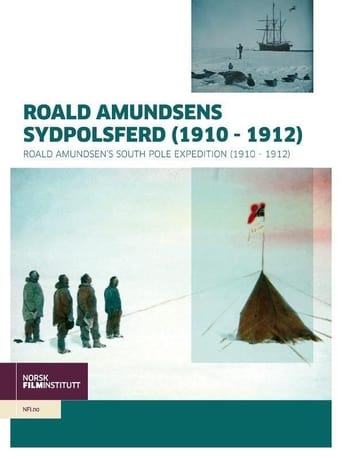
Hjalmar Fredrik Gjertsen is an obscure early cinema performer best known for appearing in the Norwegian expedition film Roald Amundsen's South Pole Expedition (1912). Because his screen career is documented only in connection with this one surviving or credited film reference, very little is securely known about his wider life, background, or professional development. He appears to have been associated with the earliest years of Scandinavian nonfiction and expedition filmmaking, a period when film roles were often uncredited or only sparsely documented. Unlike later silent-era stars, Gjertsen does not appear to have built a widely recorded acting career in feature films, and no substantial studio or stage record is readily preserved in standard film-reference sources. His historical significance lies less in celebrity than in his participation in one of the notable polar-expedition films of the early 1910s, when cinema was being used to document exploration, national achievement, and scientific heroism. As a result, he remains a marginal but authentic figure in classic film history, representing the many early screen participants whose work survives mainly through archival film lists and expedition records. Further biographical details such as his birthplace, family, education, and later life are not securely established in commonly accessible reference material.
More about Hjalmar Fredrik Gjertsen
On screen
No reliable descriptions of Hjalmar Fredrik Gjertsen's acting style survive in the available record. Given the nature of Roald Amundsen's South Pole Expedition, any performance would likely have been restrained, practical, and documentary-oriented rather than theatrical in the manner of feature-film acting. His screen presence was probably closer to filmed participation or reenactment within an expedition context than to a fully developed character performance. Because no additional films or reviews are securely attached to him, any more specific statement about his technique would be speculative.
In film history
Hjalmar Fredrik Gjertsen's cultural impact is modest but still meaningful within the history of early nonfiction cinema. His presence in Roald Amundsen's South Pole Expedition places him within the cinematic documentation of one of the most famous exploration achievements of the twentieth century, a subject that carried immense public fascination in the silent era. Films of this kind helped define how cinema could serve as an instrument of national memory, scientific prestige, and adventure storytelling long before documentary and travel filmmaking became established genres. Even when individual participants are not widely remembered, their on-screen participation contributed to the authenticity and historical value of such works. In that sense, Gjertsen is part of the broader archive of early film history where the medium recorded not only actors but also explorers, crews, and expedition figures whose images became part of popular memory.
Later reputation
Gjertsen's legacy is primarily archival: he survives in film history as a credited or documented participant in an early expedition film associated with Roald Amundsen's South Pole journey. His name is important to historians because it helps preserve the human detail behind otherwise mythic exploration narratives. The scarcity of information about him also illustrates a larger truth about silent-era cinema, where many contributors have left only fragmentary traces in production records, filmographies, or expedition documentation. For historians and database researchers, his inclusion ensures that the record of early Scandinavian film remains as complete as possible. While he was not a star in the conventional sense, his screen appearance contributes to the texture and authenticity of the early cinematic record.
Influence
There is no evidence that Hjalmar Fredrik Gjertsen directly influenced later actors or directors in a documented way. His significance is indirect: by participating in an expedition film, he contributed to a form of cinema that influenced later documentary, travel, and adventure filmmaking. Such early films established the expectation that cinema could preserve real events and real people in ways that extended beyond staged drama. In that broader sense, his work sits within the early development of nonfiction screen storytelling rather than within a personally traceable performance lineage.
Off screen
No dependable public information is readily available about Hjalmar Fredrik Gjertsen's personal life, including marriages, children, or private biography. He does not appear to have been a widely documented celebrity figure, and standard classic-cinema references do not provide a surviving personal profile. Any assumptions about family background, education, or later occupation would be speculative. His historical footprint is primarily tied to the 1912 expedition film credit rather than to a larger public persona.
Credits
- Appeared in Roald Amundsen's South Pole Expedition (1912), an important early Scandinavian expedition film
- Participated in one of the earliest cinematic records connected with Antarctic exploration
- Represents the documentary and expedition-film performers of the silent era whose work helped shape nonfiction cinema
Roles
- Participant in Roald Amundsen's South Pole Expedition
Films
Collaborators
Notes
- Gjertsen is known almost exclusively from a single 1912 film credit, making him one of the more elusive names in early cinema records.
- His film is associated with Roald Amundsen's historic South Pole expedition, one of the most famous polar achievements of the era.
- Because the film was made in 1912, his screen work belongs to the very early silent era, when film documentation was often incomplete.
- He appears in a production that sits at the intersection of exploration history and motion-picture history.
- No widely accessible records confirm additional acting roles beyond the 1912 expedition film.
- His biography is representative of many early cinema figures whose names survive but whose personal histories are largely lost.
- He is sometimes of interest to researchers precisely because so little is known about him, making any confirmed fact valuable to film databases.
Questions
Who was Hjalmar Fredrik Gjertsen?
Hjalmar Fredrik Gjertsen was a Norwegian actor associated with the early silent-era expedition film Roald Amundsen's South Pole Expedition (1912). He is notable more for his historical presence in early nonfiction cinema than for a large surviving screen career. Very little personal information about him has been preserved in widely accessible reference sources.
What films is Hjalmar Fredrik Gjertsen best known for?
He is best known for Roald Amundsen's South Pole Expedition (1912). No other reliably documented film credits are readily established in standard references. His filmography appears to have been extremely limited, or at least very poorly preserved.
When was Hjalmar Fredrik Gjertsen born and when did he die?
His birth and death dates are not securely documented in the available record. The same is true of his birthplace and later-life details. He remains a historically identified but biographically obscure early film figure.
What awards did Hjalmar Fredrik Gjertsen win?
No awards or nominations are known for Hjalmar Fredrik Gjertsen. Early silent-era expedition performers were rarely recognized with formal awards, and none are documented for him. His historical value lies in his participation in an important early film rather than in honors.
What was Hjalmar Fredrik Gjertsen's acting style?
There is no reliable critical description of his acting style. Since his known film is an expedition work rather than a conventional drama, any on-screen performance was likely practical and documentary-like rather than theatrically expressive. Beyond that, specific stylistic claims would be speculative.
What is Hjalmar Fredrik Gjertsen's legacy in film history?
His legacy is tied to the early history of Scandinavian and expedition filmmaking. He is part of the archival record of cinema's use as a witness to exploration and historical event. For historians, his name helps complete the picture of who appeared in these formative films.