Films
1 film
About Carlo Cattaneo
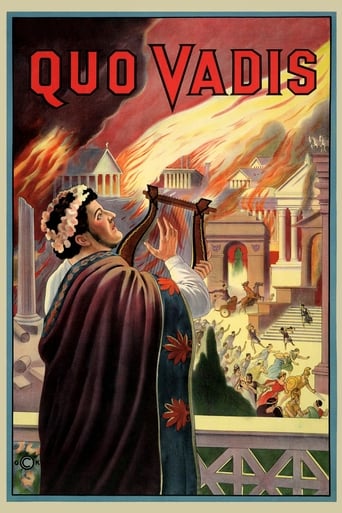
Carlo Cattaneo worked on one surviving credit: Quo Vadis? (1913). Most notably in the 1913 epic film 'Quo Vadis?' directed by Enrico Guazzoni. His career appears to have been extremely brief, with his only confirmed film credit being this landmark production from the early silent era. The 1913 'Quo Vadis?' was one of the first true epic films in cinema history, a massive Italian production that showcased the country's cinematic ambitions before World War I. Cattaneo was part of a large ensemble cast that brought to life the grand spectacle of ancient Rome and early Christian persecution. Like many actors of this very early period, his career may have been limited to this single production, or he may have primarily worked in theater with only this one foray into the new medium of film. The lack of extensive documentation about his career is typical of actors from this transitional period in cinema history, when film was still establishing itself as a legitimate art form and career path.
The Craft
Milestones
- Appeared in the groundbreaking 1913 Italian epic 'Quo Vadis?'
Best Known For
Must-See Films
Working Relationships
Worked Often With
Why They Matter
Impact on Culture
Carlo Cattaneo's contribution to cinema, while seemingly minor, represents the foundational period of filmmaking when actors were helping establish the language of cinema. His participation in 'Quo Vadis?' (1913) places him within the context of early Italian cinema's golden age, when the country was producing some of the most ambitious and technically advanced films of the era. The film itself was groundbreaking in its scale and spectacle, helping to establish the epic genre that would later become a staple of Hollywood cinema. Though his individual role may have been small, Cattaneo was part of a production that demonstrated cinema's potential as an art form capable of grand historical storytelling.
Lasting Legacy
Carlo Cattaneo's legacy is primarily tied to his participation in one of cinema's earliest and most influential epic films. While his name may not be widely recognized today, he represents the countless actors who contributed to the birth of cinema during its formative years. The 1913 'Quo Vadis?' remains an important milestone in film history, and by extension, all who participated in its creation, including Cattaneo, played a role in shaping the future of cinematic storytelling. His brief appearance in film history serves as a reminder of the many anonymous contributors who helped build the foundation of modern cinema.
Who They Inspired
As an actor from the very early silent era with only one known film credit, Carlo Cattaneo's direct influence on subsequent generations of actors and filmmakers is difficult to trace. However, his participation in productions like 'Quo Vadis?' contributed to the development of acting techniques for the silent medium, where performers had to convey emotion and story through physical expression rather than dialogue. The actors of this era established many of the foundational principles of screen acting that would evolve and be refined by later generations.
Off Screen
Very little is documented about Carlo Cattaneo's personal life, which is typical for actors from the very early silent era who had brief film careers. Most personal details about supporting actors from this period have been lost to time.
Did You Know?
- Appeared in the 1913 Italian version of 'Quo Vadis?' which was one of the first true epic films in cinema history
- The 1913 'Quo Vadis?' was a massive production for its time, featuring thousands of extras and elaborate sets
- Italian cinema was at its peak during this period, producing some of the most technically advanced films in the world
- Many actors from this era had theater backgrounds and only briefly experimented with the new medium of film
- The 1913 'Quo Vadis?' would be remade multiple times, most famously in the 1951 Hollywood version
- Early silent film actors like Cattaneo helped establish the visual language of cinema
- Record-keeping for early cinema was often incomplete, making it difficult to trace the full careers of many actors from this period
- The film was based on Henryk Sienkiewicz's Nobel Prize-winning novel
- Italian historical epics of this era were known for their spectacular sets and massive crowd scenes
- Many early film actors worked anonymously, with credits often being incomplete or inaccurate
Frequently Asked Questions
Who was Carlo Cattaneo?
Screen credits include the 1913 film 'Quo Vadis?' His career appears to have been very brief, with this landmark epic being his only known film credit.
What films is Carlo Cattaneo best known for?
Titles linked here include Quo Vadis? (1913).
When was Carlo Cattaneo born and when did he die?
Specific birth and death dates for Carlo Cattaneo are not documented in available historical records, which is common for actors from the very early silent era who had brief film careers.
What awards did Carlo Cattaneo win?
Carlo Cattaneo did not receive any documented awards or nominations, as the formal award systems for cinema, such as the Academy Awards, were not established during his brief career in 1913.
What was Carlo Cattaneo's acting style?
Specific details about Carlo Cattaneo's acting style are not documented, but actors from this early silent era typically employed exaggerated physical expressions and gestures to convey emotion without dialogue.
Why is the 1913 'Quo Vadis?' significant in film history?
The 1913 'Quo Vadis?' was groundbreaking as one of cinema's first true epic films, featuring massive sets, thousands of extras, and establishing many conventions of the historical epic genre that would influence cinema for decades.