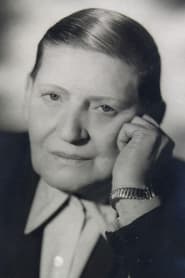
Lucie Höflich
Actor
Born: February 20, 1889 in Hannover, German Empire Died: October 9, 1956 Active: 1906-1956
Films
2 films
About Lucie Höflich
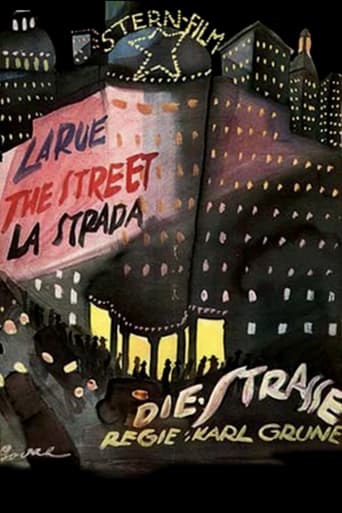
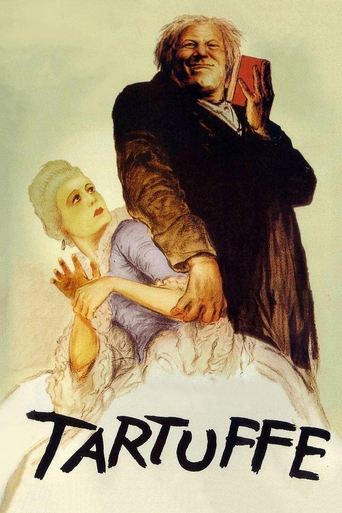
German actress: from the early 1900s through the post-World War II era, making significant contributions to both stage and screen. Born into a theatrical family, she began her career at the Deutsches Theater in Berlin under the direction of Max Reinhardt, where she developed her craft and gained recognition as one of Germany's most talented character actresses. Her transition to film came during the golden age of German cinema, where she appeared in several notable silent films including Karl Grune's expressionist masterpiece 'The Street' (1923) and F.W. Murnau's adaptation of 'Tartuffe' (1925). Höflich's performances were characterized by their psychological depth and emotional intensity, making her particularly suited to the expressionist style that dominated German cinema of the 1920s. Despite the challenges faced by artists during the Nazi regime, she continued her career in theater and later appeared in several post-war films, demonstrating remarkable resilience and adaptability throughout her long career. Her legacy endures through her influential performances and her role in shaping German theatrical and cinematic traditions.
The Craft
On Screen
Lucie Höflich was known for her intense, psychologically nuanced performances that embodied the principles of German expressionism. Her acting style combined precise physical control with deep emotional resonance, allowing her to convey complex inner states through subtle gestures and facial expressions. She excelled at portraying strong, often troubled female characters, bringing a remarkable depth and authenticity to roles that ranged from vulnerable victims to formidable antagonists. Her theatrical background gave her a commanding stage presence that translated powerfully to the screen, particularly in the close-up shots favored by German expressionist directors.
Milestones
- Debut at Deutsches Theater Berlin under Max Reinhardt (1906)
- Breakthrough role in 'The Street' (1923)
- Starring role in Murnau's 'Tartuffe' (1925)
- Leading actress at Berliner Staatstheater
- Recipient of the National Prize of East Germany (1951)
- Final film appearance in 'Das Beil von Wandsbek' (1951)
Best Known For
Iconic Roles
Must-See Films
Accolades
Won
- National Prize of East Germany (1951)
- Goethe Plaque of the City of Frankfurt (1953)
Nominated
- Film Award in Silver for Outstanding Individual Achievement: Supporting Actress (1951)
Special Recognition
- Honorary member of the Deutsches Theater Berlin
- State Actress of the German Democratic Republic
Working Relationships
Worked Often With
Studios
Why They Matter
Impact on Culture
Lucie Höflich played a significant role in shaping German expressionist cinema through her powerful performances in some of the movement's most important films. Her work in 'The Street' and 'Tartuffe' helped define the visual and emotional language of German expressionism, influencing generations of actors and filmmakers. As a prominent stage actress who successfully transitioned to film, she represented the artistic bridge between traditional theater and modern cinema in Germany. Her ability to convey complex psychological states through the medium of silent film demonstrated the potential of cinema as a serious art form capable of dramatic depth equal to that of the stage.
Lasting Legacy
Lucie Höflich's legacy endures as one of Germany's most accomplished actresses of the early 20th century, remembered for her contributions to both theatrical and cinematic arts. Her performances in key expressionist films remain studied examples of silent film acting at its most sophisticated and emotionally resonant. In post-war Germany, particularly in the East, she was celebrated as a model of artistic integrity and dedication to the craft of acting. The National Prize and other honors she received reflect her status as a cultural icon who helped preserve and advance German theatrical traditions through periods of political upheaval and social change.
Who They Inspired
Höflich influenced subsequent generations of German actors through her teaching at the acting school of the Deutsches Theater and her masterful performances that set standards for psychological realism and emotional authenticity. Her work in expressionist cinema provided a template for actors seeking to balance theatrical intensity with cinematic subtlety. Younger actresses studying at German theaters in the 1930s and 1940s often cited her as a role model for professional dedication and artistic excellence. Her approach to character development, emphasizing psychological depth over external mannerisms, became increasingly influential as German cinema moved toward more realistic styles in the post-war period.
Off Screen
Lucie Höflich was married twice during her lifetime, first to actor Emil Jannings and later to theater director Erwin Piscator, though both marriages ended in divorce. She had no children and devoted her life entirely to her artistic career. During the Nazi era, she faced challenges due to her previous associations with Jewish artists and modernist theater, but managed to continue working by adapting to the regime's cultural policies. After World War II, she settled in East Germany, where she was celebrated as a leading figure of the theatrical establishment and received numerous state honors.
Education
Trained at the acting school of the Deutsches Theater Berlin under Max Reinhardt's direction
Family
- Emil Jannings (1919-1920)
- Erwin Piscator (1928-1931)
Did You Know?
- She was one of the few actresses to successfully maintain a career across the Weimar Republic, Nazi Germany, and East Germany
- Her brief marriage to Emil Jannings, who later became the first winner of the Academy Award for Best Actor, ended after only one year
- She was considered for the lead role in 'The Blue Angel' but it ultimately went to Marlene Dietrich
- During the Nazi regime, she was initially blacklisted but later allowed to work due to her cultural significance
- She was fluent in multiple languages, which helped her maintain international connections during politically difficult times
- Her performance in 'The Street' was praised by critics for its naturalism in contrast to the film's expressionist style
- She continued performing on stage well into her 60s, demonstrating remarkable stamina and dedication
- After World War II, she chose to live and work in East Germany rather than the West
- She was known for her meticulous preparation and extensive research for each role
- Her final years were spent teaching and mentoring young actors at the Berlin acting school
In Their Own Words
The stage is not just a platform, but a sacred space where truth must be revealed
In acting, as in life, authenticity is the only currency that matters
Expressionism is not exaggeration, but the distillation of emotion to its purest form
Frequently Asked Questions
Who was Lucie Höflich?
Renowned German actress who had a career spanning five decades in both theater and film. She was particularly prominent during the German expressionist cinema movement of the 1920s and later became a celebrated figure in East German theater.
What films is Lucie Höflich best known for?
Titles linked here include The Street (1923), Tartuffe (1925).
When was Lucie Höflich born and when did she die?
Born February 20, 1889; died October 9, 1956.
What awards did Lucie Höflich win?
Lucie Höflich received the National Prize of East Germany in 1951 and the Goethe Plaque of the City of Frankfurt in 1953. She was also honored as a State Actress of the German Democratic Republic and received the Film Award in Silver nomination for her supporting role in 1951.
What was Lucie Höflich's acting style?
Lucie Höflich's acting style was characterized by psychological depth, emotional intensity, and the precise control that defined German expressionist performance. She excelled at conveying complex inner states through subtle physical expressions and brought theatrical gravitas to her film roles.
Did Lucie Höflich work with famous directors?
Yes, Lucie Höflich worked with several prominent directors including Max Reinhardt at the Deutsches Theater, F.W. Murnau on 'Tartuffe', and Karl Grune on 'The Street'. She was also briefly married to director Erwin Piscator.
How did Lucie Höflich's career change after World War II?
After World War II, Lucie Höflich chose to remain in East Germany where she became a highly respected figure in the state-supported theater system. She received numerous honors and continued performing and teaching well into the 1950s, becoming a cultural icon of East German artistic achievement.