

Tartuffe
"Molière exposes a hypocrite"
Keys: Space play/pause · ←/→ 10s · F fullscreen · M mute · </> speed
About this film
A grandson screens Molière's Tartuffe for his millionaire grandfather to expose the hypocritical governess plotting to steal the inheritance.
Cast & crew
More films like this
More Drama films
View all →







More from F. W. Murnau
View all →
More about this film
About the production
Release dateJanuary 25, 1926 (Germany)
Box officeBox office figures not well documented, but performed moderately in Germany and had limited international release
ProductionUniversum Film AG (UFA)
Filmed inBerlin, Germany, UFA Studios in Babelsberg
The film was shot during the height of German Expressionism, though Murnau took a more restrained approach compared to his earlier works. The production faced challenges in creating the film-within-a-film structure, requiring elaborate set designs to distinguish between the modern framing story and the period piece adaptation. Murnau experimented with camera techniques to create visual contrasts between the two narrative levels. The collaboration between Murnau and Emil Jannings was particularly significant, as this was one of several films they made together before Jannings moved to Hollywood.
Themes
Hypocrisy and deceptionThe power of art and cinemaGenerational conflictMoral educationThe corruption of wealth
Themes & topics
film within a filmhypocrisyreligious fraudinheritancegrandfather grandson relationshipMolière adaptationsilent filmGerman Expressionismmoral talesocial satiredeceptionfamily dramatheater adaptationWeimar RepublicUFA production
Historical background
F.W. Murnau's 1925 German adaptation framed the classic play inside a modern inheritance thriller for UFA.
Why this film matters
Murnau used the play-within-a-film device to smuggle literary satire into a commercially viable property.
Making of
The production of 'Tartuffe' represented a significant artistic challenge for F.W. Murnau, who sought to create a film that was both entertaining and socially relevant. The decision to use a framing device was innovative for the time, allowing Murnau to comment on the contemporary relevance of Molière's 17th-century play. The collaboration with Emil Jannings was particularly fruitful, as the actor brought both comedic gravitas to the role of Tartuffe and subtlety to his performance in the modern sequences. Murnau experimented with lighting and camera movement to create visual distinctions between the two narrative levels, using more expressionistic techniques for the play adaptation and more naturalistic approaches for the framing story. The production team faced technical challenges in creating seamless transitions between the two worlds, particularly in scenes where characters interact with the film-within-the-film. Despite UFA's financial pressures during this period, Murnau was given considerable artistic freedom, allowing him to explore his interest in using cinema as a medium for moral and social commentary.
What critics said
Weimar critics debated its fidelity to Molière; film historians value it as a bridge between stage classicism and Expressionist cinema.
Did you know?
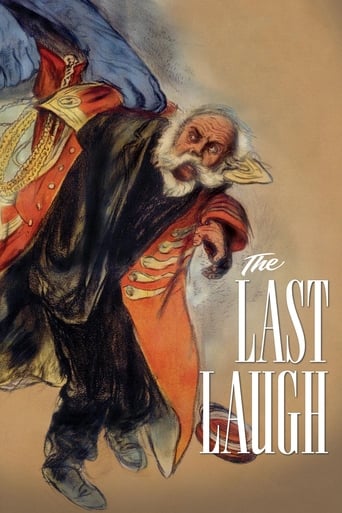
- This was F.W. Murnau's follow-up to his masterpiece 'The Last Laugh' (1924) and was made before he moved to Hollywood to direct 'Sunrise' (1927)
- The film is notable for its early use of a meta-narrative structure, featuring a film within a film decades before this became common
- Emil Jannings plays both Tartuffe in the play adaptation and has a role in the framing story, showcasing his remarkable range
- The original negative was partially damaged during World War II, requiring extensive restoration work in the 1990s
- Murnau considered a more accessible work compared to his darker expressionist films, hoping to reach a broader audience
- The film's release was delayed due to production issues at UFA, which was experiencing financial difficulties at the time
- Murnau's adaptation of Molière's 17th-century play was one of the first major screen adaptations of classical French theater
- The film's sets were designed by Robert Neppach, who created distinct visual styles for the modern and period sequences
- Despite its artistic merits, the film was less commercially successful than Murnau's previous works, partly due to its complex narrative structure
- The film was banned in some conservative regions due to its criticism of religious hypocrisy
Awards & recognition
- No major awards documented for
Visual style
The cinematography by Karl Freund and Robert Neppach employs distinct visual styles to differentiate between the framing story and the play adaptation. The modern sequences use more naturalistic lighting and conventional camera work, while the Tartuffe play segments incorporate more expressionistic techniques, including dramatic shadows and unusual camera angles. Freund, who had worked with Murnau on previous films, experimented with moving camera shots that were innovative for the time. The film uses lighting to create moral contrasts, with the hypocritical characters often shown in shadow while the virtuous characters are illuminated more naturally. The cinematography also employs careful composition to emphasize the theatrical origins of the Tartuffe story while making it distinctly cinematic. The visual distinction between the two narrative levels was achieved through different film stocks and processing techniques, creating subtle but effective visual contrasts.
Innovations
The film's most significant technical achievement was its successful implementation of a complex narrative structure that was unprecedented for its time. Murnau and his team developed innovative editing techniques to create smooth transitions between the modern framing story and the period adaptation. The production used advanced lighting techniques to create distinct visual atmospheres for the two narrative levels. The film also experimented with special effects to show characters watching the film-within-the-film, requiring careful camera work and set design. The makeup and costume design, particularly for Emil Jannings in the title role, were technically sophisticated for the period. The film's preservation and restoration have also involved significant technical challenges, with modern digital techniques used to repair damage to the original elements and recreate missing scenes where possible.
Music
As a silent film, 'Tartuffe' would have been accompanied by live musical performance during its original theatrical run. The score would have varied by theater, with larger cinemas employing full orchestras while smaller venues used piano or organ accompaniment. The music likely drew on classical French influences for the Tartuffe sequences and more contemporary German music for the framing story. Modern restorations of the film have featured newly composed scores by silent film specialists, who attempt to capture the film's dual nature through musical contrasts. Some contemporary screenings use period-appropriate French and German classical music to enhance the film's cultural context. The original musical cues and compositions for the film, if they existed, have not survived, leaving modern interpreters to create their own accompaniments based on the film's visual and emotional tone.
Famous quotes
As a silent film, dialogue was conveyed through intertitles. Key intertitles included: 'Tartuffe - the story of a hypocrite who uses religion to deceive', 'Sometimes the truth is best shown through fiction', 'In every age, there are those who prey on the trust of others', 'The theater holds up a mirror to life itself', 'What is written in books must be shown on the screen to be believed'
Memorable scenes
- The opening sequence where the young man convinces his grandfather to watch the film, establishing the meta-narrative framework
- Tartuffe's first appearance, where Emil Jannings transforms from pious devotee to scheming manipulator through subtle performance changes
- The scene where Tartuffe attempts to seduce Elmire, using dramatic lighting and camera angles to heighten the tension
- The grandfather's gradual realization of the parallels between the film and his own situation, shown through increasingly concerned reactions
- The final confrontation where the housekeeper is exposed, bringing the two narrative threads together in a satisfying resolution
What audiences thought
Initial audience reception in Germany was moderate, with the film failing to match the commercial success of Murnau's previous works like 'The Last Laugh.' Some viewers found the film-within-a-film structure difficult to follow, particularly those less familiar with Molière's original play. However, educated audiences and theater-goers appreciated the clever adaptation and the film's social commentary. The film performed better in urban centers with more sophisticated cinema audiences, particularly in Berlin. International audiences had limited exposure to the film, as its distribution was primarily focused on German-speaking markets. Over time, as the film has been restored and made more accessible through film festivals and home video, it has found appreciation among cinephiles and students of silent cinema who value its historical significance and artistic innovations.
Film connections
Influenced by
- Molière's 1664 play 'Tartuffe'
- German Expressionist cinema
- Classical French theater
- Weimar Republic social criticism
- Literary adaptation traditions
- Theatrical performance conventions
This film influenced
- Later meta-narrative films
- Literary adaptations of classical works
- German films of the late 1920s
- Films exploring media manipulation
- Works using framing devices
Film restoration
The film was partially preserved but suffered damage during World War II. Significant restoration work was carried out in the 1990s by film archives, particularly the Friedrich Wilhelm Murnau Foundation. Some sequences remain incomplete or reconstructed from surviving fragments. The restored version is approximately 90% complete, with missing portions summarized through intertitles. The film exists in the archives of several major institutions, including the Bundesarchiv-Filmarchiv in Berlin and the Museum of Modern Art in New York. Ongoing preservation efforts continue to improve the quality of available prints.
Where to watch
- Available on DVD from specialty distributors like Kino Lorber and Flicker Alley
- Streaming on The Criterion Channel (periodically)
- Available for streaming on MUBI
- Can be accessed through university film libraries and archives
- Occasionally screened at film festivals and cinematheques
- Available on Blu-ray from European distributors
- Some versions are available on YouTube (though quality varies)
- Accessible through Kanopy for library card holders