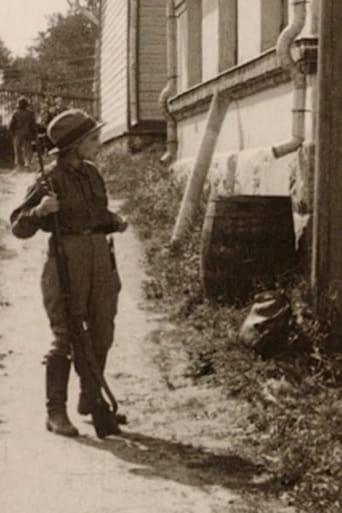
Lisi Carén
Actor
Born: September 17, 1903 in Helsinki, Finland Died: January 1, 1983 Active: 1922-1941
Films
1 film
About Lisi Carén
Lisi Carén (also known as Lizzie Carén) was a Finnish-born dancer and actress who became a significant figure in the Nordic performing arts scene during the early 20th century. Born in Helsinki in 1903, she began her artistic journey as a soloist with the Finnish National Ballet, where she honed the grace and discipline that would later define her screen presence. Her film career launched during the silent era with a prominent role as the young heiress Ellina in the 1922 Finnish production 'Sotapolulla' (On the Warpath). Following her success in Finland, she expanded her horizons to Paris, joining the prestigious Les Ballets de Moscou, an exiled Russian ballet company, and touring extensively throughout Europe and North Africa. Carén eventually settled in Norway, where she transitioned seamlessly into revues and sound films, most notably appearing in the 1941 comedy 'Den forsvundne pølsemaker'. Beyond her performances, she was a advocate for artists' rights, co-founding the Norwegian Dancers' Union in 1947, and later served as a respected performing arts critic for the newspaper Dagbladet until her late seventies.
The Craft
On Screen
Carén's acting style was deeply influenced by her background in classical ballet, characterized by an elegant physical poise and expressive gestural language typical of the late silent era. In her transition to sound films and revues, she maintained a sophisticated and often aristocratic screen persona, frequently cast in roles that required both dramatic depth and rhythmic movement.
Milestones
- Soloist for the Finnish National Ballet during its formative years
- Starring role as Ellina in the silent film 'Sotapolulla' (1922)
- Soloist with Les Ballets de Moscou in Paris, touring internationally
- Featured performer in the popular Norwegian 'Scalarevyen' (1934)
- Co-founder of the Norwegian Dancers' Union (Norsk Dansekunstnere) in 1947
- Long-term career as a performing arts critic for Dagbladet
Best Known For
Iconic Roles
Must-See Films
Accolades
Won
- Honorary membership in the Norwegian Dancers' Union (Norsk Dansekunstnere)
Special Recognition
- Full-figure portrait included in the Theater History Collection (Teaterhistorisk samling), 1935
- Recognized as a founding member of the Norwegian Dancers' Union
Working Relationships
Worked Often With
Studios
Why They Matter
Impact on Culture
Lisi Carén bridged the gap between the high art of classical ballet and the popular appeal of early cinema and revue theater in Northern Europe. Her move from Finland to Norway and her work with Russian exiles in Paris made her a truly international artist during a period of significant geopolitical change. She was instrumental in professionalizing the dance vocation in Norway, ensuring that future generations of performers had legal and financial protections through the union she helped establish.
Lasting Legacy
Her legacy is preserved both in the early archives of Finnish silent cinema and in the institutional history of Norwegian dance. As one of the few performers to successfully navigate the transition from the silent screen to the stage and then to sound film, she represents the versatility required of artists in the early 20th century. Her 1935 portrait remains proof of her status as a style icon of the era.
Who They Inspired
She influenced the development of the Norwegian revue style by bringing technical balletic excellence to the more commercial 'Cirkus' and 'Scala' productions. Her later work as a critic influenced the public's perception and appreciation of the performing arts in Norway for decades.
Off Screen
Lisi Carén was born in Helsinki but spent a significant portion of her adult life in Norway after moving there in the late 1920s. She was a central figure in the cultural circles of Oslo, maintaining a professional presence in the arts for over six decades. Even after retiring from active dancing and acting, she remained a sharp intellectual force in the Norwegian media landscape.
Education
Trained in classical ballet at the Finnish National Opera and Ballet in Helsinki.
Did You Know?
- She was a soloist in the Russian exile company 'Les Ballets de Moscou' in Paris.
- Carén toured North Africa, Spain, and Italy as a professional dancer before settling in Norway.
- In 1938, she took a leave of absence from the Centralteatret in Oslo to film a production in Prague.
- She remained an active theater critic until the age of 79.
- Her name is sometimes spelled 'Lizzie Carén' in historical Norwegian theater programs.
- She was the primary attraction at the 'Danse-Aften' with the Bergen Symphony Orchestra in 1931.
In Their Own Words
In the context of the 1931 Bergen performance, advertisements described her as 'the great attraction' of the evening, reflecting her status as a premier soloist.
Frequently Asked Questions
Who was Lisi Carén?
Finnish-Norwegian actress and classical dancer who starred in silent films and later became a prominent stage performer and arts critic. She is best known for her role in the 1922 film 'Sotapolulla' and for her leadership in the Norwegian Dancers' Union.
What films is Lisi Carén best known for?
Titles linked here include Sotapolulla (1922), Den forsvundne pølsemaker (1941).
When was Lisi Carén born and when did she die?
Born September 17, 1903; died January 1, 1983.
What was Lisi Carén's contribution to the dance community?
Beyond her career as a soloist for the Finnish National Ballet and Les Ballets de Moscou, she co-founded the Norwegian Dancers' Union in 1947 to protect the rights of performing artists.
What was Lisi Carén's acting style?
Her style was characterized by the elegance and physical precision of a trained ballerina, which she translated into expressive performances in both silent films and musical revues.