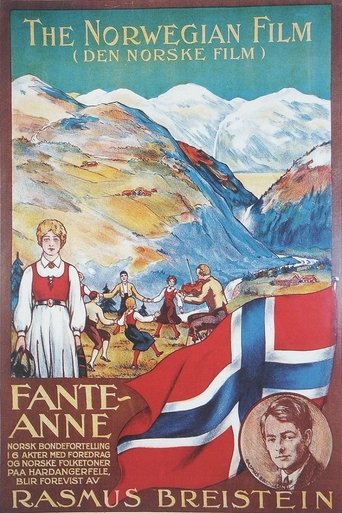

Lars Tvinde
Actor
- Active
- 1920-1920
Films 1
About Lars Tvinde
Lars Tvinde was a Norwegian stage and film actor associated primarily with the early period of Scandinavian cinema. He is documented in film history chiefly for his appearance in the silent feature Fante-Anne (1920), one of the landmark productions of early Norwegian film. Because the surviving record on Tvinde is sparse, his career is best understood within the context of the Norwegian theater and film world of the early 20th century, when many performers moved between stage work and the emerging film industry. His credit in Fante-Anne places him among the generation of actors who helped give Norwegian cinema its first broadly recognized dramatic features. Beyond this film, detailed information about his later career, training, and personal life is not well preserved in readily available classic-cinema references. As a result, he remains a little-documented but historically relevant figure in the silent-era Nordic screen tradition.
More about Lars Tvinde
In film history
Lars Tvinde's cultural significance lies less in a long surviving filmography than in his participation in the formative years of Norwegian cinema. Performers like Tvinde helped establish the legitimacy of feature-length national productions during the silent era, when Scandinavian filmmakers were building audiences and artistic identity. His credit in Fante-Anne links him to a period when film in Norway was developing from a novelty into a serious dramatic medium. Even when individual biographical details are lost, such actors remain important as part of the personnel who made early national film culture possible. In that sense, Tvinde is a representative figure of the silent-era theatrical talent that supported the growth of Nordic screen storytelling.
Later reputation
Tvinde's legacy is primarily archival and historical: he is remembered because he appears in an important early Norwegian silent film rather than because of a large surviving body of work. For historians of Scandinavian cinema, every documented performer from this era contributes to a fuller understanding of how the national film industry took shape. His presence in Fante-Anne ensures that his name remains attached to one of the early milestones of Norwegian screen history. As with many silent-era actors whose personal records are fragmentary, his legacy is preserved mainly through film credits, reference works, and the continued study of early cinema. This makes him a small but legitimate part of Norway's cinematic heritage.
Influence
There is no well-documented evidence of Tvinde exerting a direct influence on later actors or filmmakers in the way more prominent silent stars did. His importance is more indirect, as a member of the early acting pool that gave Norwegian silent cinema its dramatic performances and local authenticity. By participating in a film such as Fante-Anne, he contributed to the establishment of performance standards and screen presence during a formative period. His influence is therefore best understood as part of the collective influence of early stage actors on the development of Nordic film acting. Researchers of the era may regard him as one of the many performers who helped bridge theatrical traditions and cinematic expression.
Off screen
Very little reliably documented information is available about Lars Tvinde's personal life in widely accessible classic-cinema references. His birth family, marital history, and later life are not clearly established in standard film histories or public databases. He appears to have remained a comparatively obscure figure outside the surviving documentation of early Norwegian film. Because of the limited archival record, any further claims about his private life would be speculative.
Credits
- Appeared in the silent Norwegian feature Fante-Anne (1920), an important early national cinema production.
- Represents the generation of stage-trained Scandinavian performers who contributed to the first decades of Norwegian film.
- Remains part of film history through association with one of Norway's better-known silent-era titles.
Roles
- Role in Fante-Anne (1920) - specific character name not clearly documented in readily available sources
Films
- Fante-Anne (1920)
Collaborators
- Cast and production personnel of Fante-Anne (1920)
Studios
- Norwegian silent film production of the 1920 era
Notes
- Lars Tvinde is chiefly known today for one surviving film credit: Fante-Anne (1920).
- He belongs to the early Norwegian silent-film era, a period with many incomplete records.
- His biographical details are not well preserved in common English-language film references.
- Because his filmography is so limited in surviving databases, he is often studied as an archival rather than a star figure.
- Fante-Anne is considered an important title in the history of Norwegian cinema, which gives Tvinde historical relevance beyond his sparse record.
- His name appears in classic-cinema references connected to Norway rather than in major international star systems.
Questions
Who was Lars Tvinde?
Lars Tvinde was a Norwegian actor associated with the silent film era. He is best known for appearing in Fante-Anne (1920), an early and historically important Norwegian feature.
What films is Lars Tvinde best known for?
He is best known for Fante-Anne (1920). In the sources readily available for classic cinema, that is the principal surviving screen credit associated with his name.
When was Lars Tvinde born and when did he die?
Reliable birth and death dates are not readily available in standard accessible references for this performer. His documented film history is limited, and his vital details appear to be poorly preserved.
What awards did Lars Tvinde win?
No awards or formal honors are readily documented for Lars Tvinde in accessible classic-cinema references. His significance comes mainly from his participation in early Norwegian film history.
What was Lars Tvinde's acting style?
No detailed contemporary description of his acting style is widely documented. As a silent-era performer, his work would have relied on the expressive, theatrical screen acting typical of early 20th-century cinema.
What is Lars Tvinde's legacy in film history?
His legacy is tied to the preservation of early Norwegian cinema history. Even though little personal information survives, his film credit helps document the performers who shaped Norway's silent-film era.