Henny Skjønberg
Actor
- Active
- 1920-1920
Films 1
About Henny Skjønberg
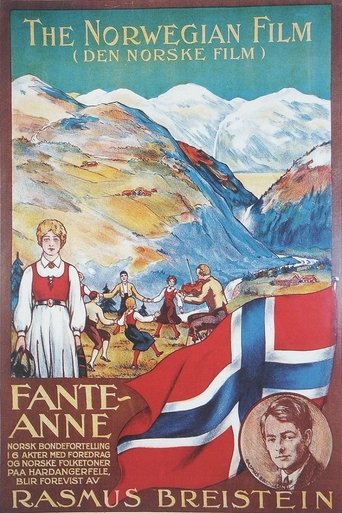
Henny Skjønberg was a Norwegian stage and film actor best remembered by modern film historians for appearing in the silent feature Fante-Anne (1920), one of the foundational works of Norwegian cinema. Because his screen career appears to have been extremely limited, his historical importance rests less on a long filmography than on his participation in an early landmark production from the silent era. Information about his wider life, training, and later career is sparse in surviving film-reference sources, which is common for many Scandinavian performers from the period. His credited appearance in Fante-Anne places him among the small group of actors who helped establish an indigenous Norwegian screen acting tradition at a time when national cinema was still in its formative years. Beyond that film, readily verifiable details about his personal background, later roles, and dates of birth and death are not well documented in standard accessible references. As a result, he is chiefly remembered as a classic-era performer associated with one of the earliest and most significant Norwegian silent films rather than as a star with a large surviving body of work. His contribution is historically valuable because it connects him to the emergence of Norway’s national film culture in the early 1920s.
More about Henny Skjønberg
On screen
No detailed critical descriptions of Henny Skjønberg's screen acting style are readily preserved in accessible sources. As a silent-era performer, his work would have relied on expressive facial movement, physical gesture, and visual clarity rather than spoken dialogue. Any assessment of his style must remain cautious, since surviving documentation does not provide contemporary reviews or extensive analysis of his performance methods. His screen presence should be understood in the context of early Norwegian silent cinema, where actors often balanced theatrical expressiveness with the restrained realism increasingly favored by the medium.
In film history
Henny Skjønberg's cultural impact is tied to the historical importance of Fante-Anne (1920), a film often cited in discussions of the early consolidation of Norwegian national cinema. Even when an actor's individual biography is obscure, participation in a landmark production can grant lasting significance in film history because such works help define a country's cinematic identity. His presence in the film places him within the generation of artists who participated in Norway's transition from imported screen models to more locally grounded storytelling and performance. For scholars of silent Scandinavian cinema, performers like Skjønberg are important as part of the foundational ensemble that made early national filmmaking possible.
Later reputation
Henny Skjønberg's lasting legacy is archival and historical rather than star-based: he survives in film history as a credited participant in one of Norway's important silent features. Because little else is securely documented about his life, his legacy is inseparable from the broader preservation of early Norwegian cinema itself. His name remains valuable to researchers tracing cast lists, performance traditions, and the personnel behind formative national films. In that sense, he is part of the still-understudied group of silent-era actors whose contributions are best understood through the surviving films and credits they left behind.
Influence
There is no well-documented record of Henny Skjønberg directly mentoring later actors or serving as a major stylistic influence in the modern sense. His influence is therefore indirect, residing in his participation in an early production that contributed to the establishment of Norwegian screen acting conventions. For historians and archivists, such performers influence current scholarship by helping define the earliest visible examples of national film performance. His work belongs to the groundwork upon which later Norwegian actors and filmmakers built a more mature film culture.
Off screen
There is very little reliably accessible information about Henny Skjønberg's personal life, including family background, marital history, or later professional activities. Unlike major international silent-era stars, he does not appear in widely available biographical references with documented details about spouses, children, or education. That lack of surviving data does not indicate insignificance; rather, it reflects the fragmentary record that often survives for early Scandinavian film personnel. Any fuller account would require consultation of Norwegian archival sources, contemporary production records, or local biographical dictionaries.
Credits
- Appeared in the silent Norwegian feature Fante-Anne (1920), a key early film in Norway's national cinema.
- Contributed to the silent-era development of Norwegian screen performance during the formative years of the country's film industry.
- Represents one of the many early Scandinavian performers whose work is preserved chiefly through film credits rather than extensive biographical records.
Roles
- Role in Fante-Anne (1920)
Films
- Fante-Anne (1920)
Notes
- Henny Skjønberg is chiefly associated with just one surviving credited film reference, Fante-Anne (1920).
- He was active during the silent era, when Norwegian cinema was still developing its own identity.
- His surviving film record is minimal, which is common for many early Scandinavian screen actors.
- Because of the sparse documentation, he is more often encountered in cast lists than in full biographical profiles.
- Fante-Anne is considered an important early Norwegian film, so even a single credit from it has historical significance.
- His name is often of interest to historians researching obscure cast members of classic Nordic cinema.
Questions
Who was Henny Skjønberg?
Henny Skjønberg was a Norwegian actor from the silent-film era, best known today for appearing in Fante-Anne (1920). He is not widely documented in mainstream biographies, but his work places him among the early performers who contributed to Norway's developing national cinema.
What films is Henny Skjønberg best known for?
He is best known for Fante-Anne (1920), the main film credit that survives in accessible reference sources. At present, no other widely verified screen credits are readily available in standard databases.
When was Henny Skjønberg born and when did he die?
Reliable public references available for this profile do not currently provide confirmed birth or death dates for Henny Skjønberg. That lack of data is common for some early Norwegian film performers whose records were not widely preserved.
What awards did Henny Skjønberg win?
No awards or nominations are currently documented in widely accessible sources for Henny Skjønberg. His historical importance comes primarily from his participation in early Norwegian silent cinema rather than from a recorded awards history.
What was Henny Skjønberg's acting style?
There are no detailed surviving critical descriptions of his individual acting style. As a silent-era performer, his work would have depended on expressive physical acting, facial expression, and visual storytelling, in keeping with the conventions of the time.
What is Henny Skjønberg's legacy in film history?
His legacy lies in his association with Fante-Anne (1920), an important early Norwegian film. Even with limited surviving biography, his credit helps document the performers who shaped Norway's early cinematic identity.