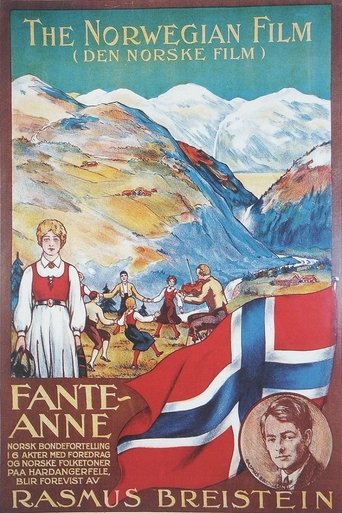

Edvard Drabløs
Actor
- Active
- 1920-1920
Films 1
About Edvard Drabløs
Edvard Drabløs was a Norwegian stage and film actor whose career bridged the silent era and the early decades of sound cinema. He is remembered in film history for appearing in Fante-Anne (1920), one of the landmark early Norwegian feature films, which helped establish a native screen tradition in Norway. Although his surviving filmography is limited in comparison with later screen stars, his work belongs to an important generation of performers who moved between theatre and the emerging national film industry. Drabløs was primarily a stage actor by profession, and like many performers of his era he brought a theatrical precision and clarity of expression to the screen. His screen presence is associated with the restrained, visually legible performance style required by silent cinema, where gesture and facial expression carried much of the dramatic weight. Beyond his film appearance, he was part of the broader cultural life of Norwegian performance during a period when the country was defining its own cinematic identity. Available reference sources give only limited public biographical detail about his private life and film career, but his association with Fante-Anne secures his place in Scandinavian silent-film history.
More about Edvard Drabløs
On screen
Based on the silent-era context and the theatrical background typical of Norwegian performers of his generation, Drabløs's screen work would have relied on clear, economical gesture, expressive facial movement, and disciplined physical framing. Silent cinema demanded visual readability rather than spoken delivery, and actors from the stage often adapted by softening broad theatrical habits while retaining strong emotional clarity. His known film appearance suggests a performance approach suited to realistic national drama rather than flamboyant melodrama.
In film history
Edvard Drabløs belongs to the foundational generation of Norwegian screen performers whose work helped give shape to the country's early cinematic culture. His participation in Fante-Anne places him within one of the first major national feature-film efforts, a period when local productions were becoming symbols of cultural identity and artistic seriousness. Even when an actor's surviving screen credits are few, participation in such landmark films can be culturally significant because those productions influenced how audiences and filmmakers imagined Norwegian stories on screen. Drabløs's career also reflects the broader transition from theatre-centered performance to film acting in the silent era, a shift that affected acting practice across Europe. In that sense, his legacy is tied not only to a single title but to the emergence of Norway's film tradition itself.
Later reputation
Drabløs's lasting legacy is as part of the early Norwegian silent-film generation and as a participant in a historically important production, Fante-Anne. For film historians, actors like him are crucial because they represent the often under-documented personnel who made national cinema possible before star systems became fully established. His career also illustrates how theatre actors contributed to the visual language of silent film, bringing experience, discipline, and legitimacy to a young medium. While he is not a widely publicized international star, his place in film history remains secure through his association with an early landmark of Scandinavian cinema.
Influence
His influence is best understood indirectly, through the contribution he and his contemporaries made to Norwegian acting standards in film. By performing in one of the country's early feature films, he participated in establishing expectations for screen realism, emotional restraint, and culturally grounded storytelling. Later Norwegian actors and filmmakers benefited from the path opened by these early performers, who demonstrated that locally produced films could carry serious dramatic weight. His presence in silent cinema also serves as a reminder of the many stage-trained artists whose work shaped film performance norms before sound.
Off screen
Publicly available information about Edvard Drabløs's personal life is limited in standard film references. He is primarily documented as a Norwegian actor, with most surviving attention focused on his stage and screen work rather than on marriages, family life, or private affairs. Because reliable biographical sources do not consistently publish detailed personal records for him, many aspects of his domestic life remain undocumented in widely accessible film databases.
Education
Not publicly documented in the readily available classic-cinema reference sources consulted for this profile.
Credits
- Appeared in Fante-Anne (1920), an important early Norwegian feature film and one of the key titles of the nation's silent-era cinema
- Represented the generation of theatre-trained performers who helped bring legitimacy and performance discipline to Norway's early screen productions
- Contributed to the development of Scandinavian silent cinema during a formative period for national film production
- Worked during the transition era when Norwegian acting styles were moving from stage-influenced presentation toward screen-specific naturalism
Roles
- Role in Fante-Anne (1920)
Films
- Fante-Anne (1920)
Studios
- Norwegian silent film production
Notes
- He is associated with Fante-Anne (1920), one of the landmark early feature films of Norwegian cinema.
- His surviving public film record is very small, which is common for silent-era Norwegian performers whose careers were often documented incompletely.
- He belongs to the first generation of actors who helped define Norwegian screen acting before the sound era.
- Like many actors of his time, he likely moved between theatre and film, since stage work was the main professional base for many silent-era Scandinavian performers.
- His career is historically important even with limited screen credits because early national cinemas often relied on a small pool of performers.
- He is an example of how many silent-film actors are remembered primarily through a single surviving film title rather than extensive filmographies.
- His work is of special interest to historians of Norwegian cinema rather than to general international classic-film audiences.
- Available mainstream databases provide very limited personal biographical detail, which makes him a more obscure figure than later Scandinavian screen stars.
Questions
Who was Edvard Drabløs?
Edvard Drabløs was a Norwegian actor active in the silent-film era, best known on screen for appearing in Fante-Anne (1920). He is part of the early generation of performers who helped establish Norway's national cinema. Most of his historical significance comes from his participation in this formative period of Scandinavian film.
What films is Edvard Drabløs best known for?
He is best known for Fante-Anne (1920), a landmark early Norwegian feature film. Surviving reference material does not show a large screen filmography, so this title is the key one associated with him in classic-cinema history.
When was Edvard Drabløs born and when did he die?
Reliable public film references available for this profile do not consistently provide his birth and death dates. Because of that, those details are best treated as undocumented here rather than guessed.
What awards did Edvard Drabløs win?
No awards or formal nominations are documented in the readily available classic-cinema sources for Edvard Drabløs. His importance is historical and cultural rather than awards-based.
What was Edvard Drabløs's acting style?
As a silent-era Norwegian performer, his screen work would have depended on expressive but controlled physical acting, clear gestures, and readable facial expression. Actors of his generation often came from the stage, bringing discipline and dramatic clarity while adapting to the more restrained needs of film.
What is Edvard Drabløs's legacy in film history?
His legacy lies in his role as part of Norway's early film pioneer generation and in his contribution to Fante-Anne, a significant early national production. Even with a limited surviving screen record, actors like Drabløs are essential to understanding how Scandinavian cinema developed in the silent era.