Einar Tveito
Actor
- Active
- 1920-1920
Films 1
About Einar Tveito
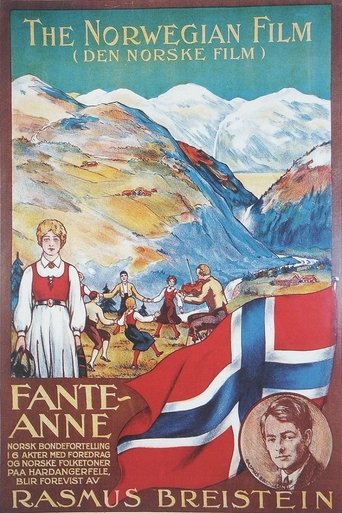
Einar Tveito was a Norwegian silent-era film actor best remembered for his appearance in the landmark 1920 feature Fante-Anne. His screen career appears to have been brief and concentrated in the early years of Norwegian cinema, a period when the national film industry was still developing its own identity and adapting literary and folkloric material for the screen. Because surviving documentation on early Norwegian performers is limited, the details of his life outside of this credited film role are not widely preserved in standard international film references. What is clear is that he belonged to the generation of Scandinavian actors who helped establish the performance style and screen presence of Nordic silent cinema. His association with Fante-Anne places him in one of the most frequently cited early Norwegian films, a production that has historical importance for the country’s film heritage. Beyond this film credit, publicly accessible information about his later career, personal life, and date of death is scarce. As a result, Tveito remains a historically significant but elusive figure from the silent era, primarily known through the survival of his filmography rather than through extensive biographical records.
More about Einar Tveito
In film history
Einar Tveito’s cultural importance lies less in celebrity than in historical placement: he is part of the small group of actors who helped shape Norway’s silent-film heritage at a time when feature filmmaking was still finding its footing. His appearance in Fante-Anne links him to a film that is regularly remembered in discussions of early Scandinavian cinema and national-screen identity. Performers like Tveito contributed to the creation of a distinctly Norwegian cinematic vocabulary, even when individual biographies were not extensively recorded. In this sense, his value to film culture is representative of many early actors whose work survives mainly in credits, archival references, and the historical importance of the films themselves.
Later reputation
Tveito’s legacy is tied to preservation and film history rather than to a long, documented star career. As a credited performer in Fante-Anne, he occupies a place in the genealogy of Norwegian cinema and in the broader history of silent-era European acting. His name continues to appear in databases and reference materials because the film remains an important artifact of early national production. For researchers of early Scandinavian film, even a sparse credit like his helps map the personnel who participated in the industry’s foundation. His enduring legacy is therefore that of a documented contributor to the silent-era screen heritage of Norway.
Influence
There is no surviving evidence that Einar Tveito directly mentored later actors or that he had a widely documented influence on performance styles beyond his participation in early Norwegian cinema. His influence should be understood in an archival and historical sense: by being part of a key early production, he contributed to the body of work that later historians, archivists, and filmmakers could study when reconstructing Norway’s film beginnings. Actors from this era collectively influenced how Scandinavian cinema balanced naturalistic performance with the heightened expressiveness required by silent film. Tveito’s individual influence is therefore indirect but still meaningful within the development of national film culture.
Off screen
No reliable public biographical record has surfaced that documents Einar Tveito’s family background, marriages, children, or later private life. Like many silent-era Scandinavian performers, he is primarily preserved in film-history references through cast listings rather than through detailed contemporary interviews or memoirs. Because of the limited surviving documentation, it is not possible to responsibly reconstruct his personal life in detail without risking speculation.
Credits
- Appeared in Fante-Anne (1920), one of the best-known early Norwegian feature films
- Worked during the formative silent era of Norwegian cinema, when national production was still emerging
- Participated in a historically important film associated with the adaptation of Norwegian cultural material for the screen
Roles
- Role in Fante-Anne (1920)
Films
- Fante-Anne (1920)
Notes
- Einar Tveito is chiefly associated with a single surviving film credit: Fante-Anne (1920).
- He worked during the silent-film era, before Norwegian cinema had a large, stable star system.
- His career is an example of how many early film performers are known today mainly through archival film records rather than extensive biography.
- Fante-Anne is among the early Norwegian films most often mentioned in discussions of the country’s silent cinema history.
- Because documentation is limited, Tveito remains a somewhat mysterious figure to modern film historians.
- His known screen activity falls entirely within 1920, based on the filmography currently available.
Questions
Who was Einar Tveito?
Einar Tveito was a Norwegian silent-era film actor best known for appearing in Fante-Anne (1920). He belongs to the early generation of Scandinavian screen performers whose careers are often only partially documented. His importance lies mainly in his contribution to one of the notable films of early Norwegian cinema.
What films is Einar Tveito best known for?
He is best known for Fante-Anne (1920), the principal film credit associated with his name. Based on currently available filmographic information, that appears to be his only documented screen role.
When was Einar Tveito born and when did he die?
Reliable public sources available for early film reference do not currently provide verified birth or death dates for Einar Tveito. His exact birth and death information appears to be unavailable in commonly accessible databases. This is not unusual for silent-era actors whose records were not fully preserved.
What awards did Einar Tveito win?
No awards or formal honors are currently documented for Einar Tveito. Silent-era Norwegian film performers from this period were often not recognized through the modern awards systems familiar today. His significance is historical rather than award-based.
What was Einar Tveito's acting style?
There is no detailed surviving critical description of his individual acting technique. As a performer in silent Norwegian cinema, his work would have relied on the expressive, visually legible style common to the era. Any assessment of his style must remain general because no extensive review or commentary has survived.
What is Einar Tveito's legacy in film history?
His legacy is that of an early Norwegian screen actor connected to Fante-Anne, a film that remains important in the history of Scandinavian silent cinema. He represents the many foundational performers whose names survive in film credits even when personal details are scarce. That archival presence still matters to historians studying the development of Norway’s national cinema.