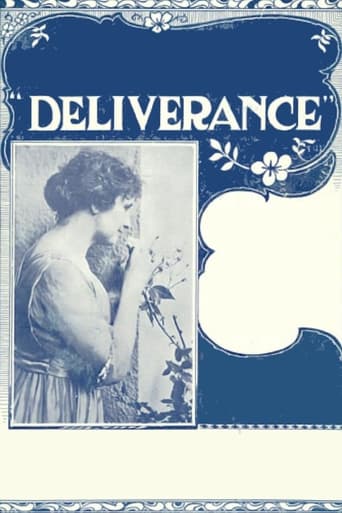
Anne Sullivan (Macy)
Actor
Born: April 14, 1866 in Feeding Hills, Massachusetts, United States Died: October 20, 1936 Active: 1919 (film appearance only) Birth Name: Johanna Mansfield Sullivan
Films
1 film
About Anne Sullivan (Macy)
Anne Sullivan Macy, born Johanna Mansfield Sullivan, was primarily known as Helen Keller's devoted teacher and companion, though she made a brief foray into cinema with the 1919 silent film 'Deliverance.' Born to impoverished Irish immigrant parents in Massachusetts, Sullivan lost her sight partially as a child due to trachoma and spent several years in poorhouses before undergoing surgery that partially restored her vision. She graduated as valedictorian from the Perkins School for the Blind in 1886, which led to her life-changing assignment as Helen Keller's teacher in 1887. Sullivan developed the revolutionary technique of spelling words into Keller's hand to communicate, leading to Keller's breakthrough at the water pump. She married Harvard editor John Albert Macy in 1905, though the marriage was troubled and they separated in 1914. Her appearance in 'Deliverance' (1919), a biographical film about Helen Keller's life, marked her only known venture into acting. Sullivan continued her work with Keller until her death in 1936, having transformed the lives of disabled people worldwide through her innovative teaching methods and advocacy.
The Craft
On Screen
As a non-professional actor appearing in a single film, Sullivan's performance would have been characterized by natural authenticity rather than theatrical technique, bringing genuine emotion to her portrayal of herself in 'Deliverance'
Milestones
- Graduated valedictorian from Perkins School for the Blind (1886)
- Began teaching Helen Keller (1887)
- Achieved Keller's breakthrough communication at water pump
- Married John Albert Macy (1905)
- Appeared in film 'Deliverance' (1919)
- Received honorary degrees from multiple universities
- Continued working with Keller for nearly 50 years
Best Known For
Iconic Roles
Must-See Films
Accolades
Won
- Honorary Master of Arts from Harvard University (1931)
- Honorary Doctor of Laws from Temple University (1932)
- Gold Medal from the National Institute of Social Sciences (1932)
Special Recognition
- Inducted into National Women's Hall of Fame (1975)
- Featured on Alabama state quarter (2003) alongside Helen Keller
- Perkins School for the Blind established Anne Sullivan Award
Working Relationships
Worked Often With
Studios
Why They Matter
Impact on Culture
Anne Sullivan Macy revolutionized education for the deaf-blind through her innovative teaching methods, particularly the manual alphabet technique that enabled Helen Keller's communication. Her work transformed societal perceptions of disabled individuals' potential for learning and contribution. The 1919 film 'Deliverance' helped bring their story to a wider audience during the silent film era, making their journey accessible to mass audiences. Sullivan's methods became foundational in special education, and her dedication inspired generations of educators and disability advocates worldwide.
Lasting Legacy
Anne Sullivan Macy's legacy extends far beyond her brief film appearance, encompassing her revolutionary contributions to special education and disability rights. Her teaching methods remain influential in deaf-blind education, and her story of perseverance continues to inspire educators and advocates. The Sullivan-Keller relationship became an enduring symbol of dedication and the transformative power of education. Her work helped establish the foundation for modern special education practices and increased public awareness of the capabilities of disabled individuals.
Who They Inspired
Sullivan's innovative techniques influenced the development of educational methods for multiply disabled individuals worldwide. Her success with Helen Keller demonstrated the potential for education regardless of physical limitations, influencing educational policy and practice. Her story has inspired numerous books, plays, and films, including 'The Miracle Worker,' perpetuating her influence through cultural representation. Her approach emphasized individualized education and the importance of human connection in learning, principles that continue to guide educational philosophy.
Off Screen
Anne Sullivan's early life was marked by hardship, losing her mother to tuberculosis and her brother to tuberculosis shortly after, leaving her in an almshouse. After partially regaining her sight through multiple surgeries, she dedicated her life to education. Her marriage to John Macy in 1905 was complicated by her devotion to Helen Keller and Macy's declining health, leading to separation but not divorce. Despite personal challenges, Sullivan maintained an unwavering commitment to Keller's education and advocacy throughout her life.
Education
Perkins School for the Blind (graduated 1886, valedictorian)
Family
- John Albert Macy (1905-1914, separated)
Did You Know?
- Her original name was Johanna Mansfield Sullivan, but she was called 'Anne' or 'Annie'
- She was nearly blind as a child due to trachoma and underwent multiple eye surgeries
- She lived in poorhouses as a child after her mother's death
- The famous water pump breakthrough occurred on April 5, 1887
- She learned manual alphabet to communicate with Helen Keller
- Her marriage to John Macy was never officially dissolved
- She and Helen Keller traveled to over 39 countries giving lectures
- She was the first woman to receive an honorary degree from Harvard
- She appeared in the film 'Deliverance' portraying herself
- She died just months after Helen Keller graduated from Radcliffe College
In Their Own Words
I have come to the frightening conclusion that I am the decisive element. It is my personal approach that creates the climate.
People seldom see the halting and painful steps by which the most insignificant success is achieved.
The best and most beautiful things in the world cannot be seen or even touched - they must be felt with the heart.
Frequently Asked Questions
Who was Anne Sullivan Macy?
Anne Sullivan Macy was Helen Keller's legendary teacher and companion who developed revolutionary methods for teaching the deaf-blind. Born in 1866, she overcame her own visual impairment to become one of history's most influential educators, though she made only one film appearance in 'Deliverance' (1919).
What films is Anne Sullivan Macy best known for?
Anne Sullivan Macy appeared in only one film, the 1919 silent biographical drama 'Deliverance,' which portrayed the life of Helen Keller. In this film, she played herself, bringing authentic representation to the story of her groundbreaking work with Keller.
When was Anne Sullivan Macy born and when did she die?
Anne Sullivan Macy was born on April 14, 1866, in Feeding Hills, Massachusetts, and died on October 20, 1936, in New York City at the age of 70. Her death came just months after her most famous student, Helen Keller, graduated from Radcliffe College.
What awards did Anne Sullivan Macy win?
While primarily recognized for her educational contributions, Sullivan received several honorary degrees including a Master of Arts from Harvard (1931) and Doctor of Laws from Temple (1932). She also received the Gold Medal from the National Institute of Social Sciences in 1932 and was posthumously inducted into the National Women's Hall of Fame in 1975.
What was Anne Sullivan Macy's teaching style?
Sullivan's teaching style was revolutionary for its time, emphasizing patience, persistence, and individualized instruction. She developed the manual alphabet technique, spelling words into Keller's hand to create tactile understanding of language. Her approach combined rigorous discipline with deep emotional connection, believing that education required touching both the mind and heart of her student.