Films
1 film
About Dorothy Dehn
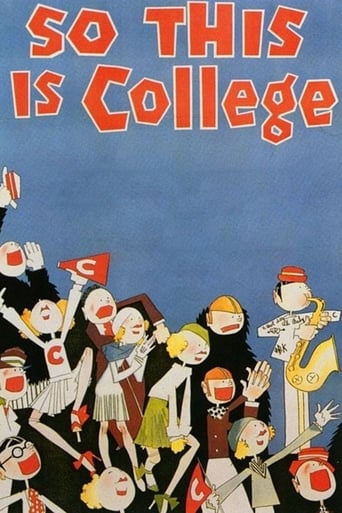
This archive lists one role for Dorothy Dehn: So This Is College (1929). Her brief film career is documented through her appearance in the 1929 MGM comedy 'So This Is College,' which was one of the early sound productions that helped define the new era of cinema. Like many actresses of her generation, Dehn entered the film industry during a time of tremendous technological and artistic change, when studios were scrambling to adapt to the demands of sound production. Her role in 'So This Is College' placed her alongside notable actors of the period, including Elliott Nugent and Robert Montgomery, under the direction of Sam Wood. Unfortunately, like many supporting players of the era, her film career appears to have been brief, possibly due to the intense competition and the industry's evolution during this transformative period. The limited documentation of her career suggests she may have been among the countless talented performers who contributed to early Hollywood but whose stories remain largely untold.
The Craft
Milestones
- Appeared in MGM's early talkie 'So This Is College' (1929)
- Part of Hollywood's transition from silent to sound films
Best Known For
Iconic Roles
Must-See Films
Working Relationships
Worked Often With
Studios
Why They Matter
Impact on Culture
Dorothy Dehn's contribution to cinema, while brief, is representative of the thousands of actors who participated in Hollywood's crucial transition from silent films to talkies. Her appearance in 'So This Is College' places her within the historical context of early sound cinema, a period that fundamentally changed the film industry and acting techniques. While not a major star, she was part of the ensemble that helped audiences adapt to this new form of entertainment, contributing to the early Hollywood productions.
Lasting Legacy
Dorothy Dehn's legacy is preserved through her participation in early sound cinema, specifically through her role in 'So This Is College' (1929). While her career may have been brief, she represents the generation of actors who navigated the challenging transition from silent films to talkies. Her story is emblematic of many performers from this era who contributed to the development of cinema but whose individual achievements were overshadowed by the rapid evolution of the industry and the emergence of major stars.
Who They Inspired
As a supporting actress from the early sound era, Dorothy Dehn's direct influence on subsequent generations of performers is difficult to trace, which was common for actors in minor roles during this period. However, she and her contemporaries helped establish the conventions of sound acting that would influence cinema for decades to come, participating in the foundational work of transitioning stage and silent film techniques to the demands of microphone-based performances.
Off Screen
Very little is documented about Dorothy Dehn's personal life, which was typical for many supporting actors of the early sound era who did not achieve major stardom. Like many performers of her time, her story represents the countless talented individuals who contributed to Hollywood's golden age but whose personal details were not extensively recorded in historical archives.
Did You Know?
- Appeared in 'So This Is College' during the pivotal year of 1929, when Hollywood was fully embracing sound technology
- Worked for MGM, one of the major studios that dominated Hollywood during the Golden Age
- Her film was directed by Sam Wood, who would go on to direct classics like 'A Night at the Opera' and 'The Pride of the Yankees'
- Participated in the early talkie era, a time when many silent film actors struggled to adapt to sound
- Her active years covered only one year, which was not uncommon for supporting actors during this transitional period
- The film she appeared in was a comedy, one of the genres that successfully transitioned to sound early on
- Like many actresses of her era, she was part of the studio system that contracted numerous performers for various roles
Frequently Asked Questions
Who was Dorothy Dehn?
American actress active during the early sound era of Hollywood, best known for her appearance in the 1929 MGM comedy 'So This Is College.' She was one of many performers who worked during the crucial transition period from silent films to talkies in the late 1920s.
What films is Dorothy Dehn best known for?
Titles linked here include So This Is College (1929).
When was Dorothy Dehn born and when did she die?
Unfortunately, specific birth and death dates for Dorothy Dehn are not readily available in historical records, which was common for many supporting actors from the early sound era who did not achieve lasting fame.
What awards did Dorothy Dehn win?
There are no documented awards or nominations for Dorothy Dehn, which was typical for many supporting actors during the early sound era who had brief careers in minor roles.
What was Dorothy Dehn's acting style?
Specific details about Dorothy Dehn's acting style are not well-documented, but as an actress during the transition to sound films, she would have been part of the generation that adapted silent film techniques to the new demands of spoken dialogue and microphone performance.
Why was Dorothy Dehn's career so brief?
Dorothy Dehn's brief career, lasting only from 1929 to 1929, was not uncommon during the early sound era when many actors struggled to adapt to new technical demands or faced intense competition as the industry rapidly evolved. Many performers from this period had only fleeting appearances in films.