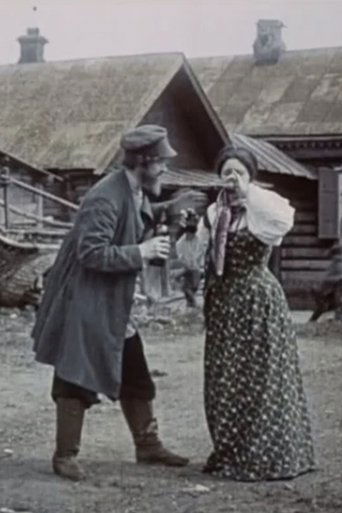
G. Ardatov
Actor
- Active
- 1909-1909
Films 1
About G. Ardatov
G. Ardatov is a very obscure early Russian/Soviet screen actor credited in the 1909 film The Dashing Merchant, a title associated with the formative years of pre-Revolutionary Russian cinema. Surviving reference material on Ardatov is extremely limited, and no reliable biographical record has been widely preserved in standard film histories or major archival reference sources. What can be stated with confidence is that he belonged to the small pool of performers active in the Russian film industry during the silent era's earliest years, when screen acting was still closely linked to stage performance and filmed theater. His credited appearance in a 1909 production places him among the pioneers of Russian motion pictures, working at a time when narrative filmmaking, acting conventions, and production systems were all still developing. Because the available record is sparse, his broader career trajectory, personal life, and later activities remain unknown. Nevertheless, his presence in an early film credit gives him a small but real place in the history of silent cinema and the earliest Russian screen acting.
More about G. Ardatov
On screen
No detailed critical description of G. Ardatov's individual acting style survives in readily available sources. Given the period and medium, his performance would likely have reflected the early silent-era norm of expressive, highly legible physical acting, with gestures and posture carrying much of the narrative meaning. In 1909 Russian productions, actors often adapted stage habits for the camera, so his work was likely shaped by theatrical clarity rather than the more restrained style that would later develop in silent cinema.
In film history
G. Ardatov's cultural impact is best understood as archival and historical rather than celebrity-driven. His credited participation in a 1909 film places him among the earliest known performers in Russian cinema, helping document the emergence of an indigenous screen culture before the major transformations of the 1910s and the Soviet period. Even when individual biographical details are lost, performers like Ardatov remain important because they represent the first generation of actors to shape cinematic performance in Russia. Their work helped establish acting norms, audience expectations, and the transfer of theatrical talent into the new medium of film.
Later reputation
Ardatov's lasting legacy is his presence in the historical record of early Russian silent film. Although no extensive body of surviving work or biographical material is currently associated with him, his name endures as evidence of the people who participated in cinema's first decade in Russia. For film historians, such credits are valuable because they help reconstruct the personnel, production networks, and performance practices of a formative era. His legacy is therefore tied to cinema history scholarship, archival reconstruction, and the broader effort to recover forgotten names from the silent era.
Influence
There is no documented evidence that G. Ardatov directly influenced later actors or directors in a traceable way. However, as part of the first generation of screen performers in Russia, he would have contributed to the early modeling of film acting conventions that later performers inherited and refined. His significance is indirect but meaningful: early actors collectively influenced the evolution of screen performance by showing how theatrical technique could be translated to the camera.
Off screen
No reliable public information has been preserved about G. Ardatov's personal life, family background, marriages, or later years. Standard film references and accessible historical summaries do not provide confirmed biographical details such as education, residence, or post-film career. As a result, his private life remains undocumented in the current public record.
Credits
- Appeared in The Dashing Merchant (1909), one of the few surviving reference points for his career
- Worked in the earliest phase of Russian narrative cinema, when film acting was transitioning from stage-style performance to screen-specific technique
- Is documented as part of the pre-Revolutionary silent film era, making him an early cinematic figure in Russian film history
Films
- The Dashing Merchant (1909)
Notes
- G. Ardatov is associated with one of the earliest periods of Russian cinema, when many performers left only minimal traces in surviving records.
- His known screen credit comes from 1909, placing him at the very beginning of narrative filmmaking in Russia.
- No widely verified birth or death information is currently available for him in standard public film references.
- His surname suggests a Russian connection, but his full identity cannot be confidently reconstructed from accessible sources alone.
- Because early film documentation was often incomplete, many performers like Ardatov are known only through title credits and archival listings.
- The Dashing Merchant (1909) is his only confirmed film credit in the information currently available.
- His career is a reminder of how many silent-era performers remain partially lost to history despite contributing to cinema's development.
Questions
Who was G. Ardatov?
G. Ardatov was an early Russian silent-film actor known from a 1909 credit in The Dashing Merchant. Very little biographical information has survived, but he is part of the first generation of screen performers in Russian cinema.
What films is G. Ardatov best known for?
He is best known, and in the surviving record essentially only known, for The Dashing Merchant (1909). No other confirmed film credits are currently available in the accessible public record.
When was G. Ardatov born and when did he die?
His birth and death dates are not currently documented in reliable accessible sources. Because of the scarcity of surviving records, both his exact birth place and death details remain unknown.
What awards did G. Ardatov win?
No awards or formal honors are currently documented for G. Ardatov. This is common for many performers from the earliest silent-film era, especially those whose careers are only sparsely recorded.
What was G. Ardatov's acting style?
No direct critical description of his acting style survives, but as a 1909 silent-film performer he likely worked in a highly expressive, gesture-based style typical of the era. Performers in early Russian cinema often drew on stage tradition while adapting to the visual language of film.
What is G. Ardatov's legacy in film history?
His legacy lies in his place among the pioneers of Russian silent cinema. Even though the archival record is thin, his credit helps historians reconstruct the people who shaped the earliest years of screen acting in Russia.