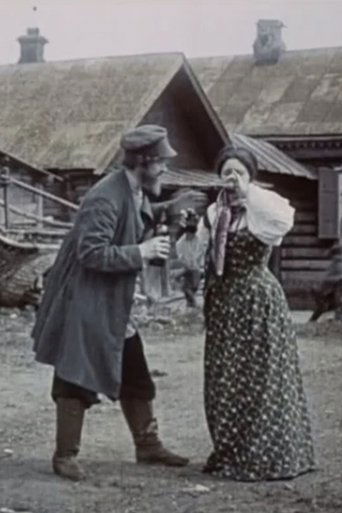
Yelizaveta Goreva
Actor
- Active
- 1909-1909
Films 1
About Yelizaveta Goreva
Yelizaveta Goreva is a little-documented early Russian screen performer associated with the silent era, best known today for appearing in the 1909 film The Dashing Merchant. Surviving reference sources on early Russian cinema preserve her primarily as a credited actor rather than as a broadly documented public figure, which is common for performers from the first years of film production in the Russian Empire. Her filmography, as currently available in standard database records, appears extremely limited, suggesting either a brief screen career or a career in which many appearances were not preserved in surviving documentation. Because of the scarcity of reliable biographical records, details such as her birth, death, family background, and training are not securely established in readily accessible film-history sources. Even so, her name remains important as part of the early generation of Russian screen actors who helped shape cinema before the development of the country’s major studio system. Her presence in The Dashing Merchant places her among the pioneers of pre-Revolutionary Russian film performance, a period when acting on screen was adapting from theatrical styles to the new grammar of cinema. As with many performers of this era, her historical significance lies as much in her role in the formative phase of national cinema as in the surviving evidence of individual stardom.
More about Yelizaveta Goreva
On screen
No detailed contemporary description of Yelizaveta Goreva's acting style survives in readily accessible sources. Given the 1909 production date of her known film, her performance would have belonged to the conventions of very early silent cinema, likely emphasizing clear gesture, expressive facial movement, and a stage-influenced mode of presentation. Performers of this period in Russian film often bridged theatrical traditions and the emerging requirements of screen realism, and Goreva's work would have been shaped by that transitional environment. Without surviving reviews or extensive film documentation, any more precise stylistic claim would be speculative.
In film history
Yelizaveta Goreva's cultural impact is best understood as part of the early infrastructure of Russian silent cinema rather than as the legacy of a widely celebrated star. Her recorded participation in a 1909 film situates her among the pioneering performers who helped establish screen acting as a recognized artistic occupation in the Russian Empire. These early actors contributed to the language, rhythm, and credibility of national film production at a time when cinema was still closely connected to theater and novelty entertainment. Even when individual careers are poorly documented, their names remain culturally significant because they testify to the existence of a functioning early film culture and to the presence of women in that foundational screen world. For historians, Goreva represents the many early performers whose work helped create a cinematic tradition later overshadowed by better-documented stars and directors.
Later reputation
Her lasting legacy is primarily archival and historical: she is remembered as one of the early credited actors appearing in a pre-Revolutionary Russian film. The survival of her name in film records helps scholars reconstruct the cast networks and performance culture of Russian cinema's first decade. In that sense, Goreva's significance lies not in a large body of surviving work, but in her place within the fragile documentary record of silent-era production. She stands as an example of how many early film artists contributed to the medium's beginnings yet remain only partially visible to modern audiences and researchers.
Influence
There is no documented record of Yelizaveta Goreva directly influencing later actors or directors in a traceable, named way. Her broader influence is indirect: by participating in one of the earliest phases of Russian screen acting, she was part of the performance culture that later artists inherited and refined. Early performers like Goreva helped normalize acting for the camera in a national cinema that would later become internationally significant. Her historical value therefore lies in participation in an influential formative era rather than in individually documented mentorship or celebrity impact.
Off screen
Reliable information about Yelizaveta Goreva's personal life, including family background, marriages, and private activities, is not available in standard surviving film-history references. Early Russian film performers were often only lightly documented in production records and newspaper notices, and Goreva appears to be one of those figures whose public biography did not survive in detail. As a result, no verified account of her relationships, domestic life, or later years can be given with confidence. Her historical presence is therefore preserved chiefly through cast listings and early cinema documentation rather than through personal memoir or press coverage.
Education
No verified information on her education or acting training is readily available in surviving standard references.
Credits
- Appeared in the early Russian silent film The Dashing Merchant (1909).
- Represents one of the documented performers from the formative years of pre-Revolutionary Russian cinema.
- Associated with the earliest surviving records of screen acting in the Russian Empire.
- Her credited appearance places her within the first generation of film actors working before the establishment of the major Soviet studio era.
Roles
- Role in The Dashing Merchant (1909)
Films
- The Dashing Merchant (1909)
Collaborators
- No reliably documented frequent collaborators are available from surviving sources
Studios
- No verified studio affiliations are readily documented in accessible sources
Notes
- Yelizaveta Goreva is chiefly identified today through her credit in The Dashing Merchant (1909).
- She is part of the very first generation of Russian screen actors documented in surviving film records.
- Her known career falls entirely within the silent era's earliest years.
- Available sources do not preserve a detailed personal biography, which is common for many early cinema performers.
- She is an example of how women were present in Russian film from its beginnings, even when later histories focus more heavily on directors and major stars.
- Her surviving film record is so brief that she is often encountered mainly in cast lists and archival databases.
- Because her documentation is sparse, she is more a historical figure than a widely known star to modern audiences.
Questions
Who was Yelizaveta Goreva?
Yelizaveta Goreva was an early Russian silent-film actor known today primarily for appearing in The Dashing Merchant (1909). She belongs to the first generation of screen performers in the Russian Empire, although very little detailed biographical information about her has survived.
What films is Yelizaveta Goreva best known for?
She is best known for The Dashing Merchant (1909), which is the main film associated with her in available records. No broader surviving filmography is securely documented in standard accessible sources.
When was Yelizaveta Goreva born and when did she die?
Her birth date and death date are not currently verifiable from readily available film-history sources. Likewise, her birthplace and later life details have not been securely preserved in the standard references accessible for early Russian cinema.
What awards did Yelizaveta Goreva win?
No awards or formal honors are documented for Yelizaveta Goreva in surviving accessible sources. This is not unusual for performers from the earliest silent era, when formal award systems were not yet established in the way they are today.
What was Yelizaveta Goreva's acting style?
No direct contemporary description of her acting style survives in commonly available references. Based on the period in which she worked, her performance would likely have reflected early silent-film conventions, with expressive gestures and a stage-influenced manner adapted to the camera.
What is Yelizaveta Goreva's legacy in film history?
Her legacy is mainly historical and archival: she is part of the documented beginnings of Russian cinema. Even with scarce personal information, her credited presence in a 1909 film helps researchers understand the performers who shaped early screen culture.