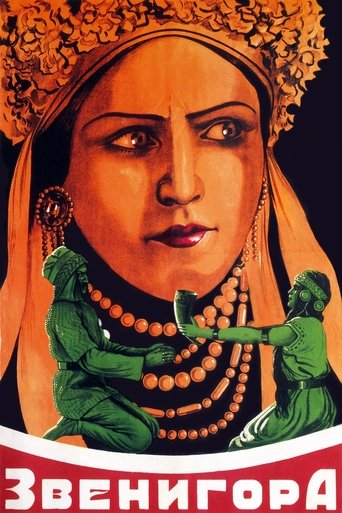
Films
1 film
About Maria Parshina
Soviet actress who emerged during the silent film era of the late 1920s, though her career appears to have been remarkably brief and concentrated in a single year. She is primarily known for her role in Alexander Dovzhenko's film 'Zvenygora' (1928), which is considered a masterpiece of Soviet avant-garde cinema. Parshina's performance in this film showcased her ability to convey emotion and character through the physical acting techniques required in silent film, a period when Soviet cinema was experiencing tremendous artistic innovation. Her involvement in Dovzhenko's work placed her within creative movements in early Soviet film history, though detailed records of her broader career remain scarce. The limited documentation of her work suggests she may have been part of the experimental theater and film scene that flourished in Ukraine during this period. Her appearance in 'Zvenygora' represents her most significant and well-documented contribution to cinema, making her a footnote in the history of Soviet film despite the brevity of her career.
The Craft
On Screen
Physical and expressive acting typical of silent film era, with emphasis on gesture and facial expression to convey emotion and narrative without dialogue
Milestones
- Appeared in Alexander Dovzhenko's 'Zvenygora' (1928)
- Participated in Soviet avant-garde cinema movement
- Contributed to Ukrainian silent film heritage
Best Known For
Iconic Roles
Must-See Films
Working Relationships
Worked Often With
Studios
Why They Matter
Impact on Culture
Maria Parshina's contribution to cinema, while limited in scope, is significant due to her participation in. 'Zvenygora' is widely regarded as a masterpiece of avant-garde cinema and represents the pinnacle of Ukrainian silent film artistry. Her involvement in this film places her within the context of the revolutionary artistic movements that characterized early Soviet cinema, where filmmakers were experimenting with new forms of visual storytelling and cinematic language. Though her individual impact may be difficult to trace due to the brevity of her career, she contributed to the Soviet film history during its most innovative period.
Lasting Legacy
Maria Parshina's legacy is primarily preserved through her appearance in 'Zvenygora,' a film that continues to be studied and celebrated by film scholars and enthusiasts of Soviet cinema. While she may not be widely recognized individually, her work contributes to the enduring cultural significance of early Ukrainian and Soviet film. Her brief career serves as a reminder of the many actors who participated in the golden age of silent cinema but whose stories remain largely undocumented, representing the collective effort that went into creating some of cinema's most important early works.
Who They Inspired
Due to the limited documentation of her career and brief period of activity, specific information about Maria Parshina's influence on other actors or filmmakers is not readily available. However, her participation in Dovzhenko's influential work places her within the broader context of artists who helped shape the distinctive aesthetic of Soviet silent cinema, which would influence filmmakers worldwide in subsequent decades.
Off Screen
Very little documented information exists about Maria Parshina's personal life, which is not uncommon for many actors from the early Soviet film period, especially those with brief careers. Her limited filmography suggests she may have been primarily involved in theater or other artistic pursuits outside of cinema.
Did You Know?
- Appeared in only one known film, 'Zvenygora' (1928)
- Worked with renowned Soviet director Alexander Dovzhenko
- Participated during the height of Soviet avant-garde cinema
- Her entire documented film career spans just one year
- Zvenygora is considered part of Dovzhenko's 'Ukrainian Trilogy'
- The film she appeared in is preserved as a classic of world cinema
- Her career coincided with the transition from silent to sound film in the Soviet Union
Frequently Asked Questions
Who was Maria Parshina?
Soviet actress active during the silent film era, best known for her role in Alexander Dovzhenko's acclaimed 1928 film 'Zvenygora.' Her documented career was extremely brief, spanning only the year 1928, but her participation in this important avant-garde film places her within the history of early Soviet cinema.
What films is Maria Parshina best known for?
Titles linked here include Zvenygora (1928).
When was Maria Parshina born and when did she die?
Specific birth and death dates for Maria Parshina are not documented in available historical records, which is not uncommon for many actors from the early Soviet film period, particularly those with brief careers or limited documentation.
What awards did Maria Parshina win?
There are no documented awards or nominations for Maria Parshina, which reflects both the brief nature of her career and the different award systems that existed during the early Soviet film period compared to contemporary cinema recognition.
What was Maria Parshina's acting style?
As a silent film actress, Maria Parshina would have employed physical and expressive acting techniques typical of the era, using gesture, facial expression, and body language to convey emotion and character without dialogue, as demonstrated in her work in 'Zvenygora'.