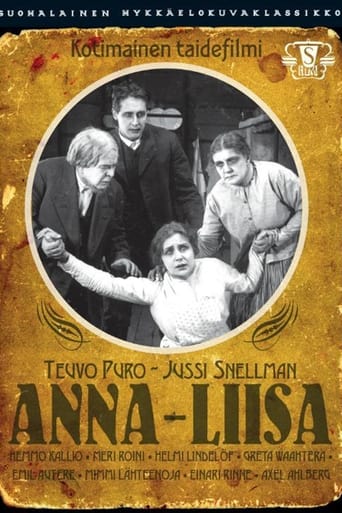
Meri Roini
Actor
- Active
- 1922-1922
Films 1
About Meri Roini
Meri Roini is a little-documented Finnish silent-era screen performer who is known primarily for appearing in the 1922 film Anna-Liisa. Available surviving film reference sources identify her as an actor active only in that single credited production, and very little else has been preserved in widely accessible historical records about her life or later career. Because her filmography is so sparse, she is best understood as part of the early generation of Scandinavian screen performers whose work was recorded during the silent period but not extensively documented in later reference works. Her known screen presence places her within the formative years of Finnish cinema, when filmmakers were adapting major national literary works and stage successes for the screen. The surviving record does not securely preserve her birth details, background, or subsequent professional activity, which is not unusual for performers from early regional silent cinema. As a result, her historical importance lies less in an individually extensive career and more in her participation in one of the era’s notable Finnish literary adaptations.
More about Meri Roini
On screen
No detailed critical descriptions of Meri Roini's acting style have survived in widely accessible sources. As a silent-era performer, her performance would have depended on facial expression, gesture, and physical clarity rather than spoken dialogue. Any assessment beyond that would be speculative, since contemporary reviews and production notes are not readily available in standard reference sources.
In film history
Meri Roini's cultural impact is best understood in the context of early Finnish silent cinema rather than through a large body of surviving work. Her credited presence in Anna-Liisa places her within a period when Finnish filmmakers were building a national screen culture through adaptations of respected literary and theatrical material. Even when individual performers are not extensively documented, their participation helped shape the visual language and professional practices of a developing film industry. For modern scholars and database users, her name is a useful marker of the many artists whose contributions supported the silent-era transition of Finnish stories from page and stage to screen.
Later reputation
Her legacy is primarily archival and historical: she represents the many early cinema actors whose names survive in cast lists even when their broader biographies have been lost to time. Because she is associated with Anna-Liisa, her name remains part of the record of Finnish silent film heritage and of the adaptation history surrounding one of the country's important literary works. In film history terms, such performers are significant because they remind us that early cinema was built not only by celebrated stars but also by numerous briefly documented contributors. Her presence in surviving film records ensures that she remains part of the documented lineage of Finnish screen acting.
Influence
There is no preserved evidence that Meri Roini directly influenced later actors or filmmakers in a documented, traceable way. Her influence is therefore indirect: she contributed to the silent-era performance culture that later generations of Finnish screen artists inherited and refined. In historical terms, every credited performer in these early films helped establish the standards and possibilities of national cinema, even when their names did not become widely famous.
Off screen
No reliable biographical record detailing Meri Roini's personal life, family background, marriages, or later years is readily available in standard film references. Her surviving public footprint is minimal, and current mainstream databases do not provide verified information on her private life. This lack of data is common for many early film performers whose careers were brief or whose records were not preserved in depth.
Credits
- Credited appearance in the Finnish silent film Anna-Liisa (1922)
- Participation in one of the early cinematic adaptations of a major Finnish literary work
- Representation of the largely under-documented performers of Finland's silent film era
Roles
- Cast member in Anna-Liisa (1922)
Films
- Anna-Liisa (1922)
Notes
- Meri Roini is credited in connection with only one known film in standard reference listings.
- Her known film, Anna-Liisa (1922), is a silent-era Finnish production.
- She is part of the group of early film performers whose biographies were not extensively preserved.
- Her surviving record highlights how many silent-era actors are known chiefly from cast listings rather than full career histories.
- Because her filmography is so limited in surviving sources, she is often of interest mainly to researchers of early Finnish cinema.
- Her name appears in the historical record despite the absence of widely published personal details.
- She exemplifies how regional film histories often preserve roles more clearly than the lives of the performers who played them.
Questions
Who was Meri Roini?
Meri Roini was a Finnish silent-era actor best known for appearing in Anna-Liisa (1922). She is a little-documented figure whose surviving record is limited, but she remains part of the history of early Finnish cinema.
What films is Meri Roini best known for?
She is best known for Anna-Liisa (1922), which is the only widely documented film credit associated with her in standard reference sources. No broader filmography is securely preserved in commonly accessible records.
When was Meri Roini born and when did she die?
Her birth and death dates are not readily available in standard film reference sources. The surviving public record does not provide verified biographical dates for her.
What awards did Meri Roini win?
No awards or nominations are documented for Meri Roini in the surviving record. This is not unusual for early silent-era performers, especially those with very limited known filmographies.
What was Meri Roini's acting style?
No contemporary critical description of her acting style is readily available. As a silent-film actor, her work would have relied on expressive gesture, facial communication, and visual clarity rather than dialogue.
What is Meri Roini's legacy in film history?
Her legacy is mainly historical and archival, as one of the documented performers in early Finnish silent cinema. She is remembered as part of the cast history of Anna-Liisa and as an example of the many early film artists whose contributions survive more clearly in credits than in biography.