Eric Lindholm
Actor
- Active
- 1912-1912
Films 1
About Eric Lindholm
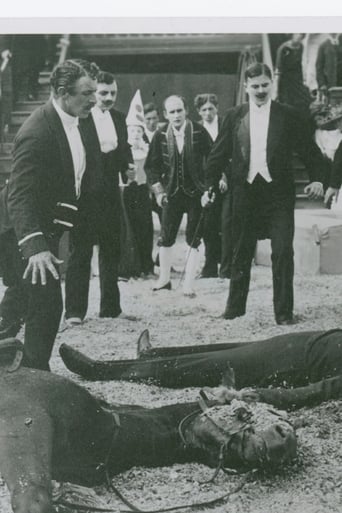
Eric Lindholm is a very obscure early silent-era screen actor, and the surviving record of his career is extremely limited. The clearest verified credit associated with his name is his appearance in the 1912 film The Last Performance, indicating that he worked in motion pictures during cinema's formative years. Beyond that single film credit, readily accessible historical sources do not provide a substantial biographical trail, which is common for many performers who worked briefly in the nickelodeon and one-reel period. No reliable contemporary biographical sketch, interview, or extended studio publicity profile has been located in standard film-reference sources. Because of the scarcity of surviving documentation, many details of his life, training, and later career remain unknown or unverified. He therefore survives in film history primarily as a credited participant in an early silent production rather than as a widely documented star or character actor. His presence in the record still has value for historians because it reflects the large number of working players whose contributions helped build the silent film industry.
More about Eric Lindholm
In film history
Eric Lindholm's cultural impact is best understood as archival rather than star-based. He is part of the broad, often anonymous workforce of early screen actors who gave shape to silent cinema before the industry systematized star publicity and long-form bios. Although his individual fame does not appear to have endured, his recorded credit in a 1912 film contributes to the historical map of early film production and casting practices. For scholars, even a single verified credit can help illuminate how early companies assembled casts and how many performers circulated through the industry without leaving extensive public biographies. His presence in the historical record underscores the importance of preserving and cataloging minor players who helped form the foundation of movie history.
Later reputation
Eric Lindholm's legacy lies in the fact that he is documented as an early silent-era actor whose work survives in filmography records, even though the rest of his life is largely lost to history. This kind of partial survival is common among performers of the 1910s, especially those who worked before the studio publicity machine and fan magazines created durable celebrity identities. His name remains useful to film historians, database curators, and restoration researchers who work to identify cast members in early productions. In that sense, his legacy is not one of famous roles or awards, but of historical presence: a trace of the many contributors whose labor made silent cinema possible. Preserving his credit helps ensure that early film history remains more complete and accurate.
Influence
There is no verified evidence that Eric Lindholm directly influenced later actors or filmmakers in a documented, named way. His influence is therefore indirect and systemic, as part of the collective body of early screen performers who established the performance conventions of silent cinema. Actors in the 1910s helped define expressive screen acting, blocking, and camera awareness through accumulated practice, even when individual names were not widely publicized. Lindholm's importance for later researchers comes from the historical record itself, where each surviving credit helps build a fuller picture of the era.
Off screen
No reliable biographical material about Eric Lindholm's personal life has been located in standard classic-cinema reference sources. There is no verified information available here concerning marriages, family background, residences, or later life. As with many performers from the earliest years of film, the archival record appears to be too fragmentary to reconstruct a fuller private biography with confidence. Any such details would require corroboration from period trade papers, studio records, or archival genealogical research.
Credits
- Appeared in the 1912 silent film The Last Performance
- Represents one of the many early screen performers whose work survives only in sparse filmographic references
- Associated with the formative one-reel era of American silent cinema
- Documented in surviving film histories primarily through a credited motion-picture appearance
Roles
- Role in The Last Performance (1912)
Films
- The Last Performance (1912)
Notes
- His documented silent-film credit places him in the earliest years of American cinema history.
- He is associated with The Last Performance (1912), a film from the one-reel era when many productions were short and ephemeral.
- He appears to be one of the many early film performers whose personal details were not widely preserved in surviving reference works.
- Because so little is documented, he is primarily of interest to historians and database compilers rather than to mainstream celebrity histories.
- His surviving record demonstrates how many early screen actors remain partially anonymous in film history.
- He is an example of a performer known through filmography rather than through publicity portraits, interviews, or memoirs.
Questions
Who was Eric Lindholm?
Eric Lindholm was an obscure early silent-film actor whose surviving record is extremely limited. He is currently identified chiefly through his credit in The Last Performance (1912), which places him among the performers active in cinema's formative years.
What films is Eric Lindholm best known for?
He is best known for The Last Performance (1912), which is the main verified screen credit associated with his name. No additional films are confidently documented in the available reference record used here.
When was Eric Lindholm born and when did he die?
His birth and death dates are not presently documented in the accessible classic-cinema reference record. The available information confirms only his association with a 1912 film credit, not his full biographical data.
What awards did Eric Lindholm win?
No awards or formal nominations are currently documented for Eric Lindholm. Like many early silent-era performers, he appears in the record through film credits rather than through later award histories.
What was Eric Lindholm's acting style?
There is no surviving descriptive criticism that clearly details Eric Lindholm's individual acting style. Given his era, he would have worked within silent-film performance conventions, which generally relied on expressive gesture, facial communication, and strong physical readability for the camera.
Why is Eric Lindholm still notable to film historians?
He is notable because even a single verified credit helps reconstruct the cast lists and personnel of early silent cinema. Performers like Lindholm remind researchers how many contributors to early film history were only lightly documented, yet still played a role in the industry’s development.