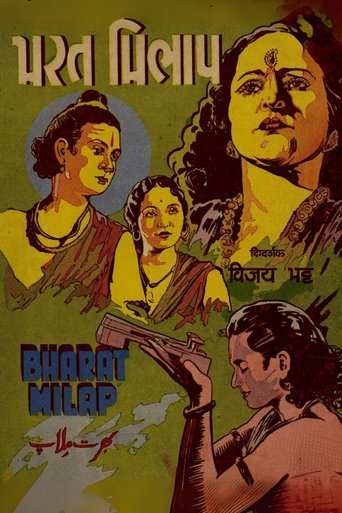
Films
1 film
About K.B. Athavale
K.B. Athavale performed in golden age of Indian cinema, specifically during the early talkie era. His documented career, though brief, placed him within the generation of performers who transitioned from silent films to sound. His sole credited role was in the 1942 film 'Bharat Milap', a significant historical and mythological production that was a major commercial and critical success of its time. This film, based on the Hindu epic Ramayana, was one of several adaptations of the story that became popular in the 1940s, demonstrating a cultural preference for devotional and historical narratives during India's struggle for independence. Athavale's participation in such a landmark project suggests he was a working actor within the burgeoning film industry based in Bombay (now Mumbai). While his filmography appears limited to this one notable film, his contribution is preserved as part of the cast that brought this epic story to life for contemporary audiences. Unfortunately, detailed records about the broader career trajectories of many supporting actors from this period are scarce, making Athavale a representative figure of the many dedicated artists whose complete histories remain partially obscured.
The Craft
On Screen
Specific details about K.B. Athavale's acting style are not documented. However, based on the conventions of Indian cinema in the early 1940s, particularly in the mythological genre, his performance would likely have been theatrical and expressive. Acting in films like 'Bharat Milap' often drew heavily from traditional Indian stage forms, including Parsi theatre, which emphasized dramatic gestures, clear vocal projection, and emotive facial expressions to convey epic narratives and moral lessons to the audience.
Milestones
- Appeared in the highly successful 1942 mythological film 'Bharat Milap'
Best Known For
Iconic Roles
Must-See Films
Working Relationships
Worked Often With
Studios
Why They Matter
Impact on Culture
K.B. Athavale's cultural impact is intrinsically tied to his role in 'Bharat Milap', a film that was more than mere entertainment for its 1942 audience. The film, depicting the reunion of Lord Rama and his brother Bharat, resonated deeply with the Indian populace during the final years of the British Raj. The themes of dharma (duty), sacrifice, and righteous kingship held significant socio-political undertones, offering a form of cultural resistance and moral fortitude. By participating in this narrative, Athavale contributed to a cinematic work that reinforced shared cultural values and mythological heritage, serving as a unifying force for a nation on the cusp of independence. The film's immense success—it ran for over a year in many theatres—cemented the popularity of the mythological genre and established its stars as household names. Athavale, as part of this ensemble, played a small role in a large-scale cultural phenomenon that helped shape the identity of popular Indian cinema.
Lasting Legacy
The legacy of K.B. Athavale is that of a representative figure from the foundational years of Indian talkie cinema. While not a major star whose name is remembered today, his work is preserved within the historical record of 'Bharat Milap',. His contribution, alongside those of many other unheralded actors, forms the bedrock upon which the massive edifice of Indian cinema was built. He represents the countless talented individuals who brought epic stories to life, contributing to the fabric of a national cinematic language. His legacy shows the collaborative nature of filmmaking, where even a single credited role in a landmark film ensures a place, however small, in film history.
Who They Inspired
Given the brevity of his documented filmography, there is no available information to suggest that K.B. Athavale directly mentored or influenced other filmmakers or actors in a formal capacity. His influence is instead passive, existing as part of the collective body of work from the 1940s that subsequent generations of Indian actors and directors would study and be inspired by. The performances in films like 'Bharat Milap' helped codify the acting style for mythological roles that would influence actors for decades, and Athavale — participant in that process.
Off Screen
Due to the limited documentation of supporting actors from this era of Indian cinema, specific details about K.B. Athavale's personal life, family, or background are not publicly available in historical film archives or databases.
Did You Know?
- K.B. Athavale's entire known filmography consists of a single film, 'Bharat Milap' (1942).
- 'Bharat Milap' was.
- The film was a production of Prakash Pictures, a leading studio of the era known for its mythological films.
- His co-stars, Prem Adib and Shobhana Samarth, became the definitive on-screen pair to play Rama and Sita for an entire generation of moviegoers.
- The film's story focuses on the poignant reunion of Rama and his brother Bharat,.
- Detailed biographical information about many supporting actors from this period, including Athavale, is extremely rare, as historical records often focused only on stars and directors.
Frequently Asked Questions
Who was K.B. Athavale?
Indian with credits in this catalog. He is known exclusively for his role in the highly successful 1942 mythological film 'Bharat Milap', which was a major cinematic achievement of its time.
What films is K.B. Athavale best known for?
Titles linked here include Bharat Milap (1942).
When was K.B. Athavale born and when did he die?
Unfortunately, the specific birth and death dates for K.B. Athavale are not documented in available historical film records, a common issue for many supporting actors from that era.
What awards did K.B. Athavale win?
There are no records of K.B. Athavale receiving any major awards or nominations for his work. The formal award system for Indian cinema was not as established during his brief active period.
What was K.B. Athavale's acting style?
While specific details are unknown, his acting style in 'Bharat Milap' would have likely reflected the theatrical traditions of early Indian cinema. This involved dramatic gestures and expressive delivery, typical for mythological films of the time.