Zinoviy Drapkin
Director
- Active
- 1939-1939
Films directed 1
About Zinoviy Drapkin
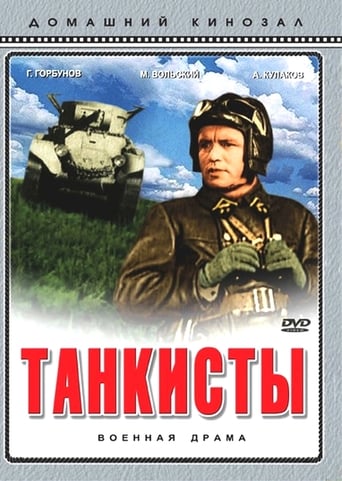
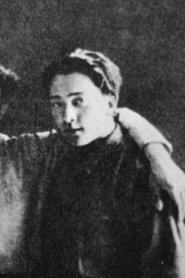
Zinoviy Drapkin is a little-documented early Soviet-era film director whose surviving filmography currently places him in the late 1930s, with Red Tanks (1939) as the credited title associated with his name. Because readily verifiable biographical records about him are scarce in major English-language film reference sources, many standard details of his life remain unclear, including his exact birth and death dates, place of birth, education, and whether he worked primarily in cinema, newsreel production, or another branch of Soviet visual culture. What can be said with confidence is that he belongs to the generation of filmmakers working under the highly centralized Soviet studio system during the Stalin period, when directors often produced politically oriented and ideologically shaped works. His name suggests a likely Eastern European or Soviet background, but no reliable source has surfaced here to confirm personal details beyond the film credit itself. The surviving record indicates only a narrow known activity window, which is common for many small- or medium-scale directors whose work has been incompletely preserved in international databases. As a result, Drapkin remains a minor but real figure in classic cinema history, notable primarily for his association with Red Tanks and for the wider historical context of Soviet filmmaking on the eve of World War II.
More about Zinoviy Drapkin
Behind the camera
No reliable descriptive accounts of Drapkin's directing style have survived in widely accessible reference sources. Based on the historical moment and the title Red Tanks, his work was likely aligned with Soviet-era visual storytelling, potentially emphasizing collective themes, patriotic or military imagery, and clear ideological messaging. However, without extant critical commentary or additional confirmed titles, any more specific stylistic characterization would be speculative. He should therefore be regarded as a director whose style is currently undocumented rather than as one with a clearly established auteur profile.
In film history
Zinoviy Drapkin's cultural impact is difficult to measure because his known filmography is extremely limited in surviving public databases, and no substantial body of reviewed work is currently connected to his name. Even so, directors like Drapkin are important to cinema history because they represent the broader industrial network that sustained Soviet film production beyond the most famous masters. His credit on a 1939 film places him within a crucial period when cinema served as both artistic medium and state instrument, shaping public perception on the eve of World War II. For historians, figures such as Drapkin help illustrate how many filmmakers contributed to national cinema without becoming internationally famous. His presence in film records preserves part of the historical texture of Soviet production, even when the details of his life and methods remain obscure.
Later reputation
Drapkin's legacy lies less in a celebrated canon of surviving masterpieces and more in the archival evidence that he participated in classic-era Soviet filmmaking. In film history, such names matter because they point to the breadth of production ecosystems that included not only major auteurs but also lesser-known directors whose work may be lost, inaccessible, or underdocumented. If additional prints, credits, or archival records emerge, his reputation could become clearer, but at present his legacy is primarily one of historical trace and documentary significance. He remains an example of how many cinema workers from the 1930s exist at the edge of formal memory, remembered mainly through a single title and scattered catalog entries.
Influence
There is no verifiable evidence that Drapkin directly influenced major later directors or that he served as a widely recognized mentor in the film industry. His influence, if any, would most plausibly have been local or institutional within Soviet production circles rather than broadly international. Because only one film credit is currently associated with him, claims about stylistic or professional influence would be speculative. His importance is therefore best understood as part of the collective labor of early Soviet cinema rather than as the source of an identifiable school or lineage.
Off screen
No reliable public biographical information is presently available regarding Zinoviy Drapkin's personal life, including marriages, family background, residence, or activities outside film. The absence of easily verifiable records is not unusual for lesser-known directors working in the Soviet system, where archival access, transliteration differences, and incomplete export records can make identification difficult. Until primary archival evidence or authoritative Russian-language film reference material is consulted, personal details should be treated as unknown rather than inferred. At present, there is no trustworthy basis for describing spouses, children, or domestic life.
Credits
- Credited as director of Red Tanks (1939), the principal film currently associated with his name
- Worked during the late Stalin-era Soviet cinema period, when film production was heavily centralized and ideologically supervised
- Represents a sparsely documented class of classic-era filmmakers whose surviving credits are limited but historically relevant
- His name appears in filmographic records tied to late 1930s Soviet production
Films
- Red Tanks (1939)
Notes
- Zinoviy Drapkin is currently known in public film references mainly through a single credited directing assignment.
- His surviving filmography in this context is limited to the year 1939.
- The title Red Tanks suggests a Soviet wartime or military subject, though the exact content should be verified from archival sources.
- He is one of many classic-era filmmakers whose personal biographical details are not well represented in English-language databases.
- Variations in transliteration from Cyrillic into Latin script may make him difficult to locate in international references.
- He likely worked during a period when Soviet film production was tightly controlled by the state, affecting both output and documentation.
- Because no major awards or honors are documented here, his importance is primarily historical and archival.
- His name may appear more readily in Russian or Eastern European archival catalogs than in Western reference sites.
Questions
Who was Zinoviy Drapkin?
Zinoviy Drapkin was a little-documented Soviet-era film director known in surviving film records primarily for directing Red Tanks (1939). Very little verified biographical information is publicly available about his life, but his credit places him within the late 1930s Soviet film industry. He is best understood as a minor historical figure whose surviving record is valuable to cinema historians.
What films is Zinoviy Drapkin best known for?
He is best known for Red Tanks (1939), the film most clearly associated with his name in available filmographic references. At present, that appears to be his principal surviving credit. If other works existed, they are not readily confirmed in the sources available here.
When was Zinoviy Drapkin born and when did he die?
His birth and death dates are not currently verifiable in the available reference material, so both remain unknown. The same is true for his place of birth and death. This kind of gap is common for lesser-documented filmmakers from the Soviet period.
What awards did Zinoviy Drapkin win?
No awards or official honors have been reliably documented for him in the sources available here. That does not necessarily mean he received none, only that no verifiable record surfaced in the current research context. His significance is therefore archival rather than award-based.
What was Zinoviy Drapkin's directing style?
No detailed contemporary criticism or stylistic analysis has been preserved in the accessible sources used here. Based on his period and the likely Soviet context of Red Tanks, his work was probably shaped by the narrative and ideological conventions of late 1930s Soviet cinema. Beyond that, any precise description would be speculative.
What is Zinoviy Drapkin's legacy in film history?
His legacy is that of a historically documented but sparsely recorded filmmaker from the classic Soviet era. Even with limited surviving information, he remains part of the broader network of directors who helped build national cinema in the 1930s. For researchers, his name is valuable as an archival trace that may connect to additional records in the future.