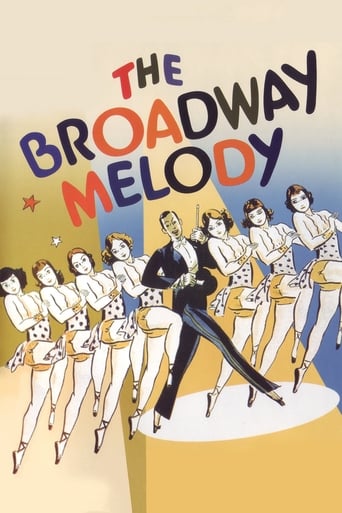
Films
1 film
About James Burrows
The 1929 film The Broadway Melody is the only title linked here for James Burrows. His career was notably brief, spanning only the year 1929, during which he appeared in MGM's musical film The Broadway Melody. This film was one of the first major Hollywood productions to be a musical with sound, and it went on to win the Academy Award for Best Picture at the 2nd Academy Awards. Burrows played a minor role in this landmark production, which starred Charles King, Anita Page, and Bessie Love. Unfortunately, like many actors from this transitional period who had brief careers, detailed records of his life and career are scarce. His single known film appearance places him among the many performers who participated in cinema's evolution into the sound era but did not achieve lasting fame. The limited documentation of his career suggests he may have been either a stage actor who briefly transitioned to film or someone who left the industry shortly after his debut.
The Craft
Milestones
- Appeared in The Broadway Melody (1929), the Academy Award-winning Best Picture
Best Known For
Must-See Films
Working Relationships
Studios
Why They Matter
Impact on Culture
James Burrows represents the thousands of actors who participated in Hollywood's transition to sound but whose careers were brief or undocumented. His appearance in The Broadway Melody places him within a historically significant film that helped establish the musical genre in cinema. While his individual contribution was minor, he was part of a production that demonstrated the commercial and artistic potential of sound films, influencing the entire industry's direction. His story illustrates how many actors from this era either couldn't adapt to the new medium or chose not to pursue long-term film careers.
Lasting Legacy
James Burrows' legacy is primarily as a footnote in the history of one of cinema's most important early musicals. His brief career exemplifies the transient nature of many early film careers during Hollywood's rapid technological evolution. While he didn't achieve lasting fame, his participation in The Broadway Melody connects him to a pivotal moment in film history when the industry was establishing new conventions and discovering which performers would succeed in the sound era.
Who They Inspired
Given his brief career and single known film appearance, there's no documented evidence of James Burrows influencing other actors or filmmakers. His story instead serves as an example of the many performers who passed through early Hollywood without leaving a lasting mark on subsequent generations of artists.
Off Screen
Very little is documented about James Burrows' personal life, which is typical of minor actors from the early sound era who had brief careers. His lack of extensive filmography and public records suggests he may have returned to other professions or stage work after his brief film appearance.
Did You Know?
- Appeared in The Broadway Melody, which was the first sound film to win the Academy Award for Best Picture
- His entire known film career consisted of a single year (1929)
- The Broadway Melody was also the first all-talking musical to be released by a major studio
- His film was one of the early productions to use the Technicolor process for certain sequences
- Like many actors from this period, his career coincided with the massive industry upheaval caused by the transition to sound
- The Broadway Melody was MGM's first full-length musical with dialogue
- His film was so successful it spawned two sequels, though he did not appear in them
Frequently Asked Questions
Who was James Burrows?
Screen credits include MGM's musical film The Broadway Melody. His career was extremely brief, consisting of only this single known film appearance during Hollywood's transition from silent films to talkies.
What films is James Burrows best known for?
Titles linked here include The Broadway Melody (1929).
When was James Burrows born and when did he die?
Unfortunately, specific birth and death dates for James Burrows are not documented in available historical records, which is common for minor actors from the early sound era who had brief careers.
What awards did James Burrows win?
There are no records of James Burrows receiving any personal awards or nominations. However, the film he appeared in, The Broadway Melody, won the Academy Award for Best Picture in 1929.
What was James Burrows' acting style?
Due to the lack of extensive documentation about his career and the brevity of his filmography, there's insufficient information to determine James Burrows' specific acting style or techniques.