The Broadway Melody
"Sisters take their act to Broadway"
Keys: Space play/pause · ←/→ 10s · F fullscreen · M mute · </> speed
About this film
Sisters Harriet and Queenie bring their vaudeville act to Broadway where romance and rivalry split the act. The 1929 Best Picture winner inaugurated Hollywood's all-singing backstage musical era.
Cast & crew
More films like this
More Music films
View all →
More from Harry Beaumont
View all →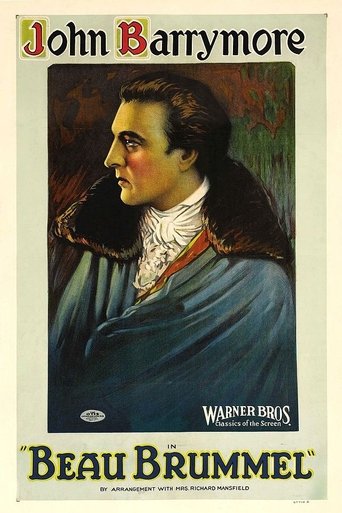
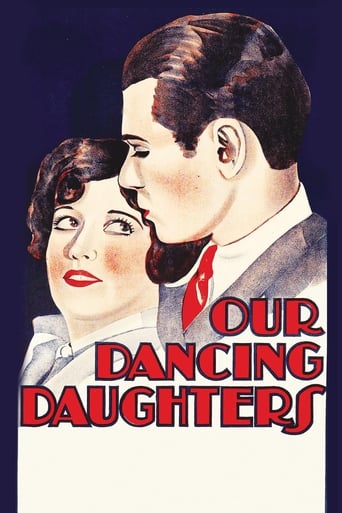
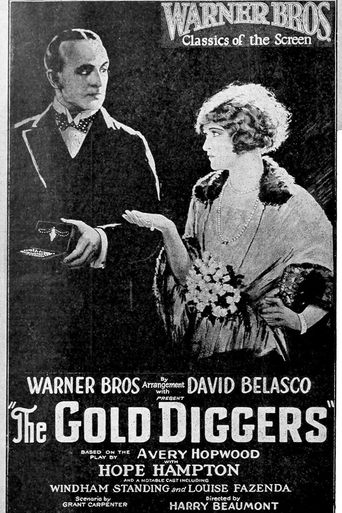
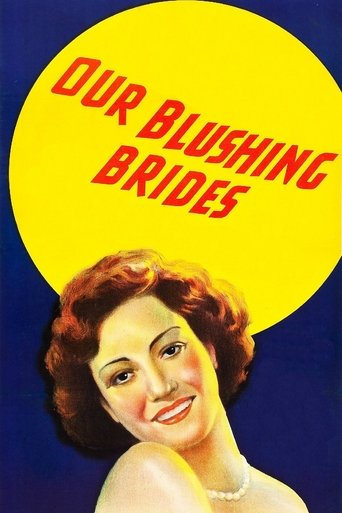

More about this film
About the production
Release dateFebruary 1, 1929
Budget$379,000
Box office$2.8 million (domestic)
ProductionMetro-Goldwyn-Mayer (MGM)
Filmed inMGM Studios, Culver City, California
The Broadway Melody was originally conceived as a silent film but was converted to sound during production as the talkie revolution swept Hollywood. The production utilized multiple cameras to capture sound, a revolutionary technique at the time. The title sequence was filmed in early two-strip Technicolor, though the rest of the film is in black and white. MGM invested heavily in the film's sound technology, making it among the costliest productions of 1929. The musical numbers were pre-recorded and then lip-synced during filming, allowing for better audio quality than live recording could provide.
Themes
Ambition and success in show businessSisterhood and family loyaltyTrue love versus materialismThe price of fameClass differences in American society
Themes & topics
Broadwaymusicalvaudevillelove trianglesistersshow businessambitionromancebackstage dramaHollywood transition to sound
Historical background
Archival records place The Broadway Melody in 1929, a year when the silent feature period shaped what theaters booked.
Why this film matters
Retrospectives include The Broadway Melody when mapping craft and subject matter from the silent feature period.
Making of
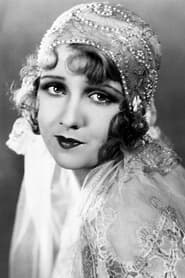
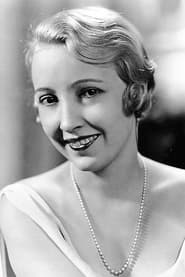
The production of The Broadway Melody was fraught with the technical challenges of early sound recording. The studio had to deal with the limitations of microphones that could pick up every sound, including camera noises, which meant cameras had to be housed in soundproof booths. Director Harry Beaumont, who had primarily directed silent films, had to adapt his techniques to accommodate the new technology. The cast underwent extensive voice coaching to ensure their performances would record well. Anita Page and Bessie Love had to learn to sing for their roles, though some of their singing was dubbed. The film's choreography was simplified compared to stage shows because the bulky recording equipment restricted movement. MGM invested heavily in the film's marketing, promoting it as a technological marvel that would change cinema forever.
What critics said
Critics revisiting The Broadway Melody emphasize performative and technical choices visible in surviving prints.
Did you know?
- The Broadway Melody was the first sound film to win the Academy Award for Best Picture at the 2nd Academy Awards
- It was the first all-talking musical produced by MGM
- The film's success spawned a series of unrelated films with similar titles: Broadway Melody of 1936, 1938, and 1940
- Bessie Love received an Academy Award nomination for Best Actress, making her one of the first nominees in that category
- The film was originally titled 'The Melody of Broadway' but was changed before release
- Despite being a musical, the film contains no original songs - all were written for other shows
- The title sequence was filmed in Technicolor, making it one of the earliest color sequences in a sound film
- Charles King was the only member of the principal cast who had appeared on Broadway before the film
- The film was remade in 1936 as 'Broadway Melody of 1936' with Jack Benny and Eleanor Powell
- The film's success helped establish MGM as the leading studio for musical films during the early sound era
Awards & recognition
- Academy Award for Best Picture (1929/30)
- Academy Award for Best Writing (Adapted Screenplay) - Harry Beaumont (shared with others)
Visual style
John Arnold's cinematography for The Broadway Melody was groundbreaking for its time, successfully adapting the visual language of silent film to the new requirements of sound recording. The camera work was necessarily static in many scenes due to the limitations of early sound equipment, but Arnold found creative ways to maintain visual interest within these constraints. The film used innovative lighting techniques to compensate for the lack of camera movement, creating dramatic shadows and highlights that enhanced the musical numbers. The Technicolor title sequence was particularly notable for its vibrant hues and smooth color transitions, demonstrating the potential of color in motion pictures. The dance sequences were choreographed specifically for the camera's fixed position, with performers arranged to create dynamic compositions within the frame.
Innovations
The Broadway Melody pioneered several technical innovations in early sound cinema. It was one of the first films to use pre-recorded musical numbers synchronized with on-screen performance, a technique that would become standard in musical films. The production utilized multiple camera setups to capture sound from different angles, allowing for more dynamic visual storytelling than earlier talkies. The film's sound mixing was particularly advanced for its time, successfully balancing dialogue, music, and sound effects. The Technicolor title sequence demonstrated the feasibility of combining color and sound, though the technology was still too expensive for use in an entire feature. The film also experimented with early forms of audio post-production, including sound effects and music editing techniques that would become fundamental to film sound design.
Music
The film's soundtrack consisted primarily of pre-existing songs rather than original compositions, including 'The Broadway Melody,' 'You Were Meant for Me,' 'Boy Friend,' and 'Truthful Parson Brown.' The music was supervised by Nacio Herb Brown and Arthur Freed, who would later become one of MGM's most successful musical producers. The songs were recorded before filming using the Vitaphone sound-on-disc system, then synchronized with the picture during post-production. This pre-recording allowed for better audio quality than live recording could provide, though it meant the actors had to lip-sync their performances. The soundtrack also included incidental music that helped bridge scenes and maintain the film's musical atmosphere. The musical numbers were staged in a relatively straightforward manner, focusing on performance rather than the elaborate choreography that would later become standard in MGM musicals.
Famous quotes
Eddie: 'You were meant for me, and I was meant for you.'
Queenie: 'I'm tired of being poor. I want nice things.'
Harriet: 'We came here together, and we'll leave together.'
Eddie: 'Broadway's the only place for people like us.'
Jock: 'Money can buy anything, even happiness.'
Memorable scenes
- The opening number 'The Broadway Melody' where the sisters perform their vaudeville act for the first time in New York
- The romantic duet 'You Were Meant for Me' between Eddie and Queenie, one of the film's most tender moments
- The lavish party scene where Jock shows Queenie the glamorous lifestyle she could have
- The emotional confrontation between the sisters when Queenie chooses Jock over her family
- The finale where Queenie realizes her mistake and returns to Eddie, reconciling with her sister
What audiences thought
The Broadway Melody was a massive commercial success, becoming one of the highest-grossing films of 1929 and 1930. Audiences were thrilled by the novelty of an all-talking, all-singing, all-dancing picture, and the film played to packed houses across the country. The musical numbers, particularly 'The Broadway Melody' and 'You Were Meant for Me,' became popular hits that audiences requested to hear again. The film's success proved that there was a huge market for musical films, encouraging studios to invest heavily in the genre. Despite its popularity with general audiences, some theater owners complained about the high cost of installing sound equipment necessary to show the film, though the film's profitability eventually justified these investments.
Film connections
Influenced by
- Broadway musical theater tradition
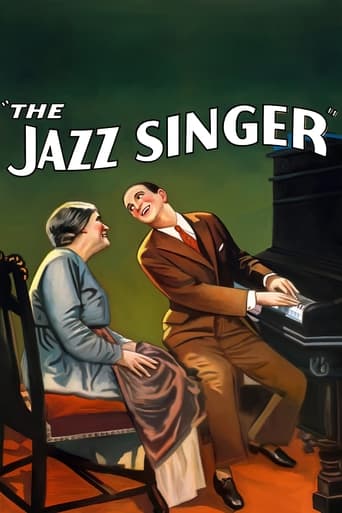
- The Jazz Singer (1927)
- Vaudeville performance style
- Early sound film experiments
- MGM's silent film productions
This film influenced
- Broadway Melody of 1936
- 42nd Street (1933)
- Gold Diggers of 1933
- Singin' in the Rain (1952)
- The Great Ziegfeld (1936)
Film restoration
The Broadway Melody is preserved in the United States National Film Registry, selected for preservation in 2010 for its cultural, historical, and aesthetic significance. The film survives in its complete form, with both picture and sound elements intact. MGM (now owned by Warner Bros.) maintains the original negatives and preservation elements. The film has been restored multiple times, most recently for home video releases, with improved picture and sound quality. The Technicolor title sequence survives, though some color degradation has occurred over time. The film is considered well-preserved for its age, with no missing scenes or significant deterioration.
Where to watch
- Warner Bros. DVD and Blu-ray releases
- Classic movie streaming services like The Criterion Channel
- Turner Classic Movies (TCM) occasional broadcasts
- Warner Archive streaming service
- Public domain versions available on various streaming platforms (though quality varies)