Mario Parpagnoli
Actor
- Active
- 1917-1917
Films 1
About Mario Parpagnoli
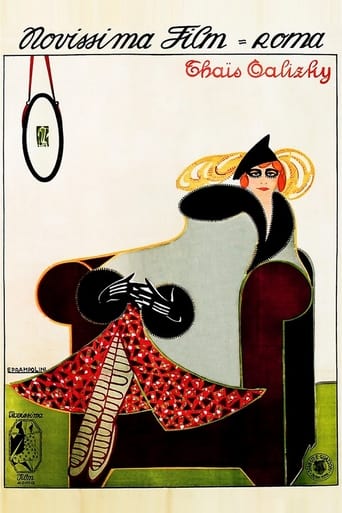
Mario Parpagnoli was an Italian silent-era film actor best remembered today for his appearance in Giovanni Pastrone's lavish 1917 production Thaïs, one of the notable surviving works of Italian early cinema. His documented screen career is extremely brief in the available film record, with the surviving filmography placing him firmly in 1917 and suggesting that he was active during the height of Italy's pre-World War I and wartime silent-film production boom. Because of the fragmentary nature of surviving records from the silent era, very little has been preserved about his private life, training, or later career, and he remains one of the many performers whose names survive primarily through cast lists and film archives. His association with Thaïs links him to one of the most visually ambitious and artistically distinctive films of the period, a production remembered for its opulent design, Symbolist imagery, and experimental mood. Parpagnoli's screen presence, however small or secondary, forms part of the ensemble of performers who helped shape the atmosphere of Italian prestige cinema in the 1910s. No reliable evidence has surfaced to confirm that he continued acting beyond 1917, and he appears to have left behind no widely documented later career in sound film or stage performance. As a result, he is chiefly remembered as a historical figure in silent Italian cinema rather than as a long-running star with a large surviving body of work.
More about Mario Parpagnoli
In film history
Mario Parpagnoli's cultural impact is best understood as part of the broader ensemble of performers who contributed to the artistic flowering of Italian silent cinema in the 1910s. His appearance in Thaïs places him within a landmark film known for its imaginative production design, stylized performance, and importance to the development of cinematic modernism in Italy. Even when individual performers from this period are poorly documented, their credits matter because they help reconstruct the collaborative nature of early film production and the networks of actors who populated these ambitious works. Parpagnoli therefore represents the many lesser-known artists whose names survive as part of cinema's foundational history.
Later reputation
His legacy lies primarily in his documented participation in Thaïs, a film that continues to attract scholarly attention and restoration interest because of its importance in silent-era aesthetics and Italian film history. Although he does not appear to have become a major star with a large surviving filmography, his credit contributes to the historical record of the era and helps preserve the memory of the supporting performers who made early cinema possible. For film historians, such names are valuable evidence of casting practices, studio networks, and the breadth of the Italian silent film industry. In that sense, Parpagnoli's lasting legacy is archival as much as artistic: he remains part of the surviving human fabric of one of the medium's formative periods.
Influence
There is no documented evidence that Mario Parpagnoli directly influenced later actors or directors in a traceable way. His significance is indirect, in that his work contributes to the preserved body of early Italian cinema that later generations of filmmakers and scholars have studied for its visual ambition and historical importance. Performers in productions like Thaïs helped establish the expressive possibilities of silent-era screen acting within highly stylized, design-driven cinema. Parpagnoli's influence, therefore, is best understood as part of the collective influence of silent-era Italian performers rather than as the legacy of a widely credited individual star.
Off screen
No reliable biographical details about Mario Parpagnoli's personal life have been widely preserved in accessible film history sources. Information about marriages, family background, residence, education, and life outside cinema is currently unavailable or not firmly documented in surviving records. Like many performers from the silent era, he appears to have left a sparse paper trail, making it difficult to reconstruct anything beyond his confirmed screen credit. Until additional archival evidence emerges, any detailed account of his private life would be speculative.
Credits
- Appeared in Giovanni Pastrone's Thaïs (1917), one of the most visually celebrated Italian silent films of the era
- Participated in the golden age of Italian silent cinema during the 1910s
- Remains documented in film history through surviving cast records and archival references
Roles
- Cast member in Thaïs (1917)
Films
- Thaïs (1917)
Collaborators
Studios
- Italian silent cinema production circles associated with Giovanni Pastrone's era
Notes
- Mario Parpagnoli is primarily documented for a single known silent-film credit in 1917.
- His best-known association is with Thaïs, a major work of Italian silent cinema directed by Giovanni Pastrone.
- He belongs to the category of early film performers whose careers are only partially recoverable from surviving credits and archives.
- Because the silent-film record is incomplete, many details of his life remain unknown rather than contradicted.
- His name continues to appear in film reference sources because Thaïs remains an important title in film history.
- He is an example of how many contributors to early cinema were not stars in the modern sense but still played a role in landmark productions.
Questions
Who was Mario Parpagnoli?
Mario Parpagnoli was an Italian silent-film actor whose documented screen work is currently known mainly through his 1917 appearance in Thaïs. He is a historically important minor figure in early Italian cinema, even though very little biographical information about him has survived.
What films is Mario Parpagnoli best known for?
He is best known for Thaïs (1917), the visually extravagant Giovanni Pastrone silent film. At present, that appears to be his principal documented film credit.
When was Mario Parpagnoli born and when did he die?
His birth and death dates are not reliably documented in the surviving sources available for early silent cinema. Because of this, both details must be regarded as unknown rather than inferred.
What awards did Mario Parpagnoli win?
No awards or nominations are currently documented for Mario Parpagnoli. This is not unusual for performers from the silent era, especially those whose careers were brief or only partially recorded.
What was Mario Parpagnoli's acting style?
No detailed critical description of his individual acting style has been preserved. Since he is known chiefly from a single surviving credit, any assessment of his screen technique would be speculative; he should be understood as part of the broader expressive performance style of Italian silent cinema.
What is Mario Parpagnoli's legacy in film history?
His legacy is tied to his presence in Thaïs, a significant film in Italian silent cinema and an important object of scholarly interest. He represents the many lesser-known performers whose work is preserved primarily through film credits and archival records rather than star biographies.