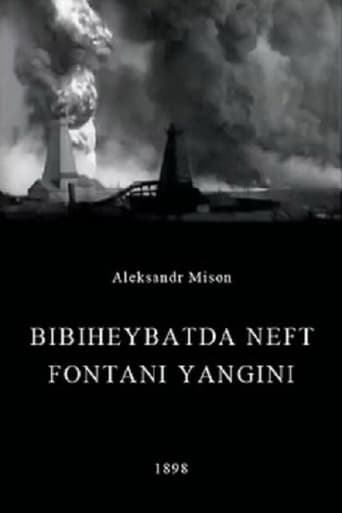
Films
1 film
About Alexandre Michon
Made significant contributions to early cinema in the Caucasus region. Born in Marseille, France, he moved to Baku in the Russian Empire where he established himself as a professional photographer before transitioning to the new medium of cinema. In 1898, using equipment from the Lumière brothers, Michon created what are considered the first films made in Azerbaijan and the entire Caucasus region. His most famous work, 'Oil Gush Fire in Bibiheybat,' documented a spectacular oil gusher fire and demonstrated remarkable early documentary filmmaking techniques. Michon's films were short documentaries that captured the industrial and social life of Baku during its oil boom era, providing invaluable historical footage of the period. Though his filmmaking only the single year of 1898, his work represents a crucial milestone in the history of cinema in the region. He continued his work as a photographer and educator in Baku until his death, leaving behind a legacy as one of the pioneers of cinema in the Russian Empire's southern territories.
The Craft
Behind the Camera
Documentary-style filmmaking focusing on industrial subjects and local life, using stationary camera positions typical of early cinema, capturing real events and locations rather than staged narratives
Milestones
- Created the first films in Azerbaijan (1898)
- Documented the Baku oil industry
- Worked with Lumière brothers' equipment
- Established early cinema in the Caucasus region
- Pioneered documentary filmmaking techniques
Best Known For
Must-See Films
Accolades
Special Recognition
- Recognized as pioneer of Azerbaijani cinema
- Honored in Baku Cinema Museum
- Featured in film history exhibitions
Working Relationships
Worked Often With
Studios
Why They Matter
Impact on Culture
Alexandre Michon's work represents the birth of cinema in the Caucasus region, particularly in Azerbaijan. His films documented the crucial period of Baku's oil boom, preserving visual records of industrial development and daily life that would otherwise be lost. By capturing real events like the oil gusher fire, Michon established early documentary filmmaking practices and demonstrated cinema's potential as a historical record. His work bridged European cinematic technology with local subjects, helping to establish a unique regional film identity. Michon's films are now considered priceless historical documents that provide insight into late 19th-century life in the Russian Empire's southern territories. His efforts laid the groundwork for the development of cinema in Azerbaijan and influenced subsequent generations of filmmakers in the region.
Lasting Legacy
Alexandre Michon is remembered as the father of Azerbaijani cinema and a key figure in the early history of documentary filmmaking. His surviving films, though few, are treasured as the earliest moving images of the Caucasus region and are preserved in film archives as invaluable historical documents. The Baku Cinema Museum features Michon prominently, recognizing his foundational role in establishing cinema culture in Azerbaijan. His name is mentioned in film history books as one of the pioneers who brought cinema to the Russian Empire's periphery. Michon's work demonstrates how early cinema spread globally from its European origins, adapting to local contexts and subjects. His documentary approach prefigured later developments in ethnographic and industrial filmmaking. Today, film scholars and historians study Michon's work to understand the early spread of cinema technology and its adaptation to non-Western subjects.
Who They Inspired
Michon influenced the development of documentary cinema in the Caucasus and inspired early Azerbaijani filmmakers to explore local subjects. His work demonstrated that cinema could be used to document and preserve cultural heritage and industrial development. Later Azerbaijani filmmakers built upon his foundation, developing a distinct national cinema that often focused on the oil industry and local culture. His techniques of filming real events and locations influenced the development of documentary filmmaking throughout the Soviet period. Michon's integration of European technology with local subjects set a precedent for how cinema could adapt to different cultural contexts. His work also influenced how the oil industry was portrayed in subsequent films, establishing visual tropes that would be reused for decades.
Off Screen
Alexandre Michon emigrated from France to Baku in the Russian Empire during the oil boom of the 1880s. He established a successful photography studio in Baku and became well-known for his portraits and documentary photography. Michon was deeply involved in the cultural life of Baku's European community and was known for his interest in new technologies. He married and had children in Baku, where he lived for most of his adult life. His photography business allowed him to travel throughout the Caucasus region, documenting its people and landscapes. Michon was also involved in educational activities, teaching photography and later cinema techniques to local enthusiasts.
Education
Trained as photographer in France, likely in Marseille or Paris
Family
- Unknown (married in Baku)
Did You Know?
- His 1898 film 'Oil Gush Fire in Bibiheybat' is considered the first documentary film made in Azerbaijan
- Michon used a Lumière Cinématographe camera, one of the first movie cameras ever made
- His films were all shot in Baku, which was then one of the world's leading oil-producing cities
- Only a few fragments of his films survive today, preserved in Russian and Azerbaijani film archives
- Michon was originally a professional photographer before turning to cinema
- His films were typically very short, lasting only about a minute each, which was standard for early cinema
- He documented not just industrial subjects but also everyday life in Baku, including markets and cultural performances
- Michon's work was discovered and studied by film historians in the Soviet era
- His films provide some of the only moving images of 19th-century Baku
- He was part of a small community of European photographers and filmmakers working in the Russian Empire's southern territories
In Their Own Words
No documented quotes from Alexandre Michon survive from his lifetime
Frequently Asked Questions
Who was Alexandre Michon?
French-Russian photographer and filmmaker who created the first films in Azerbaijan and the Caucasus region in 1898. He is considered a pioneer of cinema in the region, known for his documentary films about Baku's oil industry and daily life.
What films is Alexandre Michon best known for?
Titles linked here include Oil Gush Fire in Bibiheybat (1898), The Oil Gusher in Balakhany (1898).
When was Alexandre Michon born and when did he die?
Born 1858; died 1921.
What awards did Alexandre Michon win?
Alexandre Michon did not receive formal awards during his lifetime, as he worked before the establishment of film awards. He is now honored posthumously as the pioneer of Azerbaijani cinema and featured in the Baku Cinema Museum.
What was Alexandre Michon's directing style?
Michon's directing style was documentary-focused, using stationary camera positions typical of early cinema. He captured real events and locations rather than staged narratives, focusing on industrial subjects like oil production and everyday life in Baku.
Why is Alexandre Michon important to film history?
Michon is important because he brought cinema to the Caucasus region for the first time, creating the earliest films of Azerbaijan. His work represents the global spread of cinema technology and its adaptation to non-Western subjects.
How did Alexandre Michon learn filmmaking?
Michon learned filmmaking through his connection with the Lumière brothers, whose equipment he used in Baku. As an established photographer, he adapted his visual skills to the new medium of moving images.