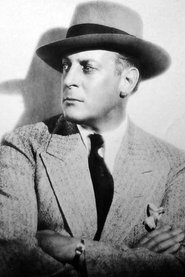
Edward H. Griffith
Director
Born: August 23, 1888 in Lynn, Massachusetts, United States Died: March 3, 1975 Active: 1917-1946 Birth Name: Edward Haven Griffith
Films
2 films
About Edward H. Griffith
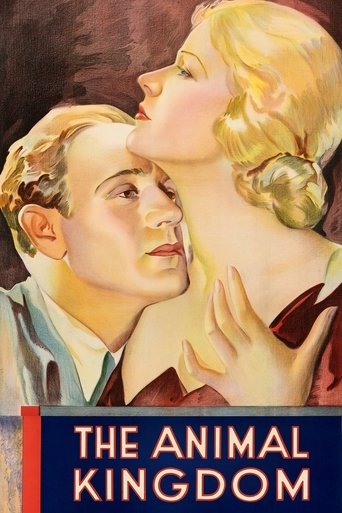
Edward H. Griffith (1888-1975) was an American film director and producer who worked during the golden age of Hollywood, specializing in sophisticated dramas and romantic comedies during the transition from silent to sound films. Beginning his career in the silent era, Griffith honed his craft directing numerous short films before moving into feature-length productions in the 1920s. He achieved notable success with 'The Animal Kingdom' (1932), a sophisticated drama starring Leslie Howard and Ann Harding that showcased his ability to handle adult themes and complex relationships. Griffith was particularly adept at adapting literary works to the screen, including his acclaimed version of 'The Age of Innocence' (1934). Throughout the 1930s and early 1940s, he continued directing for major studios, though his pace slowed in his later years. His nearly three decades, during which he directed over 60 films, leaving a significant mark on early sound cinema. Griffith retired from filmmaking in the mid-1940s, having witnessed and contributed to the dramatic evolution of Hollywood from its silent beginnings through the establishment of the studio system.
The Craft
Behind the Camera
Edward H. Griffith was known for his sophisticated and polished directing style, particularly adept at handling adult themes and complex interpersonal relationships. His approach emphasized psychological depth and nuanced character development, often focusing on the upper-class society and their romantic entanglements. Griffith had a keen eye for visual composition and utilized the new sound technology to enhance dialogue-driven scenes, creating naturalistic conversations that felt authentic to his audiences. He was particularly skilled at drawing subtle performances from his actors, especially in romantic dramas where emotional subtlety was paramount.
Milestones
- Directed the acclaimed adaptation 'The Animal Kingdom' (1932) starring Leslie Howard
- Brought Edith Wharton's 'The Age of Innocence' to the screen in 1934
- Successfully transitioned from silent films to sound pictures
- Worked with major stars including Carole Lombard, Fredric March, and Ann Harding
- Directed over 60 films during his nearly 30-year career
Best Known For
Must-See Films
Accolades
Special Recognition
- Star on the Hollywood Walk of Fame for his contributions to motion pictures
Working Relationships
Worked Often With
Studios
Why They Matter
Impact on Culture
Edward H. Griffith played a significant role in the development of the sophisticated romantic drama genre during Hollywood's transition to sound. His films often explored complex adult relationships and moral dilemmas, helping to establish a more mature approach to storytelling in American cinema. 'The Animal Kingdom' in particular was groundbreaking for its frank treatment of extramarital relationships and the conflict between artistic freedom and conventional marriage, themes that were quite bold for early 1930s cinema. Griffith's adaptations of literary works, especially 'The Age of Innocence,' helped legitimize film as a medium capable of handling serious literature with intelligence and sensitivity.
Lasting Legacy
Edward H. Griffith's legacy lies in his contribution to the development of the sophisticated adult drama during Hollywood's formative sound era. While not as widely remembered as some of his contemporaries, his films are valued by film historians for their technical polish and mature themes. His work represents an important bridge between the theatrical style of silent films and the more naturalistic approach that would dominate sound cinema. Griffith's ability to adapt complex literary works to the screen paved the way for future directors to tackle challenging source material. His films, particularly 'The Animal Kingdom' and 'The Age of Innocence,' remain important examples of early 1930s Hollywood sophistication.
Who They Inspired
Griffith influenced subsequent generations of directors through his refined approach to adult storytelling and his successful adaptations of literary works. His technique for handling dialogue and intimate scenes in early sound films served as a model for other directors navigating the new medium. His emphasis on psychological realism in character relationships prefigured the more nuanced approaches that would become standard in later Hollywood dramas. Directors such as George Cukor and William Wyler, who also specialized in sophisticated dramas, built upon the foundation that Griffith helped establish in the early sound period.
Off Screen
Edward H. Griffith was married to the famous silent film star Corinne Griffith from 1924 to 1932. Their marriage was highly publicized due to Corinne's status as.' The couple's divorce was contentious and received significant media attention, particularly regarding financial settlements. After his divorce, Griffith maintained a relatively private personal life, focusing primarily on his directorial work. He spent his later years in Laguna Beach, California, where he passed away in 1975 at the age of 86.
Education
Graduated from Lynn Classical High School in Lynn, Massachusetts; later attended Boston University where he studied engineering before pursuing a career in film
Family
- Corinne Griffith (1924-1932)
Did You Know?
- His marriage to Corinne Griffith was one of Hollywood's most high-profile unions of the 1920s
- Despite sharing the same last name, he was not related to the legendary director D.W. Griffith
- Originally studied engineering at Boston University before switching to a career in film
- Directed both silent and sound films, making him one of the few directors to successfully navigate both mediums
- His film 'No Man of Her Own' (1932) featured the only screen pairing of Carole Lombard and Clark Gable
- Was known for his meticulous preparation and often spent months adapting literary sources before filming
- His divorce settlement with Corinne Griffith was one of the largest of its time, setting precedents in Hollywood divorce cases
- Retired from directing in 1946, well before his death, choosing to live quietly in Southern California
- Many of his films have been lost or are difficult to find, making his surviving works particularly valuable to film historians
- Was particularly skilled at directing scenes of witty dialogue and sophisticated banter
In Their Own Words
The camera doesn't lie, but it can be taught to tell the truth beautifully.
In the transition from silent to sound, we didn't just add voices to pictures - we added souls to characters.
A good film, like a good marriage, requires patience, understanding, and the willingness to listen.
Frequently Asked Questions
Who was Edward H. Griffith?
American on YTB.my.
What films is Edward H. Griffith best known for?
Titles linked here include The Animal Kingdom (1932), The Age of Innocence (1934).
When was Edward H. Griffith born and when did he die?
Born August 23, 1888; died March 3, 1975.
What awards did Edward H. Griffith win?
While Edward H. Griffith did not receive major Academy Award nominations, he was honored with a star on the Hollywood Walk of Fame for his significant contributions to motion pictures during his nearly 30-year career.
What was Edward H. Griffith's directing style?
Griffith was known for his sophisticated and polished directing style, specializing in adult themes and complex relationships. He excelled at adapting literary works, emphasized psychological depth in characters, and was particularly skilled at handling dialogue and intimate scenes in early sound cinema.
Was Edward H. Griffith related to D.W. Griffith?
No, despite sharing the same famous last name, Edward H. Griffith was not related to the silent film director D.W. Griffith. This was a common misconception during their respective careers.
Who was Edward H. Griffith married to?
Edward H. Griffith was married to silent film star Corinne Griffith from 1924 to 1932. Their high-profile marriage and subsequent divorce received significant media attention in Hollywood during the 1920s and early 1930s.