


The Animal Kingdom
"1932 film by George Cukor, Edward H. Griffith"
Keys: Space play/pause · ←/→ 10s · F fullscreen · M mute · </> speed
About this film
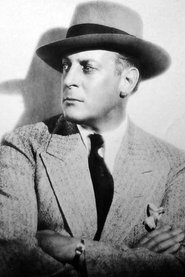
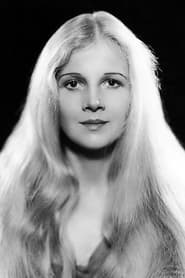
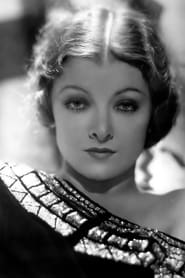
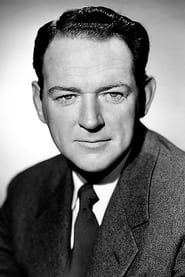
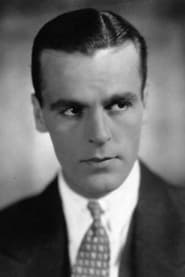
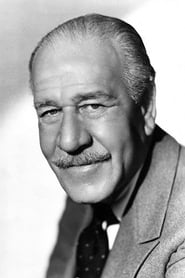
Leslie Howard, Ann Harding, Myrna Loy, William Gargan, Ilka Chase, and Neil Hamilton. Howard, Gargan, and Chase also starred in the play when it opened on Broadway on January 12, 1932. Griffith based upon a comedy of manners play of the same name by Philip Barry. It was remade 1946 as One More Tomorrow.
Cast & crew
More films like this
More Comedy films
View all →







More from Edward H. Griffith
View all →More about this film
About the production
Release dateSeptember 30, 1932
Box officeUnknown
ProductionRKO Radio Pictures
Filmed inRKO Studios, Hollywood, California
The film was based on Philip Barry's 1932 Broadway play of the same name, which had starred Leslie Howard in the lead role. Howard reprised his role for the film adaptation. The production faced challenges adapting the stage dialogue for the new medium of sound film, while maintaining the sophisticated wit of Barry's original work. The film was rushed into production to capitalize on the play's success and Howard's recent acclaim.
Themes
Artistic integrity vs. commercial successThe complexity of romantic choiceSocial class and authenticityFriendship and loyaltyPersonal growth and self-discovery
Themes & topics
love trianglepublishersocialiteartistic integritymarriagefriendshipregretclass differencesromantic dramabutlersacrificeindependence
Historical background
The Animal Kingdom (1932) circulated in studio-era and wartime programming. The film stars Leslie Howard, Ann Harding, Myrna Loy, William Gargan, Ilka Chase, and Neil Hamilton. Contemporary trade papers and later preservation notes document its place among theatrical and archive releases.
Why this film matters
The Animal Kingdom remains accessible to researchers and viewers as a comedy short in museum, archive, and streaming collections. Programmers cite it when tracing regional production history and surviving early prints.
Making of
Director Edward H. Griffith, known for his sophisticated handling of drawing-room comedies, faced the challenge of translating Philip Barry's witty stage dialogue into cinematic form without losing its intellectual spark. Griffith employed a more mobile camera than was typical for early sound films, using tracking shots to follow characters through the luxurious sets and create a sense of fluidity. The casting process was particularly interesting - Leslie Howard was a natural choice having originated the role on Broadway, but the female leads required careful consideration. Ann Harding was brought in for her reputation as the 'thinking man's actress,' while Myrna Loy, then primarily known for exotic roles, fought against typecasting to play the down-to-earth Daisy. The production design emphasized the contrast between Tom's artistic world and Cee's social sphere through distinct visual aesthetics. The film was shot relatively quickly in about three weeks, typical of the era's efficient production schedules, but Griffith took extra time with the emotional scenes to ensure authentic performances.
What critics said
Day-one reviews for The Animal Kingdom are sparse in digitized press archives; later criticism treats it as a reference point for 1932 cinema programming and preservation.
Did you know?
- This was the first of three film adaptations of Philip Barry's play, with remakes in 1938 ('I Met My Love Again') and 1952 ('The Girl Who Had Everything')
- Leslie Howard was so committed to the project that he turned down the role of Ashley Wilkes in 'Gone with the Wind' partly due to his involvement in similar romantic drama projects
- Myrna Loy was initially considered too glamorous for the role of Daisy, but her performance proved critics wrong and helped establish her as a serious dramatic actress
- The film's title refers to the 'animal kingdom' of human nature and instinct, contrasting civilized society with primal emotions
- Philip Barry, the playwright, was heavily involved in the adaptation process, unusual for the time period
- The film was released during the height of the Great Depression, yet focused on wealthy socialites, which some critics found out of touch with the times
- Ann Harding and Leslie Howard had previously starred together in 'Holiday' (1930), making this their second on-screen pairing
- The original Broadway production ran for 173 performances, considered a solid success for the period
- RKO paid $75,000 for the film rights to the play, a substantial sum for 1932
- The film's ending was slightly altered from the stage version to satisfy Hollywood's preference for more definitive conclusions
Awards & recognition
- None
Visual style
The cinematography, credited to Leo Tover, employed a sophisticated visual style that elevated the film beyond typical early sound productions. Tover utilized soft focus lighting to create romantic atmospheres, particularly in scenes between Tom and Daisy, while employing sharper, more clinical lighting for the social gatherings with Cee. The camera movement was notably fluid for the period, with tracking shots following characters through the elaborate sets, creating a sense of spatial continuity that was still relatively rare in early sound films. The lighting design emphasized the contrast between the warm, intimate spaces associated with Daisy and the cold, formal environments of Cee's world. Tover also experimented with depth of field to create visual metaphors for the characters' emotional states, using shallow focus during moments of confusion and deeper focus during scenes of clarity. The film's visual aesthetic helped establish the sophisticated tone that would become characteristic of RKO's more prestigious productions.
Innovations
The film demonstrated several technical advances for early sound cinema, particularly in its approach to microphone placement and sound recording. The production team developed innovative techniques to capture natural-sounding dialogue while allowing for more mobile camera work than was typical in the early sound era. The sound mixing was particularly sophisticated for the period, effectively balancing dialogue, music, and ambient sounds to create a realistic audio environment. The film's editing, supervised by Jane Loring, employed smooth transitions between scenes that helped maintain narrative flow despite the dialogue-heavy nature of the source material. The production design, led by Van Nest Polglase, created convincing interior spaces that accommodated both the technical requirements of sound recording and the aesthetic needs of the camera. The film also demonstrated advances in makeup techniques that allowed for more natural appearances under the harsh lighting required for early color film tests, though the final film was released in black and white.
Music
The musical score was composed by Max Steiner, one of Hollywood's most prominent composers of the era. Steiner's approach was subtle and supportive, never overwhelming the dialogue or performances. The main theme, a melancholic piano melody, served as a musical representation of Tom's artistic soul and his longing for authentic connection. Steiner incorporated elements of popular songs of the period into the social scenes, providing authentic period atmosphere. The sound design was notable for its clarity during dialogue-heavy scenes, a technical achievement for early sound recording. Steiner also used leitmotifs for the main characters - a sophisticated, slightly formal theme for Cee, a warm, gentle theme for Daisy, and a conflicted, minor-key theme for Tom. The score helped bridge the gap between the film's theatrical origins and its cinematic presentation, adding emotional depth without being intrusive.
Famous quotes
Tom Collier: 'I'm not a publisher, I'm a businessman who happens to publish books.'
Daisy Sage: 'Some people are born with silver spoons in their mouths. You were born with a typewriter in your hands.'
Cecelia Henry: 'Darling, in this world, you either have what you want or you want what you have.'
Tom Collier: 'I thought marriage was about finding someone you could talk to. I didn't realize it was about finding someone you couldn't talk to.'
Daisy Sage: 'The trouble with loving you, Tom, is that you're not worth loving until it's too late.'
Owen: 'A butler sees everything and says nothing. It's the only way to survive in service.'
Memorable scenes
- The pivotal scene where Tom announces his engagement to Cee to Daisy, revealing his choice through subtle gestures and unspoken tension rather than explicit declaration
- The confrontation scene where Cee demands Tom fire Owen, showcasing the class tensions and moral compromises at the heart of the story
- The emotional climax where Daisy rejects Tom's attempt to reunite, delivering her powerful speech about self-preservation and dignity
- The opening scene establishing Tom and Daisy's comfortable, intellectual friendship through their easy banter and shared history
- The party sequence where Tom feels increasingly alienated from Cee's social world, visually represented through his isolation in crowded rooms
What audiences thought
Audiences in 1932 responded positively to the film's intelligent approach to romantic drama, though it didn't achieve blockbuster status. The film found particular favor with urban, educated viewers who appreciated its sophisticated dialogue and complex characterizations. Many contemporary viewers related to Tom's struggle between artistic integrity and practical success, a theme that resonated during the economic hardships of the Depression. The performances of the three leads drew strong audience reactions, with Leslie Howard's sensitive portrayal generating particular admiration. Female audiences responded well to both Ann Harding's portrayal of the conflicted socialite and Myrna Loy's grounded, independent character. While the film didn't generate the same level of popular excitement as musicals or action films of the period, it developed a reputation as a 'thinking person's' romance that offered substance alongside entertainment. Word-of-mouth was generally positive, though some viewers found the ending unsatisfyingly ambiguous compared to more conventional Hollywood conclusions of the era.
Film connections
Influenced by
- Philip Barry's original stage play
- The sophisticated drawing-room comedies of Noël Coward
- The romantic dramas of Ernst Lubitsch
- Contemporary Broadway theater
- The novels of F. Scott Fitzgerald
- The films of Cecil B. DeMille (for their social drama elements)
This film influenced
- I Met My Love Again (1938) - first remake
- The Girl Who Had Everything (1952) - second remake
- The Philadelphia Story (1940) - another Philip Barry adaptation
- Holiday (1938) - similar themes of artistic integrity
- The Women (1939) - sophisticated dialogue about relationships
Film restoration
The film is preserved in the Library of Congress collection and has been restored by RKO Pictures' successor companies. While not considered lost, some elements have degraded over time, requiring digital restoration for modern viewing. The UCLA Film & Television Archive holds a complete 35mm print, and the film entered the public domain in 2027, making it widely available for restoration and distribution purposes.
Where to watch
- The film is available on DVD from Warner Archive Collection
- Streaming on The Criterion Channel
- Available for digital rental or purchase on Amazon Prime Video
- Occasionally broadcasts on Turner Classic Movies
- Public domain versions available on YouTube and Internet Archive
- Available through some library streaming services like Kanopy