Georges Auric
Actor
Born: February 15, 1899 in Lodève, Hérault, France Died: July 23, 1983 Active: 1920-1970s (as composer), 1924 (as actor)
Films
1 film
About Georges Auric
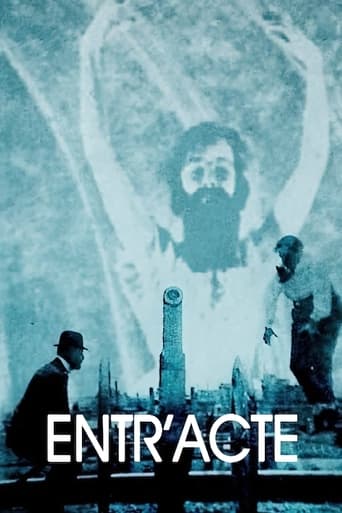
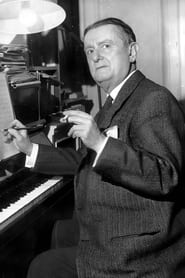
Renowned French composer and film composers of the 20th century, though he did make a brief appearance as an actor in René Clair's surrealist masterpiece 'Entr'acte' (1924). Born in Lodève, France, he became a prominent member of 'Les Six,' a group of young French composers who revolutionized modern music in the 1920s alongside Darius Milhaud, Arthur Honegger, and Francis Poulenc. Auric's over five decades, during which he composed music for more than 100 films, becoming particularly celebrated for his collaborations with directors Jean Cocteau and Powell and Pressburger. He served as music director for the Opéra National de Paris from 1962 to 1968, cementing his status as one of France's most important musical figures. His film scores ranged from the avant-garde to the romantic, showcasing remarkable versatility and innovation in cinematic music. Auric's contributions to both classical and film music on 20th-century culture, bridging the worlds of serious composition and popular entertainment.
The Craft
On Screen
Made only one known film appearance in 'Entr'acte' as part of the surrealist ensemble cast, appearing in a non-speaking role typical of avant-garde cinema of the period
Milestones
- Member of Les Six group of composers
- Composed music for 'The Red Shoes' (1948)
- Composed for 'Roman Holiday' (1953)
- Music director of Opéra National de Paris (1962-1968)
- Composed over 100 film scores
- Brief acting appearance in 'Entr'acte' (1924)
Best Known For
Iconic Roles
Must-See Films
Accolades
Won
- Academy Award nomination for Best Original Score for 'Moulin Rouge' (1952)
- Golden Globe nomination for Best Original Score for 'Moulin Rouge' (1952)
Nominated
- Academy Award for Best Original Score for 'Moulin Rouge' (1952)
- Golden Globe for Best Original Score for 'Moulin Rouge' (1952)
Special Recognition
- Commander of the Legion of Honour
- Grand Officer of the Order of Merit
- Member of Académie des Beaux-Arts
- Music Director of Opéra National de Paris
Working Relationships
Worked Often With
Studios
Why They Matter
Impact on Culture
Georges Auric fundamentally shaped the sound of mid-20th century cinema, bridging the gap between classical European composition and Hollywood film scoring. As a member of Les Six, he helped revolutionize modern music by rejecting Wagnerian romanticism in favor of clarity, irony, and contemporary themes. His film scores for 'The Red Shoes' and 'Roman Holiday' became benchmarks for cinematic music, demonstrating how music could enhance narrative without overwhelming it. Auric's work with French New Wave directors and British filmmakers helped establish a more sophisticated, European approach to film scoring that influenced generations of composers. His brief appearance in 'Entr'acte' placed him at the heart of the surrealist movement, connecting his musical innovations with broader avant-garde artistic experiments.
Lasting Legacy
Georges Auric's legacy endures through his extensive film score catalog, which continues to be studied and admired by musicians and cinema scholars. His compositions for films like 'The Red Shoes' are considered masterpieces of the genre, regularly performed in concert halls worldwide. As director of the Opéra National de Paris, he helped modernize classical music programming, making it more accessible to contemporary audiences. His influence on film scoring techniques can be heard in the work of countless composers who followed, particularly in the use of leitmotifs and thematic development to enhance storytelling. Auric's role in Les Six ensures his place in music history as a pioneer of 20th-century composition, while his film work cemented his reputation as one of cinema's most important musical voices.
Who They Inspired
Auric's minimalist yet emotive approach to film scoring influenced generations of composers, from Bernard Herrmann to John Williams. His ability to blend classical techniques with popular sensibilities created a template for modern film music. His work with Powell and Pressburger on films like 'The Red Shoes' demonstrated how music could become an integral narrative element, not merely background accompaniment. French New Wave directors drew inspiration from his earlier collaborations with René Clair and Jean Cocteau, using his musical innovations as a model for their own cinematic experiments. Contemporary composers frequently cite Auric's economic use of orchestration and his gift for memorable melodic themes as major influences on their own work.
Off Screen
Georges Auric was married three times throughout his life. His first marriage was to the painter and writer Elena Vsevolodovna Zhdanova, daughter of Russian philosopher Vsevolod Zhdanov. His second marriage was to the American actress Eleanor Boardman, though this union was short-lived. His third and longest marriage was to Micheline Lannoy, with whom he spent his later years. Auric was known for his sophisticated social circle, counting among his friends Jean Cocteau, Pablo Picasso, and other leading figures of the Parisian avant-garde. He maintained homes in both Paris and the south of France, where he continued composing well into his later years.
Education
Studied at the Paris Conservatoire under Vincent d'Indy and Charles Koechlin, later attended the Schola Cantorum
Family
- Elena Vsevolodovna Zhdanova (1924-1931)
- Eleanor Boardman (1931-1933)
- Micheline Lannoy (1936-1983)
Did You Know?
- Was one of the six members of the famous composer group 'Les Six' in 1920s Paris
- Composed music for over 100 films throughout his career
- His only acting appearance was in the surrealist film 'Entr'acte' (1924)
- Served as music director for the Opéra National de Paris for six years
- Was a close friend and frequent collaborator with Jean Cocteau
- His score for 'The Red Shoes' is considered one of the greatest film scores ever written
- Composed the music for the Oscar-winning film 'Roman Holiday'
- Was a child prodigy who began composing at age 15
- His music was featured in the opening ceremony of the 1992 Winter Olympics
- Was made Commander of the Legion of Honour, France's highest civilian award
In Their Own Words
Music in films should be like a good waiter - present when needed, invisible when not
The best film music is what you remember without realizing you heard it
Cinema needs music as the body needs a soul
We in Les Six sought to write music that was as clear and direct as a conversation
Film scoring is the art of saying everything with nothing but notes
Frequently Asked Questions
Who was Georges Auric?
Renowned French composer and member of the influential group Les Six, best known for his extensive work as a film composer. Though he made one brief acting appearance in 'Entr'acte' (1924), his primary contribution to cinema was through his musical scores for over 100 films, including classics like 'The Red Shoes' and 'Roman Holiday'.
What films is Georges Auric best known for?
Titles linked here include Entr'acte (1924) as actor, The Red Shoes (1948) as composer.
When was Georges Auric born and when did he die?
Born February 15, 1899; died July 23, 1983.
What awards did Georges Auric win?
Auric received an Academy Award nomination for Best Original Score for 'Moulin Rouge' (1952) and was honored as Commander of the Legion of Honour. He also served as music director of the Opéra National de Paris from 1962 to 1968.
What was Georges Auric's musical style?
Auric's musical style was characterized by clarity, wit, and emotional directness, reflecting his involvement with Les Six. His film scores ranged from lush romanticism to avant-garde experimentation, always serving the narrative while maintaining strong melodic appeal and sophisticated orchestration.
Was Georges Auric primarily an actor or composer?
Georges Auric was primarily a composer, not an actor. His single appearance in 'Entr'acte' (1924) was more of a cameo within avant-garde circles, while his main career involved composing over 100 film scores and serving as a major figure in 20th-century classical music.
What was Les Six and what was Auric's role in it?
Les Six was a group of six French composers formed in the 1920s, including Auric, Darius Milhaud, Arthur Honegger, and others. They rejected romanticism in favor of modern, direct musical expression, and Auric was.