Films
1 film
About Boris Shpis
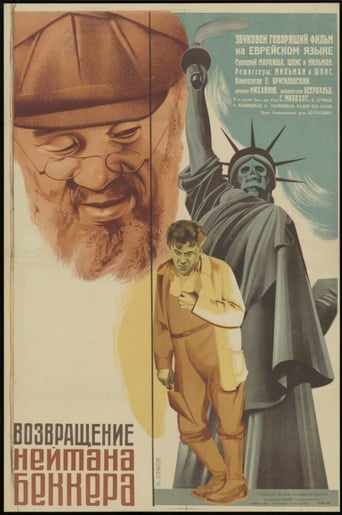
Obscure Soviet-era film director: entire known cinematic output consists of a single film, 'The Return of Nathan Becker' (1932), which appears to be lost. Active exclusively during the year 1932, his brief career coincided with the turbulent transition from silent cinema to sound in the Soviet Union, a period marked by intense political and artistic scrutiny from the state. His sole directorial credit suggests he may have been part of the generation of filmmakers who struggled to adapt to the new technical and ideological demands of the era, or perhaps his career was cut short by the political purges that would soon decimate the Soviet film industry. Very little is documented about his life, training, or the circumstances surrounding the production and release of his only known film. 'The Return of Nathan Becker' itself is a phantom of film history, with no known surviving prints or even detailed plot synopses available in major film archives. His legacy is that of a ghost, a name on a filmography representing countless artists whose work was lost to time, censorship, or the destructive forces of 20th-century history. Shpis stands as a poignant symbol of the immense cultural and artistic erasure that occurred during this period.
The Craft
Behind the Camera
Given the single credit and lack of surviving work, Shpis's directing style is entirely unknown. However, working in the Soviet Union in 1932, his film would have been subject to the strictures of Socialist Realism, which was beginning to dominate Soviet arts. This ideology demanded that films be easily understood by the masses, promote optimistic and collectivist values, and feature heroic workers and peasants as protagonists. It is likely his approach was conventional and aligned with state-mandated cinematic principles, potentially employing montage techniques inherited from Soviet pioneers like Eisenstein and Pudovkin, but adapted for a simpler, narrative-driven format.
Milestones
- Directed the only known film, 'The Return of Nathan Becker' (1932)
Best Known For
Must-See Films
Working Relationships
Studios
Why They Matter
Impact on Culture
Boris Shpis's cultural impact is negligible in terms of direct influence, as his work has not survived and he left no known disciples or documented influence on other filmmakers. However, his existence as a documented name attached to a lost film from a specific historical moment provides a valuable, if minute, data point for film historians studying the breadth of Soviet film production. His story highlights the vast scale of film production in the early 1930s USSR and the immense loss of cultural heritage that occurred. He represents the 'average' filmmaker of his time—not a visionary like Eisenstein or Vertov, but a working director whose career was likely shaped entirely by the political and industrial forces of his day.
Lasting Legacy
The legacy of Boris Shpis is one of absence and mystery. He is a ghost of early Soviet cinema, a figure known only by a single credit for a lost film. His primary legacy is as a case study in film preservation and historical erasure, prompting questions about how many other artists and their works have vanished without a trace. For scholars, Shpis is a reminder that the official canon of film history represents only a fraction of what was actually created, and that the stories of many participants are lost forever. His name serves as a placeholder for countless anonymous creators whose contributions to the medium have been silenced by time.
Who They Inspired
Due to the complete lack of surviving work and documentation, there is no evidence to suggest Boris Shpis influenced any other filmmakers or cinematic movements. His influence is entirely hypothetical, confined to the possibility that his work may have been seen by contemporaries within his immediate circle or at the studio where he worked. He is more a subject of historical inquiry than an agent of artistic influence, representing the countless individuals whose potential impact on the art form was never realized or recorded.
Off Screen
The personal life of Boris Shpis is completely undocumented in available historical and filmographic records. There is no known information regarding his family, marital status, children, or personal interests. His obscurity is so profound that he does not appear in major encyclopedias of Soviet cinema, suggesting he was either a minor figure whose life was not considered noteworthy for preservation or that records were deliberately destroyed or lost. The absence of any personal details places him among the many anonymous individuals who participated in the early Soviet film industry.
Did You Know?
- His entire known filmography consists of only one film, 'The Return of Nathan Becker' (1932).
- The film he directed is considered lost, with no known surviving copies in any major film archive.
- His active period in the film industry lasted for a single year, 1932.
- He is.
- The title of his only film, 'The Return of Nathan Becker,' suggests a possible Jewish-themed narrative, which was a subject of both interest and sensitivity in the USSR at the time.
- There are no known photographs of Boris Shpis in circulation.
- His name does not appear in major Western film encyclopedias, highlighting the obscurity of his career.
- He worked during a period when Stalin's cultural policies were beginning to heavily restrict artistic freedom in the Soviet Union.
Frequently Asked Questions
Who was Boris Shpis?
Extremely obscure Soviet on YTB.my. He is known solely for directing one film, 'The Return of Nathan Becker,' which is now considered lost, making him a ghost of early cinema history.
What films is Boris Shpis best known for?
Titles linked here include The Return of Nathan Becker (1932).
When was Boris Shpis born and when did he die?
The birth and death dates of Boris Shpis are unknown, as are the details of his personal life. He appears only as a name in filmography databases for his work in 1932.
What awards did Boris Shpis win?
There are no records of Boris Shpis receiving any awards or nominations for his work. His brief and undocumented career did not yield any formal recognition that has been preserved.
What was Boris Shpis's directing style?
Boris Shpis's directing style is impossible to determine as his only film is lost. However, working in the USSR in 1932, his work would have been heavily influenced by the emerging doctrine of Socialist Realism, which demanded clear, optimistic, and state-approved narratives.