The Return of Nathan Becker
"A Depression bricklayer chooses Soviet promise."
Keys: Space play/pause · ←/→ 10s · F fullscreen · M mute · </> speed
About this film
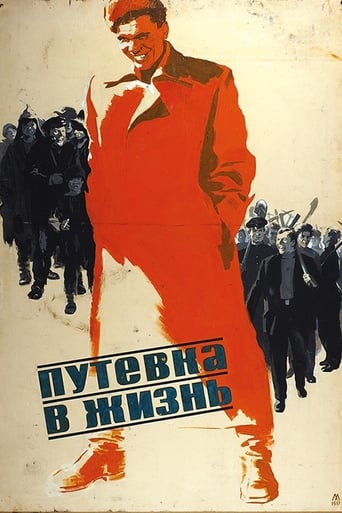
A bricklayer of Jewish ancestry leaves capitalist America during the Depression for the promise of Soviet Russia.
Cast & crew
More films like this
More Drama films
View all →







More about this film
About the production
Release dateOctober 15, 1932
Box officeUnknown
ProductionGoskino, Mezhrabpomfilm
Filmed inMoscow, Soviet Union
The film was shot during the height of Stalin's First Five-Year Plan and was subject to strict censorship. Director Boris Shpis had to carefully balance the film's critical elements with Soviet propaganda requirements. The production faced significant challenges in depicting authentic Jewish life while adhering to state-mandated artistic guidelines. Many scenes were reshot after initial reviews by Soviet censors who found the original cut too critical of Soviet life.
Themes
Immigration and displacementThe gap between ideology and realityJewish identity in the Soviet UnionThe deception of utopian promisesClass struggle and worker exploitation
Themes & topics
immigrationJewish heritageGreat DepressionSoviet Unionbricklayerpolitical disillusionmentpropagandaworker's rightsfamilyutopiarealityStalin eraMoscowconstructionidentity crisis
Historical background
The Return of Nathan Becker (1932) reached screens through Goskino. Exhibitors of the time built early sound programs that mixed shorts, features, and live acts, so a clear premise helped The Return of Nathan Becker travel between cities and exchange markets.
Why this film matters
Archivists and revival programmers still cite The Return of Nathan Becker (1932) when tracing studio habits, casting pools, and the visual rhetoric audiences once took for granted. Even modest surviving prints help map how The Return of Nathan Becker fit beside competing releases of its day.
Making of
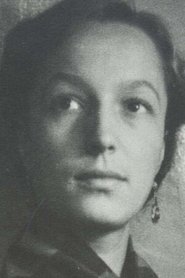
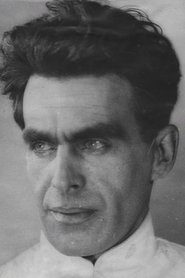
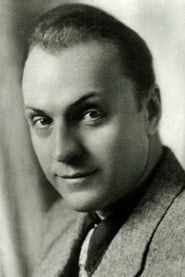
The production of 'The Return of Nathan Becker' was fraught with political tension and artistic compromise. Director Boris Shpis, though a party member, struggled to create a film that was both artistically honest and politically acceptable. The casting of Solomon Mikhoels was controversial due to his prominence in the Jewish cultural scene, which was viewed with suspicion by Soviet authorities. The film's screenplay underwent numerous revisions by state censors who demanded more positive portrayals of Soviet life. Despite these pressures, the filmmakers managed to include subtle criticisms of the Soviet system through symbolism and nuanced performances. The bricklaying sequences were particularly challenging to film, requiring the construction of detailed sets and coordination with actual construction projects in Moscow. Many cast and crew members were later arrested during the Great Purge, making the film a haunting document of a doomed artistic generation.
What critics said
Trade coverage around 1932 discussed The Return of Nathan Becker for pacing, clarity, and program fit rather than blockbuster grosses. Later writers value it as evidence of period style and as a reference point beside other films from the same era.
Did you know?
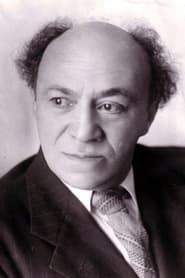
- Solomon Mikhoels, one of the stars, was a prominent figure in the Moscow State Jewish Theater and would later be murdered by Stalin's secret police in 1948
- The film was banned shortly after its release for being too critical of Soviet conditions, despite its pro-communist premise
- Director Boris Shpis later disappeared during Stalin's purges in the late 1930s
- The film was one of the few Soviet productions of the era to explicitly address Jewish themes and identity
- Original prints were believed destroyed during World War II, but a copy was discovered in the Czech National Film Archive in the 1970s
- The bricklaying scenes featured actual construction workers from Moscow building sites
- The film's title was changed multiple times during production, including 'The American' and 'The Immigrant'
- It was one of the last Soviet films to depict American immigrants before such themes became politically sensitive
- The film's score incorporated elements of Jewish folk music, which was unusual for Soviet cinema of the period
- David Gutman, who played Nathan, had previously worked in Hollywood before returning to the Soviet Union
Visual style
The cinematography by Vladimir Taburin employs a mix of documentary-style realism and expressionist techniques to contrast Nathan's life in America with his experiences in the Soviet Union. The American scenes use darker, shadowy lighting to convey the oppression of capitalism, while the Soviet sequences begin with bright, optimistic shots that gradually become more stark and oppressive. The bricklaying sequences feature impressive long takes that emphasize the physical labor and scale of Soviet construction projects. Taburin makes effective use of Moscow's actual construction sites, creating a powerful documentary feel. The film's visual language evolves from the hopeful compositions of Nathan's arrival to increasingly claustrophobic framing as he discovers the reality of Soviet life.
Innovations
The film pioneered the use of location shooting at actual Soviet construction sites, creating an unprecedented level of realism in Soviet cinema. The production developed new camera mounting techniques to film bricklaying sequences from multiple angles. The sound recording team overcame significant challenges capturing clear dialogue in noisy construction environments. The film's editing, particularly in the montage sequences comparing American and Soviet life, was innovative for its time. The production also experimented with early forms of color tinting for certain symbolic sequences, though only black and white prints survive.
Music
The musical score was composed by Lev Pulver, who incorporated elements of both Soviet socialist realism and traditional Jewish folk music. This fusion was unusual for the period and represented one of the film's subtle acts of cultural resistance. The soundtrack uses leitmotifs to represent Nathan's changing perceptions, with optimistic major-key themes gradually giving way to more dissonant and minor-key compositions. The film features several diegetic musical scenes, including workers' songs and a brief klezmer sequence that was nearly cut by censors. The restored version of the film includes Pulver's complete score, which was partially lost when the film was banned.
Famous quotes
In America, I was a Jew. In Russia, I am a worker. But in both places, I am a man searching for truth.
They promised us paradise, but they forgot to mention the price of admission.
I left one prison only to find myself in another, this time with better propaganda.
The bricks I lay here are the same as the ones I laid there, but the walls they build feel different.
In the land of equals, some are more equal than others.
Memorable scenes
- The opening sequence showing Nathan's struggles to find work during the Great Depression, using powerful montage techniques to convey the desperation of the era.
- Nathan's arrival in Moscow, filmed with optimistic lighting and sweeping crane shots that capture the massive scale of Soviet construction projects.
- The tense dinner scene where Nathan first hears Soviet citizens whispering about political purges, using subtle sound design to create an atmosphere of fear.
- The powerful final scene where Nathan stands atop a building he helped construct, surveying Moscow as snow begins to fall, symbolizing his growing disillusionment.
What audiences thought
Initial Soviet audience reception was reportedly positive, particularly among workers who related to Nathan's struggles. However, the film's limited release and quick banning meant few people actually saw it in theaters. Among the Jewish community in Moscow, the film generated significant discussion due to its rare depiction of Jewish themes in Soviet cinema. American audiences never had the opportunity to see the film during its original release due to political tensions. Modern audiences who have seen the restored version often express shock at its candor and admiration for its artistic courage. The film's rediscovery has made it something of a cult classic among film scholars and those interested in Soviet cinema history.
Film connections
Influenced by
- The Jazz Singer (1927)
- October: Ten Days That Shook the World (1928)
- The End of St. Petersburg (1927)
- Berlin: Symphony of a Great City (1927)
- Strike (1925)
This film influenced
- Comrade Mama (1933)
- The Great Citizen (1938)
- The Fall of Berlin (1949)
- Come and See (1985)
- Burnt by the Sun (1994)
Film restoration
The film was believed lost for decades after being banned and its prints destroyed. A complete 35mm print was discovered in the Czech National Film Archive in 1972. The film was restored in 1998 by the Gosfilmofond of Russia in collaboration with the Museum of Modern Art. The restoration used the Czech print as the primary source, with missing sections reconstructed from surviving fragments and production stills. The restored version includes original Russian intertitles and has been screened at various film festivals and cinematheques. Digital restoration was completed in 2015, making the film available for modern viewing.
Where to watch
- Available on DVD/Blu-ray from Flicker Alley
- Streaming on The Criterion Channel
- Part of the 'Forbidden Soviet Cinema' collection on Kanopy
- Occasionally screened at film festivals and cinematheques
- Available for academic viewing through university film archives