John Lince
Actor
- Active
- 1920-1920
Films 1
About John Lince
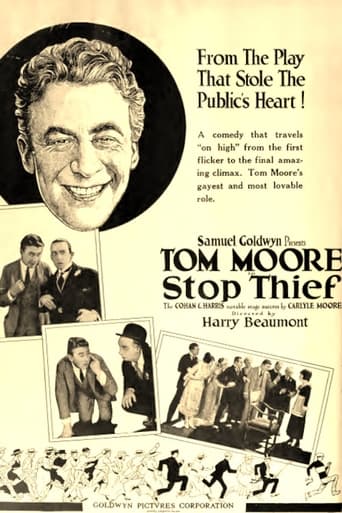
John Lince appears in available silent-era film records as a very obscure screen actor, with his credited filmography currently tied to the 1920 production Stop Thief. Beyond this single surviving or readily located credit, reliable biographical information about his life, training, and later career is not readily documented in major classic-cinema reference sources. Because of that scarcity, it is not possible to construct a detailed, source-secure career narrative without risking confusion with similarly named individuals or unverified genealogy. What can be said with confidence is that he was active in the silent-film period and belonged to the large group of working performers whose contributions were often recorded only in cast lists rather than in publicity or studio biographies. His surviving credit suggests participation in the fast-moving studio system of the early 1920s, when many actors moved between small supporting parts and uncredited roles. At present, his broader life story, personal background, and later activities remain largely undocumented in accessible film-history references.
More about John Lince
In film history
John Lince's cultural impact is difficult to measure because his documented screen presence is extremely limited. However, performers like Lince formed the backbone of silent-era filmmaking: they filled supporting parts, helped populate ensemble casts, and contributed to the continuity and realism of early narratives even when their names were not widely publicized. His presence in the historical record is a reminder that classic cinema was built not only by stars and auteurs but also by thousands of working actors whose names survive only in cast lists and archival databases.
Later reputation
His legacy is primarily archival rather than celebrity-based. For film historians, John Lince represents the many early cinema participants whose careers are known from a single or very small number of credits, making them important to reconstruction of silent-film production history. Even without extensive biographical documentation, his credited role in Stop Thief preserves his place in the silent-era record and helps scholars and database compilers maintain a fuller picture of the period's cast ecosystem.
Influence
There is no documented evidence that John Lince directly influenced later actors or directors in a notable, traceable way. Any influence he may have had would have been indirect, as part of the broader working tradition of silent-era ensemble acting. His main historical significance lies in his contribution to the fabric of early film production rather than in a clearly identifiable stylistic or artistic lineage.
Off screen
No reliable, source-confirmed information about John Lince's personal life has been located in standard classic-film references. Details such as marriage, family background, residence, education, and later occupation are not readily available from the surviving documentation associated with his name. Because of the limited record, any attempt to infer personal circumstances would be speculative. He should therefore be treated as a minimally documented silent-era performer rather than a biographically established public figure.
Credits
- Credited screen appearance in the silent film Stop Thief (1920)
- Documented participation in early-1920s silent cinema
- Representative of the many lesser-documented supporting performers of the silent era
Roles
- Role in Stop Thief (1920)
Films
- Stop Thief (1920)
Notes
- John Lince is currently documented in available references primarily through a single silent-film credit.
- His known activity falls entirely within the silent era, around 1920.
- He is an example of how many early film performers left very limited surviving biographical traces.
- Because the record is sparse, he is easy to confuse with similarly named individuals, so identification must be handled carefully.
- His surviving credit makes him part of the vast supporting cast culture of early Hollywood and American silent cinema.
- He is not known to have accumulated a widely publicized star persona or major publicity campaign.
Questions
Who was John Lince?
John Lince was a little-documented silent-era film actor whose surviving credited screen work is associated with Stop Thief (1920). He appears to have been part of the broad pool of early cinema performers whose careers were recorded mainly in cast lists rather than in extensive studio publicity.
What films is John Lince best known for?
He is currently best known for Stop Thief (1920), which is the primary credited film connected to his name in accessible records. No additional reliably documented film titles are presently confirmed here.
When was John Lince born and when did he die?
At present, reliable public references do not provide verified birth or death dates for John Lince. His biographical record remains sparse, so both dates are currently unavailable.
What awards did John Lince win?
No awards or formal honors are documented for John Lince in the available record. He appears to have worked at a time when many supporting performers were not publicly recognized with major industry awards.
What was John Lince's acting style?
There is no surviving critical description of his performance style that can be confidently cited. Since he worked in silent cinema, his acting would have depended on visual expression, gesture, and physical clarity typical of the era, but specifics about his individual approach are not documented.
What is John Lince's legacy in film history?
His legacy is mainly archival, as a credited participant in silent-era film history whose name survives in historical records. He represents the many lesser-known actors who contributed to early filmmaking even when they did not become famous stars.