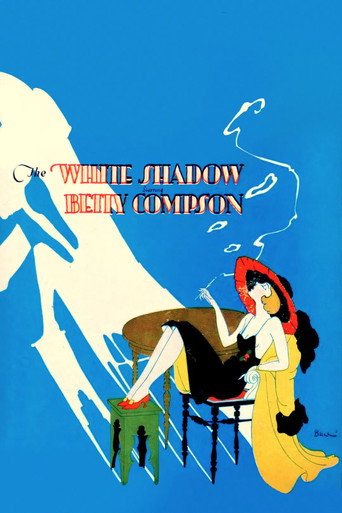
Donald Searle
Actor
- Active
- 1924-1924
Films 1
About Donald Searle
Donald Searle is a very obscure silent-era screen actor who is documented primarily for his appearance in the 1924 film The White Shadow. Surviving film reference sources indicate that his known screen activity falls within a single year, 1924, suggesting either a brief professional screen career or an incomplete historical record. Because he appears in only limited surviving documentation, very little can be stated with confidence about his broader life, training, or later career without risking confusion with other individuals of similar name. He belongs to the large group of early cinema performers whose work survives more clearly in film credits and archival indexes than in biographical records. His career, as currently documented, is notable chiefly for its participation in the silent-film era rather than for a long list of credited performances. No reliable public record currently provides enough verified personal detail to reconstruct a fuller life story, so his legacy rests almost entirely on the historical value of his credited screen appearance.
More about Donald Searle
In film history
Donald Searle's cultural impact is necessarily modest and indirect, but he remains part of the essential fabric of silent cinema history. Performers like Searle helped populate the silent screen world, contributing to the atmosphere, scale, and social texture of early feature filmmaking even when they did not become stars. His name persists because archival film records preserve the collaborative nature of the medium, where every credited player contributes to the historical identity of a film. In that sense, his presence in The White Shadow connects him to the broader development of British or international silent-era screen performance, depending on production context, even though his individual biography is largely lost. The continued listing of his credit in databases and filmographies underscores how classic cinema scholarship values even the most obscure contributors. His name is part of the historical record that helps scholars reconstruct cast lists, production histories, and the full ecology of early film-making.
Later reputation
Donald Searle's legacy lies in his preserved credit rather than in a widely documented career. For historians, he represents the many early cinema performers whose work is known only through surviving film references and archival indexes. This kind of legacy is important because it reminds researchers that silent cinema was built not only by major stars and directors but also by numerous lesser-known actors whose careers may have been brief or poorly documented. As more archival material is digitized and cross-referenced, figures like Searle remain important to the completeness and accuracy of film history. His name continues to matter as part of the cast history of The White Shadow and as evidence of the depth of the silent-film workforce.
Influence
There is no verified evidence that Donald Searle directly influenced other actors or filmmakers in a documented, traceable way. His influence is best understood in aggregate: as one of many working actors who helped establish the performance conventions and ensemble textures of silent cinema. Even where individual biographies are missing, these performers collectively shaped the visual storytelling traditions that later generations inherited. Searle's presence in film history databases contributes to that broader understanding of early screen acting as a collaborative art form.
Off screen
No reliable biographical information about Donald Searle's personal life has been located in standard classic-cinema reference sources. Details such as family background, marriages, children, residence, and later occupation are not currently verified. Because the available record is so sparse, any claim about his private life would be speculative. He should therefore be treated as a documented screen credit with an otherwise unknown personal history.
Credits
- Credited screen appearance in the silent feature The White Shadow (1924)
- Documentation as an early-film performer active during the silent era
- Representation of the many lesser-known supporting players whose work is preserved in film history records
Roles
- Role in The White Shadow (1924)
Films
- The White Shadow (1924)
Notes
- Donald Searle is currently documented primarily through his credit in The White Shadow (1924).
- His known active period in film records is extremely short, listed as 1924 only.
- He appears to be one of many silent-era players whose personal biography has not survived in widely accessible reference works.
- Because his record is sparse, he is easy to confuse with other people of similar name, so identification must be handled carefully.
- His surviving credit helps film historians reconstruct cast lists for early features.
- No verified awards, nominations, or honors are known for him.
- No confirmed birth or death details are readily available in standard public film references.
Questions
Who was Donald Searle?
Donald Searle was a silent-era film actor known from surviving credits, most notably The White Shadow (1924). He is an obscure historical figure whose career is only sparsely documented in available film references.
What films is Donald Searle best known for?
He is best known for The White Shadow (1924), which is the main surviving screen credit currently associated with his name. No other verified film credits are confidently documented in the available record.
When was Donald Searle born and when did he die?
At present, no reliably verified birth or death dates are available in standard reference sources. His personal life details remain largely undocumented in accessible classic-cinema records.
What awards did Donald Searle win?
No awards or nominations are currently documented for Donald Searle. Given the scarcity of biographical information, it is safest to say that no verified honors are known.
What was Donald Searle's acting style?
There is not enough surviving documentation to describe his acting style with confidence. As a silent-era performer, he would have worked within the expressive, physically legible performance traditions of the period, but no detailed contemporary criticism of his technique is currently available.
What is Donald Searle's legacy in film history?
His legacy is that of a documented participant in early silent cinema whose name survives in cast records. He represents the many lesser-known actors whose contributions helped shape the silent film era even when their personal biographies were not preserved.