The White Shadow
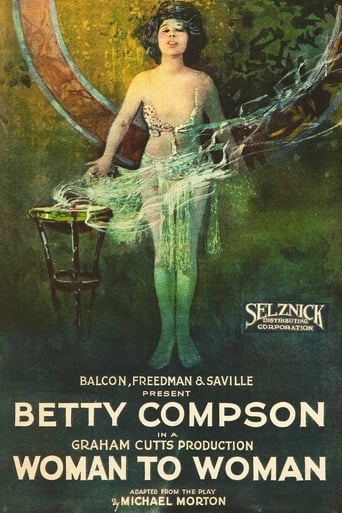
"The white shadow of her twin's soul haunted her wild life."
Plot
Set in Paris, The White Shadow centers on twin sisters whose lives are tragically and mysteriously intertwined. One of the twins, a reckless and pleasure-seeking young woman, appears to be possessed after the death of her more virtuous sister, who sacrificed herself to save her sibling's life at birth. As the surviving sister spirals between romance, self-destruction, and uncanny changes in personality, the film gradually frames her behavior as both psychological turmoil and a supernatural visitation of conscience. The story builds toward the revelation of the twins' emotional bond and the idea that the dead sister's spirit may be guiding the living one toward redemption and self-knowledge.
About the Production
The White Shadow is one of the most important early British feature films associated with Alfred Hitchcock, who worked on the production in multiple capacities, including contributing to intertitles, art direction, and editing assistance according to commonly cited production histories. The film was directed by Graham Cutts and produced under the Gainsborough banner during a period when British studios were trying to compete with the technical polish and international appeal of Hollywood imports. Surviving production accounts emphasize its stylish visual presentation, melodramatic subject matter, and the unusually prominent role played by Hitchcock in shaping its finished form. The film is also notable as one of the lost Hitchcock-related works for many decades, making any surviving elements especially valuable to silent-film historians.
Historical Background
The White Shadow was produced in 1924, in the late silent era, at a time when European cinemas were still recovering from the upheaval of World War I and competing aggressively with rapidly expanding Hollywood production. British film culture in particular was seeking stronger artistic identity and industrial stability, and companies like Gainsborough were central to that effort. The film's Parisian setting, psychological melodrama, and emphasis on visual elegance reflect the international style that silent cinema often favored before synchronized sound transformed filmmaking practices. It also belongs to the period when British studio filmmaking was increasingly professionalized, with young talents like Hitchcock learning craft within established genre projects rather than immediately emerging as auteur directors.
Why This Film Matters
The film matters today primarily because of its place in early Hitchcock history and because it illustrates the collaborative ecology of British silent cinema. For scholars, it provides evidence of the kinds of projects that shaped Hitchcock's early development: melodramatic narratives, visual symbolism, emotional doubling, and a strong dependence on image-driven storytelling. It is also culturally significant as a surviving reference point for a period of British filmmaking that has lost many titles to deterioration or disappearance, making each extant or documented work important to the historical record. The White Shadow helps demonstrate how the silent era could blend romance, psychological conflict, and supernatural suggestion in a form that feels both commercially accessible and artistically ambitious.
Making Of
The White Shadow was made during the mid-1920s when Gainsborough Pictures was building a reputation for more ambitious feature productions. Graham Cutts handled the directorial duties, but Hitchcock's involvement has become the most discussed behind-the-scenes element, since he served on the production in several creative capacities and was gaining practical experience in silent-film construction. As with many productions of the period, the film relied heavily on visual storytelling, expressive performance, and intertitles to carry its psychological and emotional material. Later accounts from Hitchcock scholarship have treated the production as a formative apprenticeship, especially in terms of pacing, composition, and the use of mood to suggest inner states. Because the film survives only incompletely or was long unavailable in standard circulation, many behind-the-scenes details are pieced together from production histories, contemporary references, and later retrospectives rather than from a full archival record.
Visual Style
The film is notable for the visual expressiveness typical of mid-1920s silent melodrama, with an emphasis on faces, gesture, spatial contrast, and mood. Like many prestige silent productions, it would have depended on carefully composed framing, lighting, and intertitles to convey the psychological uncertainty at the heart of the story. Historians often associate the production with an early use of visual symbolism and controlled atmospheric effects that helped suggest the twin motif and the haunting presence implied by the title. Even without modern sound, the film likely aimed for a rich emotional texture through image design, performance, and editing rhythm.
Innovations
The White Shadow is not known for a single headline technical innovation, but it is important for its polished silent-era craftsmanship and for the early development of film language associated with Hitchcock and his collaborators. The production demonstrates advanced use of visual storytelling, emotional contrast, and atmosphere within the constraints of the silent form. Its significance lies more in the refinement of cinematic technique and the shaping of mood than in a specific mechanical breakthrough. For historians, the film is technically noteworthy as part of the apprenticeship period that helped form one of cinema's most influential directors.
Music
As a silent film, The White Shadow was originally presented with live musical accompaniment in theaters rather than a fixed synchronized soundtrack. Specific original score information is not firmly documented in the surviving widely cited record, and different venues in the 1920s would likely have used local musicians, cue sheets, or house arrangements. Any modern screenings or restorations may use newly prepared accompaniment, but a definitive original score is not generally identified in standard references. The film's emotional tone would have depended heavily on the theater's musical presentation.
Famous Quotes
No widely documented surviving spoken quotes are associated with this silent film.
As a silent feature, its dialogue survives only in intertitles, which are not consistently preserved in the available record.
Memorable Scenes
- The central revelation of the dead twin's sacrificial history, which reframes the heroine's emotional crisis.
- Moments in which the surviving sister's behavior shifts abruptly, suggesting the haunting influence of her twin's spirit.
- Romantic and nocturnal Paris sequences that build atmosphere around the film's theme of dual identity.
Did You Know?
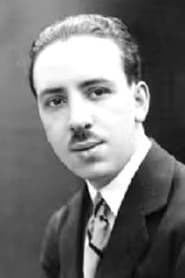
- The White Shadow is widely remembered as an early film contribution by Alfred Hitchcock, long before he became a director in his own right.
- Hitchcock later described the production as an important early learning experience, and film historians often cite it as part of the foundation of his later visual and narrative style.
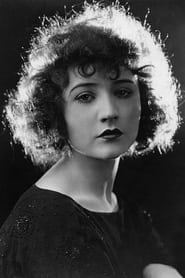
- The film stars Betty Compson, an American actress who was a significant international screen presence in silent cinema.
- The story combines melodrama, psychological doubling, and supernatural ambiguity, which made it stand out from many straightforward romantic dramas of the era.
- It was directed by Graham Cutts, one of the more important British directors of the silent period, though he is now less widely remembered than Hitchcock.
- The film was long thought to be lost or difficult to access, which contributed to its mythic status among silent-film scholars.
- The title refers to the supposedly benevolent or guiding presence of the dead twin, a concept that gave the film its distinctive haunting tone.
- It is often discussed in histories of Hitchcock because of the overlap between this production and the earliest development of his visual storytelling instincts.
- The film was made at a time when British studios were trying to strengthen their production values to rival American and Continental cinema.
- Its Paris setting reflects the period's fascination with cosmopolitan, emotionally charged melodrama.
What Critics Said
Contemporary critical reception is not comprehensively preserved in the available record, but the film was generally treated as a polished and atmospheric melodrama rather than a major prestige landmark. In later decades, its reputation grew less through mainstream criticism than through Hitchcock scholarship and silent-film historiography, where it is valued as an early example of the director's working environment and evolving aesthetic interests. Modern critics and historians tend to discuss it in relation to the development of visual narrative, the role of mood and doubling, and the degree to which Hitchcock's influence can be detected in the finished film. Because the film is not as widely accessible as canonical silent masterpieces, its critical profile remains specialized rather than broadly popular.
What Audiences Thought
Specific audience-response data from 1924 is not widely documented, but the film was made for the commercial feature market and was likely intended to attract audiences interested in romance, suspense, and emotional spectacle. Silent-era viewers would have encountered it as a polished British melodrama with an exoticized Paris setting and a strongly designed central role for Betty Compson. In modern times, audience awareness is limited mostly to silent-film enthusiasts, Hitchcock followers, and archival viewers who encounter it through retrospectives or restorations. Among these audiences, interest usually centers on its atmosphere, its unusual premise, and its historical link to Hitchcock rather than on mass popularity.
Film Connections
Influenced By
- Victorian and Edwardian melodramatic fiction
- The literary and theatrical tradition of doubles and doppelgängers
- Early psychological melodramas of the silent era
- Contemporary European silent cinema emphasizing mood and atmosphere
This Film Influenced
- Early Hitchcock psychological thrillers
- British melodramas that use visual storytelling and emotional doubling
- Later films exploring twin identity and supernatural possession motifs
You Might Also Like
More Drama Films
View allMore from Graham Cutts
View allFilm Restoration
The film is not generally considered lost, but it is a rare silent-era title with incomplete or limited circulation history, and its preservation status has long been of archival interest. It is discussed as surviving in some form, though not as a commonly available mainstream classic, and access has historically been restricted compared with more famous Hitchcock-related works. Availability may vary by archive, restoration status, and regional licensing.