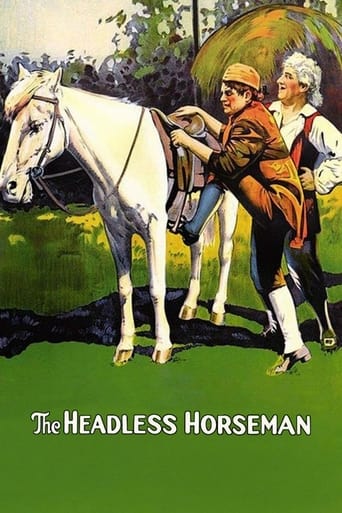
Bernard A. Reinold
Actor
- Active
- 1922-1922
Films 1
About Bernard A. Reinold
Bernard A. Reinold was a stage and screen actor active during the silent-film era, though surviving records about his life are extremely limited. He is credited in the 1922 film The Headless Horseman, which places him within the early 1920s period when many Broadway-trained and theater-based performers crossed into motion pictures. Available film history references do not preserve a substantial screen career for him, suggesting that his contribution to classic cinema was brief or sparsely documented. Because of the scarcity of reliable biographical material, it is difficult to reconstruct his full personal or professional arc with confidence. What can be said with certainty is that he belongs to the large group of early film performers whose work helped shape silent-era production, even if they did not become long-running stars. His screen legacy survives primarily through his credit in The Headless Horseman and any archival theater references that may survive under the same name. In the absence of verified evidence for additional film roles, awards, or personal details, his biography remains one of the many partial histories common to early cinema personnel.
More about Bernard A. Reinold
In film history
Bernard A. Reinold's cultural impact is difficult to measure because the surviving record preserves only a narrow slice of his work. Even so, his presence in The Headless Horseman places him within the network of stage-trained performers who lent silent films acting experience, diction, and physical discipline adapted to camera work. Performers like Reinold helped populate the supporting casts that made early feature filmmaking function as a dramatic medium, even when their names did not become widely remembered. His career is representative of the many early cinema artists whose contributions were essential to production history but not fully preserved in later publicity or fan culture.
Later reputation
Reinold's legacy lies less in fame than in documentation: he is part of the historical record of silent cinema and the cast lists that allow scholars to trace the personnel of early film production. His surviving credit in The Headless Horseman ensures that his name remains attached to one of the period's literary adaptations and to the broader development of feature-length filmmaking in the early 1920s. For film historians, figures like Reinold are important because they reveal how many theater and character actors passed through the silent screen without leaving extensive press coverage or fan-magazine visibility. His legacy is therefore archival and historical, representing the many working performers whose participation supported the growth of American cinema.
Influence
There is no verified evidence that Bernard A. Reinold directly influenced major actors or directors in a documented way. His importance is more indirect: as part of the early silent-era performing community, he contributed to the performance conventions and ensemble practices that younger screen actors would later inherit. In that sense, his influence is best understood as part of the collective evolution of early film acting rather than as a clearly traceable personal mentorship or star lineage.
Off screen
No reliable biographical records readily available in major classic-cinema reference sources document Bernard A. Reinold's family background, marriages, children, or private life. Because of the limited surviving information, it is not possible to confirm whether he had a longer career in theater, vaudeville, or other stage work before or after his screen appearance. Any further claims about his personal life would be speculative and are therefore omitted here.
Credits
- Screen credit in the 1922 silent film The Headless Horseman
- Participation in early-1920s American silent cinema
- Association with a high-profile literary adaptation from the silent era
Roles
- Role in The Headless Horseman (1922)
Films
- The Headless Horseman (1922)
Notes
- Bernard A. Reinold is known to film historians primarily through a single surviving film credit rather than a broad documented filmography.
- His credited appearance in The Headless Horseman places him in the silent-film period, when many roles remain poorly documented.
- Because of limited archival records, he is one of many early cinema performers whose life story is still largely unverified.
- His name is preserved in cast records that help reconstruct the personnel of silent-era productions.
- The scarcity of information about him is itself typical of many supporting actors from the 1920s, especially those with only brief screen careers.
Questions
Who was Bernard A. Reinold?
Bernard A. Reinold was a silent-era actor best known for appearing in The Headless Horseman (1922). Surviving documentation about his broader career is very limited, so he is chiefly remembered through that film credit.
What films is Bernard A. Reinold best known for?
He is best known for The Headless Horseman (1922), his only reliably documented screen credit in the available record. No additional verified filmography is readily preserved in standard reference sources.
When was Bernard A. Reinold born and when did he die?
His birth and death dates are not currently verified in the available classic-cinema record. Likewise, his birthplace and lifespan cannot be stated confidently without better archival evidence.
What awards did Bernard A. Reinold win?
No awards or formal nominations are currently documented for Bernard A. Reinold in the surviving record. This is not unusual for performers from the silent era, especially those with limited screen careers.
What was Bernard A. Reinold's acting style?
There is not enough surviving critical commentary to describe his style with certainty. Given his era, his work would have been shaped by silent-film performance conventions, which emphasized expressive gesture, clear physical characterization, and visual storytelling.
What is Bernard A. Reinold's legacy in film history?
His legacy is archival and historical: he is part of the documented cast history of early American silent cinema. Even with little surviving personal information, his credit helps historians reconstruct the people who worked in the industry during its formative years.