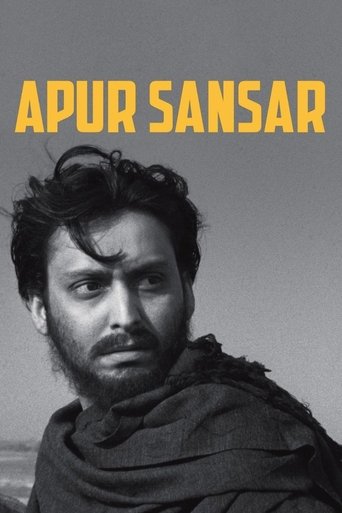
Films
1 film
About Shanti Bhattacherjee
Shanti Bhattacherjee was cast in Satyajit Ray's masterpiece 'Apur Sansar' (The World of Apu) in 1959, the final installment of the acclaimed Apu Trilogy. While details about their broader career are scarce, their participation in this landmark film places them within the golden era of Indian cinema. Shanti Bhattacherjee was part of a revolutionary movement in Indian filmmaking that brought international recognition to Bengali cinema. Their appearance in 'Apur Sansar' came during a pivotal moment when Indian cinema was transitioning to more realistic, neorealist storytelling. The film itself was for its naturalistic performances and deep psychological exploration of its characters. Bhattacherjee's contribution, though possibly in a supporting capacity, was part of what many consider one of the greatest film trilogies ever made, alongside works like 'The Godfather' and 'Three Colors' trilogy.
The Craft
Milestones
- Appeared in Satyajit Ray's 'Apur Sansar' (1959)
- Part of the cast of the final film in the legendary Apu Trilogy
- Contributed to
Best Known For
Iconic Roles
Must-See Films
Working Relationships
Worked Often With
Why They Matter
Impact on Culture
Shanti Bhattacherjee's participation in 'Apur Sansar' places them within the cultural phenomenon that was the Apu Trilogy, which fundamentally changed international perceptions of Indian cinema. The trilogy introduced authentic Indian storytelling to global audiences and influenced generations of filmmakers worldwide. By being part of this cinematic milestone, Bhattacherjee contributed to a work that has been preserved in the Criterion Collection and studied in film schools globally. The film's success helped establish Satyajit Ray as one of cinema's greatest directors and brought Bengali cinema to the international stage, paving the way for future Indian art house films to gain recognition at major film festivals like Cannes and Venice.
Lasting Legacy
While specific details about Shanti Bhattacherjee's individual legacy are limited, their contribution to 'Apur Sansar' ensures their place in film history as part of one of cinema's most revered trilogies. The Apu Trilogy continues to be referenced and homaged in contemporary cinema, and its influence can be seen in the works of directors like Martin Scorsese, Wes Anderson, and Mira Nair. The film's themes of love, loss, and personal growth remain timeless, and its naturalistic acting style revolutionized Indian film performance. Bhattacherjee's work, alongside the ensemble cast, helped create a benchmark for realistic acting in Indian cinema that continues to inspire actors today.
Who They Inspired
As a supporting actor in a groundbreaking film, Shanti Bhattacherjee was part of a production that demonstrated the power of naturalistic, understated performance in contrast to the theatrical acting style prevalent in Indian cinema at the time. The influence of 'Apur Sansar' on subsequent Indian actors was profound, encouraging a move toward more subtle and authentic portrayals of characters. The film's success internationally also showed that Indian stories could resonate with global audiences without compromising cultural authenticity, influencing how future generations of Indian actors approached their craft in both art house and commercial cinema.
Off Screen
Very limited information is available about Shanti Bhattacherjee's personal life, which was common for supporting actors in Indian cinema during the 1950s who often worked anonymously or with minimal public documentation.
Did You Know?
- 'Apur Sansar' was the third and final film in Satyajit Ray's Apu Trilogy
- The film was shot on a very limited budget, characteristic of Ray's early works
- Sharmila Tagore made her debut in this film at the age of 14
- The Apu Trilogy is considered one of the greatest achievements in film history
- The films were restored in 2015 by the Criterion Collection
- Ray discovered Sharmila Tagore through a photograph
- The trilogy was based on novels by Bengali writer Bibhutibhushan Bandyopadhyay
- Many of the supporting actors were non-professionals, which was common in Ray's films
Frequently Asked Questions
Who was Shanti Bhattacherjee?
Screen credits include Satyajit Ray's acclaimed film 'Apur Sansar' in 1959. They were part of the cast of this landmark film, which concluded the famous Apu Trilogy that brought international recognition to Indian cinema.
What films is Shanti Bhattacherjee best known for?
Titles linked here include Apur Sansar (1959).
When was Shanti Bhattacherjee active in films?
Based on available information, Shanti Bhattacherjee's known film activity was limited to 1959, with their documented appearance in 'Apur Sansar'. This was during the golden era of Bengali cinema when Satyajit Ray was revolutionizing Indian filmmaking.
What was the significance of 'Apur Sansar' in cinema history?
'Apur Sansar' was the culminating film in the Apu Trilogy, which is considered one of the greatest trilogies in cinema history. The film established Satyajit Ray as an international auteur and brought Indian art house cinema to global prominence, winning numerous awards at international film festivals.
How did 'Apur Sansar' influence Indian cinema?
'Apur Sansar' revolutionized Indian cinema through its naturalistic acting style, realistic storytelling, and technical innovation. It moved away from the theatrical traditions prevalent in Indian films and introduced a more authentic, neorealist approach that influenced generations of Indian filmmakers and actors.