Films
1 film
About Carl Goliath
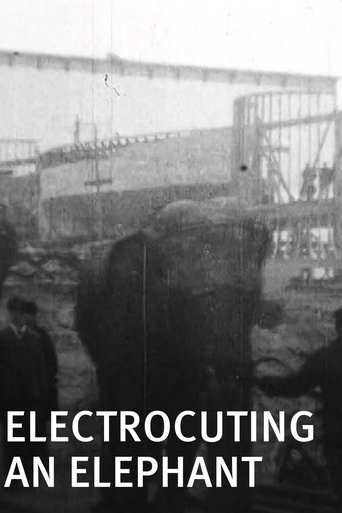
Carl Goliath is a figure from the earliest days of cinema, known primarily for his participation in the controversial 1903 film 'Electrocuting an Elephant.' His entire known filmography consists of this single, historically significant short documentary produced by the Edison Manufacturing Company. Goliath was not a traditional actor but rather the keeper of Topsy, the circus elephant at the center of the film. His role was that of a real-life participant in the event being documented, a common practice in early cinema where actuality films often blurred the line between documentary and performance. Following the execution of Topsy on Coney Island, an event for which Goliath was present and likely involved in handling the animal, there is no further record of his involvement in the burgeoning film industry. His legacy is inextricably linked to this one shocking and widely distributed film, which serves as a stark example of early cinema's fascination with sensationalism and its role as a medium for documenting real-life events, no matter how grim. Consequently, his career arc is exceptionally brief, representing a snapshot of a specific moment in time rather than a sustained artistic journey.
The Craft
On Screen
As a participant in an actuality film, Carl Goliath did not employ a traditional acting style. His presence was that of a real person involved in a real event, documented by the camera. His performance, if it can be called that, was purely functional and authentic to the circumstances, lacking any of the theatricality common in stage or later silent film acting.
Milestones
- Appeared in the Edison Manufacturing Company film 'Electrocuting an Elephant' (1903)
Best Known For
Iconic Roles
Must-See Films
Working Relationships
Worked Often With
Studios
Why They Matter
Impact on Culture
Carl Goliath's cultural impact is indirect but significant. As the keeper of Topsy, he was a key figure in an event that was captured in. 'Electrocuting an Elephant' is frequently studied by film historians as a prime example of early actuality films, the use of cinema for sensational purposes, and the intersection of technological progress (AC vs. DC electricity) with popular entertainment. Goliath's presence in the film grounds the sensational event in a human context, representing the anonymous workers who facilitated such spectacles. The film itself has become a cultural artifact, referenced in discussions about animal cruelty, media ethics, and the early development of the film industry.
Lasting Legacy
Carl Goliath's legacy is almost entirely defined by his single appearance in 'Electrocuting an Elephant.' He is remembered not as an actor with a body of work, but as a historical figure connected to a pivotal and disturbing moment in early 20th-century history. His name survives in film credits and historical analyses of the Edison Company's output, serving as a reminder of the many anonymous individuals who participated in the birth of cinema. While he did not contribute to the art of acting in a traditional sense, his participation ensures he is permanently part of the historical record of film's earliest and most controversial days.
Who They Inspired
Carl Goliath did not have an influence on other actors or directors in the conventional sense, as he was not a creative artist within the film industry. His role was that of a real-life subject, and his 'performance' was not intended to be emulated. However, his inclusion in the film represents the broader influence of early cinema's practice of documenting real events, a practice that would evolve into documentary filmmaking. In this way, his anonymous participation is part of the foundation upon which non-fiction film was built.
Off Screen
Extremely little is known about Carl Goliath's personal life outside of his documented connection to Topsy the elephant. Historical records from the era are sparse, and as a low-level animal handler, he was not a figure of public interest. He was employed by the Forepaugh Circus, which owned Topsy, and was responsible for her care. His life before and after the infamous 1903 event remains a mystery to film historians.
Did You Know?
- His only known film credit is for 'Electrocuting an Elephant' (1903).
- He was not a professional actor but an animal keeper for the Forepaugh Circus.
- The film he appeared in was produced by Thomas Edison's company and was used to promote the supposed dangers of alternating current (AC) electricity.
- The event depicted in the film—the execution of Topsy the elephant—occurred on January 4, 1903, at Coney Island's Luna Park.
- Topsy was killed after being deemed a dangerous animal, having killed a spectator in 1902.
- The film is only 74 seconds long but has become.
- Goliath's name appears in historical records and some film databases, but virtually no other biographical information about him exists.
Frequently Asked Questions
Who was Carl Goliath?
Animal keeper for the Forepaugh Circus in the early 1900s, known solely for his appearance in the 1903 Edison film 'Electrocuting an Elephant.' He was the keeper of Topsy, the elephant featured in the film, and was present at her public execution.
What films is Carl Goliath best known for?
Titles linked here include Electrocuting an Elephant (1903).
When was Carl Goliath born and when did he die?
The birth and death dates for Carl Goliath are unknown. Historical records from this period for individuals like circus workers are often incomplete or nonexistent.
What awards did Carl Goliath win?
Carl Goliath did not receive any awards or nominations for his film work, as he was a participant in a single early actuality film, not an actor in the traditional sense.
What was Carl Goliath's role in 'Electrocuting an Elephant'?
In the film, Carl Goliath was the real-life keeper of Topsy the elephant. His presence was not a performance but a documentation of his role in the actual event of leading the elephant to be electrocuted.
Why is the film 'Electrocuting an Elephant' historically significant?
The film is significant as an early example of an actuality film and a piece of propaganda in the 'War of the Currents.' It is also frequently cited in discussions about media ethics, animal cruelty, and the sensationalism of early cinema.