Electrocuting an Elephant
"Topsy the elephant is electrocuted before Edison's cameras."
Keys: Space play/pause · ←/→ 10s · F fullscreen · M mute · </> speed
About this film
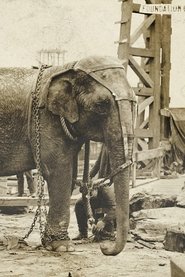
Topsy, a Luna Park elephant deemed dangerous after killing three men, was publicly electrocuted at Coney Island on January 4, 1903. Edison's crew filmed the execution as alternating current passed through copper sandals fitted to her feet, and she collapsed within seconds. The footage circulated as a sensational actuality and as propaganda in Edison's campaign against Westinghouse alternating current.
Cast & crew
More films like this
More Documentary films
View all →
More from Edwin S. Porter
View all →

More about this film
About the production
Release dateJanuary 1903
BudgetNot documented - typical of the era, but minimal as it was essentially a newsreel capture of a real event
Box officeNot systematically tracked in 1903, but was widely distributed and exhibited by Edison Studios across the United States
ProductionEdison Manufacturing Company
Filmed inConey Island, Brooklyn, New York, Luna Park, Coney Island
Filmed by Edwin S. Porter and his Edison Studio crew on January 4, 1903, the same day as the actual execution. The electrocution was performed using AC current, which Edison was actively trying to portray as dangerous in his campaign against Westinghouse and Tesla's alternating current system. The film was shot from multiple angles to capture the event comprehensively, unusual for the period. The execution itself was a public spectacle, reportedly attended by 1,500 people who paid admission to witness it.
Themes
Animal crueltyTechnological warfarePublic spectacleDeath and mortalityMedia ethics
Themes & topics
Historical background
Released in 1903 during cinema's first decade, Electrocuting an Elephant reached audiences when exhibitors were still defining programming conventions. The narrative hook—This is a film taken of the execution of Topsy, an elephant employed to help…—reflects what contemporary producers thought would draw viewers.
Why this film matters
Electrocuting an Elephant remains discussed by archivists tracing how screen stories of its period represented work, desire, conflict, and social order. Its central situation—This is a film taken of the execution of Topsy, an elephant employed to help…—still prompts questions about genre conventions and audience expectations.
Making of
The making of 'Electrocuting an Elephant' represents disturbing intersections of early cinema and commercial exploitation. Edwin S. Porter, working for Edison Studios, arranged to capture the execution as part of Edison's broader campaign against alternating current electricity. The filming required special arrangements with Luna Park management and local authorities. Porter positioned his cameras strategically to capture the full spectacle, using the new technology of motion pictures to document what was essentially a commercial execution. The crew had to work quickly to set up their bulky cameras in the cold January weather, and the filming itself was technically challenging due to the outdoor conditions and the need to capture a fast-moving, dramatic event. The film's production was not driven by artistic or documentary concerns, but rather by Edison's business interests and the public's morbid curiosity about death and technology.
What critics said
Trade and newspaper notices for Electrocuting an Elephant generally emphasized casting, spectacle, and program fit rather than extended aesthetic argument. Retrospective screenings and archival notes continue to shape how viewers evaluate Electrocuting an Elephant today.
Did you know?
- The film was part of Thomas Edison's campaign to discredit alternating current (AC) by showing its lethal potential, in what became known as the 'War of Currents'
- Topsy the elephant had killed three men, including a drunken trainer who tried to feed her a lit cigarette
- The execution was originally planned to be a hanging, but animal welfare groups protested, leading to the electrocution method
- The film was one of the first to capture an actual death on camera, making it extremely controversial even for its time
- Edison's crew used multiple cameras to film the event from different angles, an innovative technique for 1903
- The film was distributed internationally and caused significant debate about the ethics of filming such events
- Topsy's remains were not buried but rather skinned and her skeleton was displayed at the American Museum of Natural History
- The execution was carried out by electricians from the Edison company, not by zookeepers or animal handlers
- The film was sometimes shown with other Edison 'actuality' films depicting executions and controversial events
- Modern historians view this film as an early example of 'shock value' cinema and documentary exploitation
Visual style
The cinematography by Edwin S. Porter was relatively advanced for its time, utilizing multiple camera angles to capture the execution from different perspectives. The film was shot outdoors in natural light, which presented technical challenges for the primitive camera equipment of 1903. Porter used static camera positions typical of the era, but the inclusion of multiple viewpoints was innovative. The black and white footage has the characteristic high contrast and grainy quality of early film stock. The composition frames the elephant prominently in the center of the shot, ensuring the spectacle is clearly visible to viewers. The camera work is straightforward and documentary in style, without the artistic flourishes that would later become common in narrative filmmaking.
Innovations
The film demonstrated several technical achievements for its time, including the use of multiple cameras to capture a single event from different angles, which was innovative in early cinema. The successful filming of a fast-moving, outdoor event with the cumbersome camera equipment of 1903 showed technical proficiency. The film also represents an early example of using motion pictures to document a news event in real-time, predating what would become newsreel journalism. The clear capture of the electrocution process, despite the technical challenges of filming such a dramatic event, demonstrated the improving capabilities of early film equipment and techniques.
Music
As a silent film from 1903, there was no synchronized soundtrack. The film would have been accompanied by live music in theaters, typically a pianist or small orchestra who would improvise or play appropriate music. The nature of the subject matter likely called for dramatic or somber musical accompaniment, though specific musical selections are not documented. Some exhibitors might have used sound effects or narration during screenings, but this was not standardized practice in 1903.
Famous quotes
No dialogue in the silent film; promotional materials described it as 'The Electrocution of an Elephant - A Most Startling and Interesting Subject'
Memorable scenes
- The final moment when 6,600 volts of electricity surge through Topsy's body, causing her to collapse dramatically to the ground - captured in stark, unflinching detail by Porter's cameras
What audiences thought
Contemporary audiences reportedly flocked to see the film, drawn by its sensational subject matter and the novelty of witnessing a real execution on screen. The film was a commercial success for Edison Studios, playing in vaudeville houses and early movie theaters across the country. Modern audiences who encounter the film typically react with shock and revulsion, finding it difficult to watch and questioning why such an event was filmed and exhibited. The film today serves more as a historical document than entertainment, with most viewers approaching it as evidence of early cinema's sometimes troubling relationship with real-world violence and death.
Film connections
Influenced by
- Edison's earlier 'actuality' films
- Contemporary news photography
- Public execution documentation
- Circus and sideshow entertainment
This film influenced
- Later execution documentaries
- Shock cinema films
- Animal rights documentaries
- Mondo Cane
- style exploitation films
Film restoration
The film survives and has been preserved by the Library of Congress and other film archives. It is available in various collections of early American cinema and has been digitized for scholarly access. The quality varies depending on the source material, but the basic content remains intact. Some versions include intertitles explaining the context of the execution.
Where to watch
- Library of Congress National Film Registry
- Museum of Modern Art Film Collection
- Internet Archive
- Early cinema educational websites
- Film history archives and special collections