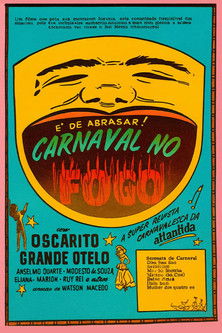

Grande Otelo
Actor
- Born
- October 18, 1915, Uberlândia, Minas Gerais, Brazil
- Died
- November 26, 1993
- Active
- 1920s-1990s
- Birth name
- Sebastião Bernardes de Sousa Prata
Films 1
About Grande Otelo
Grande Otelo was one of the most important and enduring performers in Brazilian cinema, stage, radio, and television, celebrated for a career that spanned more than six decades. Born Sebastião Bernardes de Sousa Prata in Uberlândia, Minas Gerais, he rose from a difficult childhood to become a beloved comic actor, singer, and all-around entertainer whose work helped shape popular Brazilian screen performance. He began performing at a young age and became famous for his expressive physical comedy, musical timing, and ability to move between farce, social satire, and emotional drama. Although widely associated with comedy, he was also a versatile dramatic actor who appeared in landmark films of Brazilian cinema and worked with many of the most significant filmmakers of his era. His screen presence made him a national icon, and his performances often reflected both popular culture and the racial and social complexities of Brazilian life. Over time, he became one of the best-known Black performers in Brazilian entertainment history, admired for breaking barriers while remaining deeply connected to mass audiences. He died in Paris in 1993, leaving behind an extraordinary body of work that remains central to the history of Latin American cinema.
More about Grande Otelo
On screen
Grande Otelo's acting style combined agile physical comedy, rapid-fire timing, expressive facial work, and a strong musical sense. He was especially effective at playing witty, quick-thinking characters whose humor often carried an undercurrent of melancholy or social critique. Even in broad comedy, he brought nuance and a sharp awareness of class and racial dynamics, which gave many of his roles unusual depth. He could shift fluidly between clowning, song, and sincere emotion, making him one of the most versatile performers of Brazilian popular cinema.
In film history
Grande Otelo had a profound cultural impact as a performer who became synonymous with Brazilian screen comedy while also embodying the possibilities and contradictions of Black stardom in a racially stratified society. He helped popularize a distinctly Brazilian comic style that drew on music, improvisation, carnival tradition, and everyday urban life. His performances were widely accessible to mass audiences, yet they also resonated with deeper themes of identity, marginalization, and resilience, which made him more than a mere comic entertainer. For many viewers, he represented the vitality of Brazilian popular culture at its most inventive and humane.
Later reputation
His legacy rests on his remarkable longevity, his enormous versatility, and the central place he occupies in the canon of Brazilian cinema. He is remembered not only for individual performances but for helping establish a model of comic acting that fused physical expressiveness, musicality, and social intelligence. Film historians regard him as a foundational figure whose work bridges popular entertainment and serious national cinema. His importance also extends beyond film history, as he remains a landmark figure in discussions of race, representation, and Black artistry in Brazil.
Influence
Grande Otelo influenced generations of Brazilian actors by demonstrating that comedy could be both popular and artistically sophisticated. His screen persona helped define how humor could function in Brazilian film: energetic, musical, improvisational, and rooted in local speech and manners. Later performers drew from his ability to balance laughter with poignancy, and filmmakers continued to cast actors in roles shaped by the template he helped establish. His career remains a reference point for studies of performance, star image, and racial representation in Latin American cinema.
Off screen
Grande Otelo's personal life was marked by both artistic success and hardship, and he often spoke through his work to the experience of social inequality in Brazil. He was known to have been married more than once, and his long career in entertainment was intertwined with the pressures of constant travel, performance, and public attention. He had children, though detailed family information varies across sources and is not as consistently documented as his professional career. Despite personal difficulties, he remained publicly beloved and continued working into later life, moving between film, television, theater, and music.
Education
Formal schooling is not prominently documented; he is generally understood to have had limited formal education and to have developed his performing skills through early stage work and practical experience.
Credits
- Became a national screen and stage star in Brazil through his comic and musical talents
- Appeared in the influential Brazilian films Rio, 40 Graus and Rio, Zona Norte, helping define a more socially engaged national cinema
- Worked with major Brazilian filmmakers and became one of the most recognizable performers in the country's film history
- Built a celebrated career that crossed silent-era performance traditions, early sound cinema, radio, theater, and television
- Earned lasting acclaim as one of Brazil's greatest comic actors and one of its most important Black cultural figures
Roles
- Comic supporting roles in Brazilian popular comedies
- The resourceful, streetwise everyman character in Brazilian musical and comedy films
- Memorable ensemble roles in socially conscious Brazilian cinema of the 1950s and 1960s
Films
- Carnaval no Fogo (1949)
- Rio, 40 Graus (1955)
- Rio, Zona Norte (1957)
- Matar ou Correr (1954)
- Macunaíma (1969)
Awards
- Best Actor award at the Berlin International Film Festival for O Cangaceiro (1953) was not for Grande Otelo; no major international acting award is securely attributable to him from widely verified sources
- Widely honored in Brazil for his lifetime contribution to cinema and popular entertainment
Nominations
- No widely verified major international award nominations are securely documented in standard references
Honors
- Recognized as one of the great figures of Brazilian popular culture
- Honorary and retrospective tributes from Brazilian film institutions and festivals
- Posthumous respect as a foundational figure in the history of Black performance in Brazilian cinema
Collaborators
- Watched and worked with major Brazilian popular cinema teams associated with Atlântida
- Nelson Pereira dos Santos
- Anselmo Duarte
- Glauber Rocha
- Oscarito
Studios
- Atlântida Cinematográfica
- Brazilian independent production companies
- Various theater, radio, and television employers rather than a single long-term Hollywood-style studio system
Family
- Multiple marriages reported; specific spouse dates vary by source
Notes
- He was born with the name Sebastião Bernardes de Sousa Prata and later became known universally by the stage name Grande Otelo.
- He was one of the most famous Black performers in Brazilian entertainment history.
- His nickname 'Grande Otelo' was an ironic and memorable stage name that contrasted with his small physical stature and enormous talent.
- He worked across film, theater, radio, and television, making him a true multimedia star of Brazilian popular culture.
- He became especially associated with comic roles, but he was also capable of deeply affecting dramatic performances.
- He remained active for decades, which gave him unusually broad historical reach from early Brazilian screen entertainment to modern national cinema.
- He is frequently cited by scholars as a key figure in the development of Brazil's popular film tradition.
- His career helped connect carnival, music, and cinema in a distinctly Brazilian entertainment style.
Quotes
Specific widely verified quotations are not consistently documented in standard reference sources.
Questions
Who was Grande Otelo?
Grande Otelo was a legendary Brazilian actor, comedian, and singer whose career helped shape the history of Brazilian popular cinema. Born Sebastião Bernardes de Sousa Prata, he became famous for his expressive comic style, musical talent, and long association with some of Brazil's most important films and performers.
What films is Grande Otelo best known for?
He is especially known for Carnaval no Fogo, Rio, 40 Graus, Rio, Zona Norte, Matar ou Correr, and Macunaíma. These films show his range from popular comedy to socially aware and artistically ambitious cinema.
When was Grande Otelo born and when did he die?
Grande Otelo was born on October 18, 1915, in Uberlândia, Minas Gerais, Brazil. He died on November 26, 1993, in Paris, France.
What awards did Grande Otelo win?
Widely verified international award records for him are limited, but he received major recognition in Brazil for his lifetime contribution to entertainment and cinema. His true distinction lies in his immense cultural stature and the enduring respect he earned from audiences, critics, and film historians.
What was Grande Otelo's acting style?
His acting style blended physical comedy, sharp timing, expressive facial acting, and musical performance. He was especially skilled at making comic characters feel vivid and human, often adding emotional depth and social awareness beneath the humor.
What is Grande Otelo's legacy in film history?
Grande Otelo is remembered as one of the central figures in Brazilian screen history and one of the country's greatest comic actors. His work influenced later generations by showing how popular entertainment could also carry artistic, cultural, and social significance.