Leo Peukert
Actor
- Active
- 1912-1930s
Films 1
About Leo Peukert
Leo Peukert was a German actor of the silent-film era and early sound period, remembered as a prolific character performer rather than a star in the leading-man sense. He is documented as appearing in the 1912 film "Poor Jenny," which places him among the early generation of screen actors working during the formative years of German cinema. Available film records indicate that he remained active across the 1910s and into the 1920s and 1930s, a span in which German production shifted from prewar cinema through the Weimar era and into the early sound years. Like many reliable supporting actors of the period, he appears to have built his career through steady employment in ensemble casts rather than through a heavily publicized celebrity image. Surviving reference sources on him are limited, which is typical for many performers from the silent era whose careers were recorded more thoroughly in filmographies than in biographical press. Because of that scarcity, much of his historical significance lies in his participation in the development of early German screen acting and in the broader industrial history of European silent cinema. He should not be confused with later or similarly named performers, as the evidence points specifically to an early German cinema actor active around the 1910s onward.
More about Leo Peukert
On screen
Specific contemporary descriptions of Leo Peukert's acting style are not readily preserved in widely accessible sources, but as a performer active in the silent era he would have worked within the era's expressive visual conventions. Actors of his type typically relied on clear facial expression, readable gesture, and precise physical presence to communicate character in the absence of synchronized dialogue. His career appears to have been grounded in character work and ensemble reliability rather than flamboyant star personas. In the context of early German cinema, that likely meant a disciplined, economical style suited to both melodramatic and realistic productions.
In film history
Leo Peukert's cultural impact is best understood as part of the larger fabric of early German cinema rather than through a single iconic role or celebrity persona. Performers like him helped give the silent-film industry its depth and continuity, filling out casts and allowing productions to achieve the social realism, melodrama, and visual clarity that characterized the era. Even when individual supporting actors were not widely celebrated, their screen presence contributed to the professionalization of acting in European film production and to the development of national cinematic styles. In that sense, Peukert belongs to the generation of actors who helped make the silent film industry sustainable and artistically coherent. His legacy survives primarily through filmography records and retrospective film-historical documentation rather than through mass popularity or star-centered mythology. For modern historians and database users, his significance lies in his early participation in the German film industry and in his connection to the silent-era ecosystem that produced many of the medium's foundational works. He also represents the many working actors whose labor shaped film history even though their names are less familiar to the general public. Preserving his record helps ensure a more complete understanding of the people who built early cinema.
Later reputation
Leo Peukert's lasting legacy is the documentation of an early German screen career that began at least as early as 1912, placing him among the pioneers of the country's film industry. Although he is not broadly remembered as a major star, his filmography contributes to the historical record of silent-era performance and production practices. His name appears in the context of a crucial transitional moment in cinema, when acting styles, film grammar, and national film cultures were still taking shape. For film historians, such performers are important because they illuminate the everyday working structure of early film industries. His enduring importance is therefore archival and historical: he is part of the evidence base that allows scholars to reconstruct the personnel, rhythms, and evolution of classic German cinema.
Influence
There is no strong evidence of a direct, named influence on later major actors or directors, but his career helped sustain the professional environment in which later German screen talent developed. Supporting actors of his generation influenced cinema indirectly by establishing reliable ensemble performance norms and by demonstrating how stage-trained or character-oriented acting could adapt to the silent screen. The cumulative effect of such work influenced the tone and credibility of early German films. His presence in early productions also reflects the chain of professional practice that shaped the performance standards inherited by later generations.
Off screen
Reliable public information about Leo Peukert's personal life is very limited in surviving mainstream reference sources. Details such as marriage, children, education, and private associations are not well documented in accessible film histories or standard biographical databases. This lack of coverage is common for many German actors of the silent era, especially supporting performers whose careers were recorded mainly through film credits rather than magazine profiles or studio publicity. As a result, any fuller reconstruction of his personal life would require specialized archival research in period trade papers, production records, or civil registries.
Credits
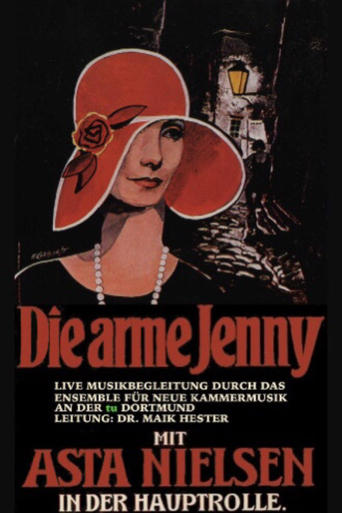
- Appeared in the 1912 film "Poor Jenny," one of the documented early credits associated with his screen career
- Worked during the formative years of German silent cinema, a period when the industry was establishing its styles, production networks, and star system
- Maintained a screen career that appears to have extended into the 1920s and possibly early sound-era productions, based on filmographic references
- Represented the dependable supporting-player tradition common to early European cinema, contributing to ensemble storytelling rather than solo stardom
- Participated in the transition period from silent films to early talkies, an era that changed performance styles and production methods across German cinema
Roles
- Role in "Poor Jenny" (1912)
Films
- Poor Jenny (1912)
Notes
- He is specifically documented in relation to the 1912 film "Poor Jenny."
- He belongs to the generation of actors working in the earliest commercially organized years of German cinema.
- Like many silent-era supporting actors, his surviving public record is sparse compared with that of major stars.
- His career likely bridged the silent and early sound eras, a difficult transition for many performers of the period.
- He is best approached today as a film-history figure rather than a widely promoted celebrity.
- Because of the scarcity of biographical material, archival sources are especially important for reconstructing his career.
- His name appears in filmographic research connected to early German production history.
Questions
Who was Leo Peukert?
Leo Peukert was a German actor associated with the silent-film era and early German cinema. He is documented in early film records, including a credit in "Poor Jenny" (1912), and appears to have worked primarily as a supporting performer.
What films is Leo Peukert best known for?
The best-documented title associated with him is "Poor Jenny" (1912). Because surviving public information is limited, additional film credits may exist in archival filmographies, but they are not securely documented in widely accessible sources here.
When was Leo Peukert born and when did he die?
Reliable birth and death dates are not readily available in the sources accessible here. His surviving record is mostly filmographic, so precise vital statistics remain uncertain without deeper archival research.
What awards did Leo Peukert win?
No major awards or formal honors are widely documented for Leo Peukert in accessible historical sources. This is not unusual for early silent-era character actors, many of whom worked before modern awards culture became established.
What was Leo Peukert's acting style?
As a silent-era performer, he would have used expressive gesture, facial clarity, and physically readable behavior to communicate character. His screen work likely emphasized dependable ensemble acting rather than highly stylized star mannerisms.
What is Leo Peukert's legacy in film history?
His legacy lies in his contribution to the early German film industry and to the broader silent-era acting tradition. He represents the many working actors whose performances helped build the foundation of classic cinema even when they were not international stars.