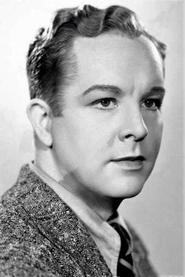
Hal Thompson
Actor
Born: August 28, 1899 in Rutherford, New Jersey, USA Died: March 3, 1966 Active: 1924-1959 Birth Name: Harold E. Thompson
Films
1 film
About Hal Thompson
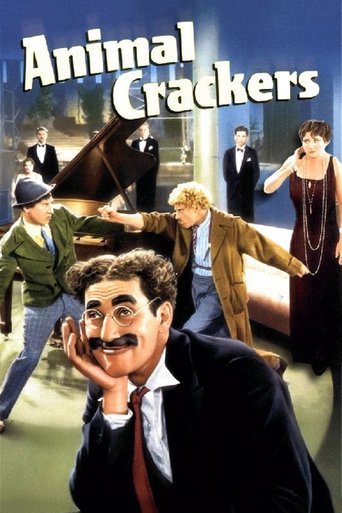
Versatile American actor and singer: the transition from silent film to the early talkie era and later into television. Born Harold E. Thompson in Rutherford, New Jersey, he initially gained recognition in the 1920s as a youthful leading man, appearing in silent features such as 'Men' (1924) and 'Who's Your Friend?' (1925). He is perhaps best remembered by modern audiences for his role as John Parker, the romantic lead and struggling artist, in the 1930 Marx Brothers classic 'Animal Crackers.' During the 1930s, Thompson expanded his repertoire to include British cinema, appearing in films like 'Kicking the Moon Around' (1938). His stage career was equally significant, with several Broadway credits including 'The Great Necker' (1928) and 'Ada Beats the Drum' (1930). Thompson continued to work in the industry through the mid-20th century, making his final screen appearance in a 1959 episode of 'Alfred Hitchcock Presents.'
The Craft
On Screen
Thompson was known for his 'juvenile lead' persona, characterized by a clean-cut, earnest, and slightly stiff demeanor that served as a necessary 'straight man' foil to the chaotic energy of comedians like the Marx Brothers. As a trained singer, his style was rooted in the musical theater traditions of the 1920s, emphasizing clear diction and a pleasant, melodic vocal delivery. In his later years, he transitioned into more character-driven roles, demonstrating a capacity for both light comedy and dramatic television work.
Milestones
- Cast as the romantic lead John Parker in the Marx Brothers' second feature film, Animal Crackers (1930).
- Made his Broadway debut in the 1928 production of 'The Great Necker'.
- Performed the duet 'Why Am I So Romantic?' with Lillian Roth in Animal Crackers.
- Starred in British musical comedies during the late 1930s, including 'Kicking the Moon Around'.
- Transitioned successfully into early television, appearing in the 1947 TV movie 'The Man Who Came to Dinner'.
- Concluded a long career with a guest role in the prestigious 'Alfred Hitchcock Presents' series in 1959.
Best Known For
Iconic Roles
Must-See Films
Accolades
Special Recognition
- Recognized as a prominent 'straight man' in early sound comedy history.
Working Relationships
Worked Often With
Studios
Why They Matter
Impact on Culture
Hal Thompson represents the quintessential 'straight man' of the early talkie era, a role that was vital for grounding the absurdist comedy of the period. In 'Animal Crackers,' he provided the romantic subplot and musical interludes that allowed the audience a brief respite from the Marx Brothers' relentless anarchy. His performance of 'Why Am I So Romantic?' remains a nostalgic touchstone for fans of 1930s musical cinema, illustrating the era's blend of high society parody and genuine sentiment.
Lasting Legacy
While often overshadowed by the legendary comedians he supported, Thompson's legacy is preserved through his participation in some of the most influential comedies of the 20th century. He is cited by film historians as one of the more effective romantic leads in the Marx Brothers' filmography, avoiding the 'objectionable' or overly wooden quality that plagued other actors in similar roles. His career serves as a record of the fluid movement between stage, film, and early television during the industry's formative decades.
Who They Inspired
His work influenced the archetype of the 'musical juvenile' in film, a role that required a balance of leading-man looks and legitimate vocal talent. He demonstrated how a supporting actor could maintain a distinct presence while sharing the screen with overwhelming comedic personalities.
Off Screen
Hal Thompson maintained a relatively private personal life outside of his professional engagements in New York, London, and Los Angeles. He was part of the generation of actors who frequently moved between the Broadway stage and the burgeoning film industry in both the US and the UK. His life came to a tragic end in 1966 due to a domestic accident in Los Angeles.
Education
Trained in musical theater and vocal performance, though specific institutions are not widely documented.
Did You Know?
- He performed the song 'Why Am I So Romantic?' in Animal Crackers, which features a famous harp interlude by Harpo Marx.
- Thompson died at the age of 66 in a house fire caused by falling asleep with a lit cigarette.
- He spent a significant portion of the mid-1930s working in the United Kingdom.
- His film debut was in the silent era, nearly six years before his famous turn in 'Animal Crackers'.
- He appeared in a Broadway show titled 'Smile at Me' in 1935 which featured Jack Osterman.
- His final professional credit was in the 'Alfred Hitchcock Presents' episode 'The Indestructible Mr. Weems' (1959).
In Their Own Words
Why am I so romantic? Why are the stars above? (Lyrics sung as John Parker in Animal Crackers, 1930)
Frequently Asked Questions
Who was Hal Thompson?
American with credits in this catalog. He is most famous for playing the romantic lead John Parker in the 1930 Marx Brothers film 'Animal Crackers'.
What films is Hal Thompson best known for?
Titles linked here include Animal Crackers (1930), Leave It to Lester (1930).
When was Hal Thompson born and when did he die?
Born August 28, 1899; died March 3, 1966.
What was Hal Thompson's acting style?
He was a classic 'juvenile lead' and 'straight man,' known for his earnest delivery and musical talent. His role was often to provide a grounded, romantic contrast to the zany antics of lead comedians.
Did Hal Thompson win any awards?
While he did not win major competitive awards like an Oscar, he was a respected stage and screen professional with a career spanning over 35 years across two continents.