

Animal Crackers
"well-known explorer and hunter Captain Spaulding has just re"
Keys: Space play/pause · ←/→ 10s · F fullscreen · M mute · </> speed
About this film
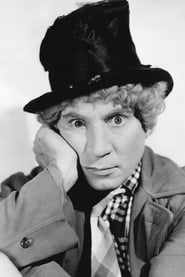
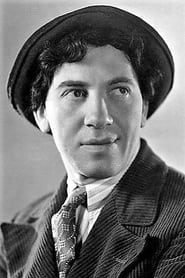
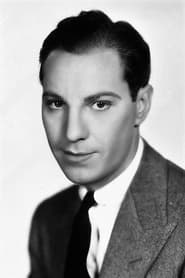
The well-known explorer and hunter Captain Spaulding has just returned from Africa, and is being welcomed home with a lavish party at the estate of influential society matron Mrs. Rittenhouse when a valuable painting goes missing. The intrepid Captain Spaulding attempts to solve the crime with the help of his silly secretary Horatio Jamison, while sparring with the anarchic Signor Emanuel Ravelli and his nutty sidekick The Professor.
Cast & crew
More films like this
More Comedy films
View all →






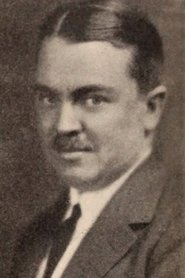
More from Victor Heerman
View all →
More about this film
About the production
Release dateAugust 28, 1930
BudgetApproximately $200,000 to $300,000
Box office$3.1 million (U.S. and Canadian rentals)
ProductionParamount Pictures
Filmed inParamount-Publix Astoria Studios, Queens, New York City, New York, USA
The picture was adapted from the Marx Brothers' 1928 Broadway hit of the same name. It was the last of their films to be shot at the Astoria Studios in New York before the production moved to Hollywood. Director Victor Heerman was specifically hired for his reputation as a disciplinarian to manage the brothers' notoriously disruptive and improvisational behavior on set. Interestingly, the picture was shot during the day while the brothers were still performing the stage version of the show at night, leading to exhaustion and frequent tardiness. The production also faced the challenge of early sound technology, which required cameras to be housed in soundproof booths, often limiting visual movement.
Themes
Class SatireAnarchy vs. OrderIdentity and ImpersonationThe Absurdity of High SocietyAnti-Authoritarianism
Themes & topics
stolen paintingAfrican explorerhigh society partymistaken identityrapid-fire punsslapstickart theftfake painting
Historical background
Produced Animal Crackers reflects Paramount Pictures's release strategy for United States markets at a moment when cinema technology and taste were shifting quickly.
Why this film matters
Programmers and historians revisit Animal Crackers (1930) because its story—the well-known explorer and hunter captain spaulding has just returned from africa, and is being welcomed home with a lavish party at the estate of influential society matron mrs—illustrates popular narrative habits and production norms of the period.
Making of
The production of 'Animal Crackers' was a chaotic affair, largely due to the Marx Brothers' habit of ignoring scripts and improvising. Director Victor Heerman reportedly had to build a 'jail' (actually a repurposed set) to keep the brothers from wandering off to play golf or nap between takes. One of the biggest technical hurdles was the transition to sound; the music department often had the final say on which take to use because a bad note was harder to fix than a visual mistake. In one instance, a take was chosen where Groucho was partially out of frame simply because the clarinet accompaniment sounded better. The brothers were also performing the stage version concurrently, which meant they were often testing new jokes on live audiences at night and bringing the successful ones to the set the next morning.
What critics said
English-language trade reviews of Animal Crackers are limited for 1930. Where notices survive, they stress pacing and photographic clarity; later criticism values the title as archival evidence of studio style.
Did you know?
- Groucho Marx's character name, Captain Spaulding, became so iconic that he used the song 'Hooray for Captain Spaulding' as the theme for his later game show, 'You Bet Your Life'.
- the picture was legally unavailable for decades due to a rights dispute between Paramount and the authors of the original play, which was only resolved in 1974 after a student-led campaign.
- The famous 'elephant in my pajamas' joke was ranked #53 on the AFI's 100 Years... 100 Movie Quotes list.
- During the 'Strange Interlude' parody, Groucho breaks the fourth wall to deliver soliloquies directly to the audience, a technique borrowed from Eugene O'Neill's play of the same name.
- Harpo Marx actually plays the harp in the picture, showcasing his genuine musical talent amidst the comedy.
- Chico Marx's piano piece 'I'm Daffy Over You' became his signature tune following.
- the picture was re-released in 1936 with several 'suggestive' lines and scenes cut to comply with the newly enforced Hays Code.
- A 2016 restoration discovered a minute and a half of footage that had been missing since the 1936 censorship cuts.
- The character of Roscoe W. Chandler is revealed to be 'Abie the Fish Peddler' from Czechoslovakia, a running gag throughout the picture.
- Lillian Roth, who played Arabella, later wrote a famous autobiography 'I'll Cry Tomorrow' about her struggles with alcoholism.
Awards & recognition
- National Film Preservation Board - National Film Registry (Added in 2026)
- AFI's 100 Years... 100 Laughs (Nominated)
- AFI's 100 Years... 100 Movie Quotes (Winner - #53)
Visual style
The cinematography by George J. Folsey is typical of early sound films—functional and somewhat static. Because of the bulky sound equipment and the need for the actors to stay near hidden microphones, the camera movement is minimal. However, the picture features some impressive large-scale sets of the Rittenhouse estate, and the 'Hooray for Captain Spaulding' number uses dynamic blocking for the era.
Innovations
While visually conservative, the picture was a significant achievement in early sound synchronization for a musical comedy. It successfully captured the rapid-fire, overlapping dialogue of the Marx Brothers, which was a major technical challenge for 1930s recording equipment. The 2016 restoration is also considered a technical milestone in film preservation, using digital technology to repair decades of wear and reintegrate censored footage.
Music
The music was composed by Bert Kalmar and Harry Ruby. Key tracks include 'Hooray for Captain Spaulding,' 'Hello, I Must Be Going,' and 'Why Am I So Romantic?' The soundtrack is notable for integrating musical numbers into the plot more naturally than its predecessor, 'The Cocoanuts,' and for featuring Chico's piano and Harpo's harp solos, which became mandatory elements of all future Marx Brothers films.
Famous quotes
One morning I shot an elephant in my pajamas. How he got in my pajamas, I don't know.
Hello, I must be going. I came to say I must be going.
Africa is a great country. It's the only place in the world where you can get a good steak for a dollar and a half, but you have to bring your own steer.
I'm staying at the Rittenhouse. It's a very nice place, but they don't allow children. That's why I'm here.
Signor Ravelli's first selection will be 'Somewhere My Love Lies Sleeping' with a male chorus.
Memorable scenes
- The grand entrance of Captain Spaulding on a litter carried by 'natives,' followed by the 'Hooray for Captain Spaulding' musical number.
- The 'Strange Interlude' parody where Groucho steps aside to deliver internal monologues while the other characters freeze.
- The bridge game scene where Harpo and Chico systematically dismantle the rules of the game and the sanity of their opponents.
- The 'Abie the Fish Peddler' sequence where Chico and Harpo confront Roscoe W. Chandler about his secret past.
- Harpo's surreal 'bottomless' pockets, from which he pulls increasingly impossible items, including a steaming cup of coffee and a flute.
What audiences thought
the picture was a massive commercial hit, grossing over $3 million during a time when movie tickets cost cents. It was so popular that it was re-released several times in the 1930s. Today, it maintains a cult following and is a staple of classic cinema screenings and film studies courses.
Film connections
Influenced by
- Vaudeville
- The Algonquin Round Table
- Eugene O'Neill's 'Strange Interlude'
- Gilbert and Sullivan
This film influenced
- Duck Soup
- A Night at the Opera
- Blazing Saddles
- The Naked Gun
- Monty Python's Flying Circus
Film restoration
the picture is fully preserved and was extensively restored in 2016 by Universal Pictures in collaboration with the picture Foundation. This restoration returned the picture to its original 1930 pre-Code length.
Where to watch
- Available on Blu-ray/DVD (The Marx Brothers Silver Screen Collection)
- Amazon Prime Video (Rent/Buy)
- Apple TV
- Criterion Channel (occasionally)