Harry Keenan
Actor
- Active
- 1913-1913
Films 1
About Harry Keenan
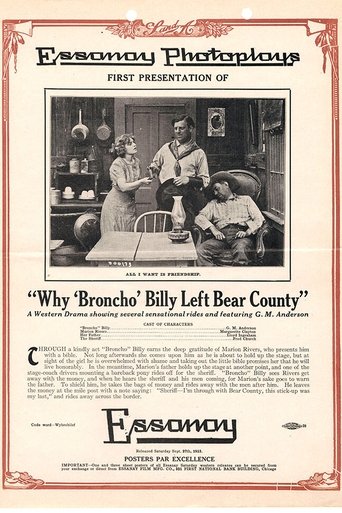
Harry Keenan was a silent-era screen actor who appears in the surviving trade and film records of early American cinema, with his documented filmography placing him in 1913. He is credited in the Western short Why Broncho Billy Left Bear County (1913), a film associated with the Broncho Billy series that helped define the popular early Western one-reel format. Because he worked during the earliest phase of narrative film production, information about his life beyond his screen credit is scarce, and no authoritative biographical source readily preserves a fuller personal history. Like many performers of the period, he seems to have been part of the fluid stock of actors who moved between short subjects and company productions rather than building a long, individually publicized star persona. His surviving record suggests participation in the fast-moving world of silent filmmaking, when performers often went unbilled or received only limited documentation. No reliable evidence currently establishes a later screen career, so he is generally regarded as a minor but documented figure in early silent Western cinema. His significance lies primarily in his presence in an historically important era when the language of American film acting was still being formed.
More about Harry Keenan
In film history
Harry Keenan's cultural impact is best understood as part of the broader foundation of silent-era American cinema rather than as the impact of a major star. Performers like Keenan contributed to the production of the one-reel Westerns that introduced audiences to recurring frontier heroes, stock characters, and action-driven storytelling. Even when individual names are difficult to trace, their work helped normalize the rhythms, gestures, and screen grammar that audiences came to associate with the Western genre. His appearance in a Broncho Billy title places him within a historically important cycle that influenced the commercial shape of early genre filmmaking.
Later reputation
Keenan's legacy is archival as much as artistic: he survives in film history through a documented credit that helps scholars and enthusiasts map the personnel of early silent Western production. For modern classic-cinema researchers, names like his are important because they reveal the breadth of labor behind early film manufacturing, where many contributors were not yet elevated to star status. His presence in the historical record underscores how much of silent cinema depended on actors whose careers were brief, underpublicized, or incompletely preserved. In that sense, he remains part of the essential but often anonymous human fabric of early Hollywood and the pre-Hollywood film industry.
Influence
There is no evidence that Harry Keenan directly influenced later named actors or directors in a documented, traceable way. His broader influence is indirect, as part of the ensemble of performers who established the acting conventions of silent Western shorts through broad physical expression, clear storytelling, and efficient characterization. Those conventions shaped later genre acting, but his individual contribution cannot be isolated with confidence from the surviving record. He should therefore be understood as a participant in a formative cinematic tradition rather than as a widely recognized innovator with a documented personal school of influence.
Off screen
No reliable biographical information about Harry Keenan's personal life has been established in readily accessible classic-cinema reference sources. His marriage history, family background, residence, and off-screen activities are not documented in the surviving public record available here. Because he appears to have had a very limited or poorly preserved screen career, standard studio publicity and biographical profiles do not appear to survive for him. As a result, any specific claims about his private life would be speculative and are best left unasserted.
Credits
- Appeared in the silent Western short Why Broncho Billy Left Bear County (1913)
- Documented as part of the early Broncho Billy-era screen personnel associated with the formative Western genre
- Represents one of the many working actors whose credits help reconstruct the production history of early American silent films
Films
Notes
- Harry Keenan is primarily preserved in film history through a single documented 1913 credit.
- His known screen appearance is in a Broncho Billy Western, placing him in one of the earliest enduring American film series traditions.
- He is an example of a silent-era performer whose surviving record is much smaller than his likely real working life in film.
- Because many early credits were inconsistently recorded, his complete filmography may be incomplete or lost.
- His documented career falls entirely within the silent era, before feature-length stardom became the norm.
- Early Western shorts like the one he appeared in were essential to the growth of narrative filmmaking in the United States.
Questions
Who was Harry Keenan?
Harry Keenan was a silent-era actor known from surviving film records, including a credit in Why Broncho Billy Left Bear County (1913). He appears to have worked during the very early development of American Western films, though his wider biography is not well preserved.
What films is Harry Keenan best known for?
He is best known for Why Broncho Billy Left Bear County (1913), the only clearly documented screen credit available here. If additional films existed, they are not securely identified in the accessible record.
When was Harry Keenan born and when did he die?
At present, his birth date and death date are not reliably documented in the available classic-cinema record. His biographical details remain obscure, which is common for some early silent-era supporting players.
What awards did Harry Keenan win?
No awards or formal honors are currently documented for Harry Keenan. This is not unusual for early silent-era actors, many of whom worked before modern award culture and star accounting were fully established.
What was Harry Keenan's acting style?
There is no surviving detailed critical description of his personal acting style. As a performer in a 1913 silent Western, he would have worked within the era's expressive, physically legible performance conventions, but any more specific characterization would be speculative.
What is Harry Keenan's legacy in film history?
His legacy lies in his contribution to the early silent Western tradition and in the documentary value of his credit. He represents the many working actors who helped build early narrative cinema even when their names were not widely publicized.