Why Broncho Billy Left Bear County
Plot
Broncho Billy initially appears to be a hard-riding outlaw in Bear County, but a small act of kindness from Marion Rivers awakens a moral struggle in him. After Marion gives him a Bible in gratitude for his earlier kindness, she later encounters him just as he is preparing to rob a stagecoach; ashamed by her presence and by the memory of her gift, he takes the Bible as a sign to reform and promises to live honorably. At nearly the same time, Marion’s father independently robs the stage at another point, setting in motion a pursuit by the sheriff and his men. Broncho Billy sees Rivers escape with the stolen money, but when he learns that the authorities are closing in, he chooses to protect Marion’s father by taking the money and drawing pursuit away from him. In the end, he leaves the loot at a milepost with a note declaring that he is done with Bear County and that this was his last hold-up, then rides across the border as a reformed man seeking a new life.
About the Production
This is an early Broncho Billy Western made during the height of the one-reel silent film era, when Essanay was producing a large number of short western dramas centered on Gilbert M. Anderson’s popular cowboy persona. As with many productions of this period, detailed production records such as budget, exact shooting locale, and box-office receipts were not routinely preserved. The film is notable for its moral-turnaround plot, a hallmark of the Broncho Billy series, in which the outlaw-hero is tested by conscience and chooses redemption over violence. Contemporary documentation ties the film closely to Essanay’s Chicago-based production system and to the company’s expanding western output, though surviving records do not reliably specify the precise outdoor locations used.
Historical Background
The film was made in 1913, during a pivotal transitional year for American cinema. The industry was still dominated by short films, especially one-reel westerns, comedies, and melodramas shown in nickelodeons and early movie theaters, while feature-length storytelling was only beginning to gain wider acceptance. This was also the period when the western was solidifying as a distinctly American genre, drawing on frontier mythology, outlaw reform narratives, and moral clarity that resonated with contemporary audiences. Essanay, one of the major silent-era studios, was among the companies helping standardize production practices and star-driven branding, and Broncho Billy Anderson was central to that development. The film matters historically because it exemplifies the early cowboy hero as a figure of conscience rather than simple violence, foreshadowing later western traditions in which rugged individualism is balanced by ethical restraint and redemption.
Why This Film Matters
The film is significant as one of the many early Broncho Billy entries that helped establish the cowboy hero as a durable screen archetype. Its plot reinforces the idea that the western protagonist can be morally conflicted yet fundamentally honorable, a characterization that would echo through later silent and sound westerns. The use of a Bible as the catalyst for reform reflects the era’s blend of frontier adventure and moral instruction, revealing how early cinema often carried overt ethical lessons for audiences. More broadly, films like this helped popularize the western as a mass entertainment form and contributed to the mythology of the American West that would become deeply embedded in global film culture. Even though it is a short, relatively obscure title today, it occupies an important place in the history of serialized screen cowboy fiction and in the career of one of the genre’s earliest stars.
Making Of
Why Broncho Billy Left Bear County was produced at a time when Essanay was aggressively building the Broncho Billy brand into one of the best-known attractions in American silent cinema. Gilbert M. Anderson’s approach typically blended action, moral conflict, and pathos, allowing the character to remain both rugged and redeemable, which made him especially appealing to family audiences and exhibitors seeking dependable western fare. The film’s plot depends on precise emotional timing—Marion’s gift of the Bible, the revelation of her father’s crime, and Broncho Billy’s final sacrifice—showing how early westerns often relied on compact melodramatic structure rather than elaborate spectacle. Because surviving production documentation from 1913 is incomplete, many behind-the-scenes specifics are lost, but the film clearly reflects the efficient, assembly-line style of Essanay’s one-reel output, where stars, directors, and company players frequently worked interchangeably across multiple quick-turnaround pictures.
Visual Style
The film would have employed the straightforward, functional visual style typical of early 1910s western shorts: static or lightly adjusted camera setups, clear staging in open outdoor spaces, and emphasis on readable action in long or medium-long shots. Early Essanay westerns often prioritized geographic legibility and quick narrative clarity over elaborate camera movement, allowing audiences to follow rides, confrontations, and moral gestures with ease. The visual storytelling in this film likely depended on strong gesture, costume contrast, and iconic props such as the Bible, the stagecoach, the money bags, and the milepost note. Like many silent westerns of its era, it would have used composition and action blocking to make the hero’s change of heart visually immediate and emotionally legible.
Innovations
The film does not appear to have introduced a unique technical innovation, but it is representative of the efficient storytelling methods that were becoming standardized in early silent cinema. Its chief achievement lies in its streamlined narrative construction: a compact moral dilemma, a parallel crime, a pursuit, and a redemptive resolution all packed into a short runtime. The film also demonstrates the early western’s ability to convey complex ethical turns through props and action rather than dialogue, especially the Bible and the written note left at the milepost. In the larger context of film history, works like this helped refine the grammar of continuity storytelling in genre cinema.
Music
As a silent film, it had no synchronized recorded soundtrack. In original exhibition, it would typically have been accompanied by a live pianist, organist, or small theater ensemble improvising music appropriate to the action and mood. Specific cue sheets for this title are not widely documented, so no original score is known. Modern presentations of surviving silent-era shorts of this type usually rely on archival or newly compiled accompaniment rather than a historically fixed soundtrack.
Famous Quotes
“SAheriff, I'm through with Bear County with this stick-up was my last”
The film’s best-known written statement is the note Broncho Billy leaves with the money, announcing that his criminal life is over.
Memorable Scenes
- Marion Rivers presents Broncho Billy with a Bible, turning a simple gesture of gratitude into the catalyst for his reform.
- Broncho Billy confronts the moral crisis of a stagecoach hold-up and, upon seeing Marion, abandons the robbery out of shame and conscience.
- The parallel revelation that Marion’s father is the real robber adds irony and urgency to the sheriff’s pursuit.
- Broncho Billy takes the stolen money to protect Marion’s father, choosing sacrifice and concealment over self-preservation.
- He leaves the loot at the milepost with his farewell note, a visually emblematic end to his life as an outlaw.
- Broncho Billy rides across the border, ending the film with a classic frontier-image of escape, reinvention, and moral closure.
Did You Know?
- The film is part of Gilbert M. Anderson’s long-running Broncho Billy series, which helped define the screen cowboy archetype before the feature-length western became standard.
- The title is often cited in early film references for its strong moral-reform ending, a common narrative device in silent-era westerns.
- Broncho Billy was one of the first major recurring cowboy characters in American cinema, making this film part of an influential early franchise model.
- The Moving Picture World synopsis specifically notes the handwritten sign left at the milepost, a detail that has become the film’s best-known surviving plot point.
- The story uses a Bible as a visual symbol of conscience and redemption, a recurring motif in early melodramatic westerns.
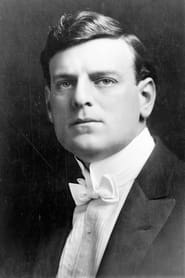
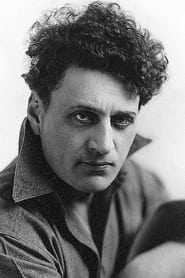
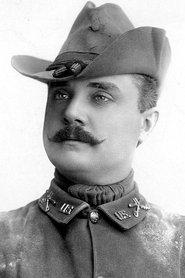
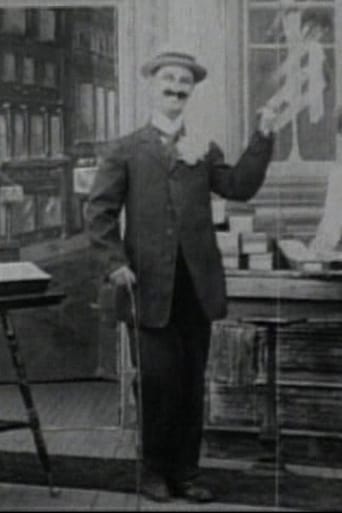
- Gilbert M. Anderson not only directed but also starred, reflecting the multi-hyphenate working methods common in early silent production.
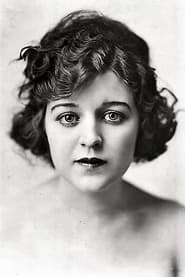
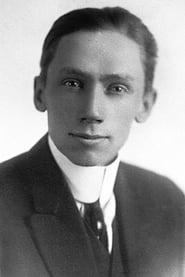
- Marguerite Clayton appears as Marion Rivers, continuing Essanay’s pattern of pairing Broncho Billy with sympathetic female figures who catalyze his moral transformation.
- Lloyd Ingraham’s presence links the film to broader silent-era personnel networks, as he later became a notable director and character actor.
- Like many 1913 western shorts, the film was likely exhibited in nickelodeons and mixed programs rather than as a stand-alone attraction.
- The film survives chiefly in historical references and catalog records; as with many early silent shorts, complete extant prints are not widely documented.
What Critics Said
Contemporary critical reception is not extensively documented in surviving sources, but trade-paper coverage of Broncho Billy films generally treated the series as reliable, audience-friendly fare that combined action, sentiment, and clear storytelling. The Moving Picture World synopsis indicates that the narrative was sufficiently notable to merit circulation in the trade press, suggesting it was recognized as a typical but effective Broncho Billy moral western. In modern film-historical terms, the film is valued less for innovation than for what it reveals about early western formulas, studio production habits, and the construction of the cowboy hero. Scholars and archivists tend to view it as representative of Anderson’s influential work rather than as a landmark on its own, though its survival in catalog memory makes it useful for understanding the genre’s early development.
What Audiences Thought
Direct audience records are scarce, which is typical for films of this period, but Broncho Billy films were generally designed for broad popular appeal and were widely booked by exhibitors. Audiences of 1913 were accustomed to short westerns with clear moral contrasts, and the combination of action, sentiment, and redemption would have fit contemporary tastes well. The character of Broncho Billy was especially popular because he blended outlaw excitement with respectable values, making him appealing to viewers who wanted thrills without cynicism. The film likely succeeded as a dependable part of the Essanay program, benefiting from the star recognition Anderson had already established.
Film Connections
Influenced By
- The American dime-novel and frontier-romance tradition
- Early stage melodrama
- Nickelodeon-era western short films
- The modern frontier legend shaped by Wild West performance culture
This Film Influenced
- The many later Broncho Billy and cowboy-hero films that used the outlaw-reformer template
- Silent-era and sound-era westerns centered on redemption through sacrifice
- Early recurring-character serial westerns that built star identity around a familiar hero
You Might Also Like
More Western Films
View allMore from Gilbert M. Anderson
View allFilm Restoration
Preservation status is unclear in readily available public reference sources. The film is documented in trade-paper synopses and filmographies, but an extant complete print is not widely confirmed in standard accessible references, suggesting that it may be lost or survive only incompletely in archives.