
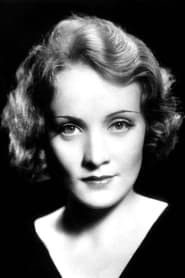
Marlene Dietrich
Actor
Born: December 27, 1901 in Schöneberg, Berlin, Germany Died: May 6, 1992 Active: 1919-1984 Birth Name: Marie Magdalene Dietrich
Films
1 film
About Marlene Dietrich
German-American cinematic icon: over seven decades, beginning in the vibrant cabaret culture of 1920s Berlin. Born Marie Magdalene Dietrich, she achieved international superstardom with her role as Lola Lola in 'The Blue Angel' (1930), the first major German sound film. Following this success, she moved to Hollywood under contract with Paramount Pictures, where director Josef von Sternberg meticulously crafted her image as a sophisticated and mysterious femme fatale. Throughout the 1930s, she became one of the highest-paid actresses in the world, known for her smoldering screen presence and androgynous fashion sense. During World War II, Dietrich became a fierce opponent of the Nazi regime, renouncing her German citizenship and performing extensively for Allied troops on the front lines. Her post-war career saw her transition into a highly successful global cabaret performer and take on acclaimed dramatic roles in films like 'Witness for the Prosecution' and 'Judgment at Nuremberg.' She spent her final years as a recluse in Paris, remaining enduring symbols of Golden Age glamour and individual defiance.
The Craft
On Screen
Dietrich was famous for her 'languid sensuality' and a highly controlled, minimalist acting style. She utilized her deep, smoky contralto voice and a piercing, heavy-lidded gaze to convey a sense of worldly mystery and detached irony. Under Josef von Sternberg's direction, she mastered the art of lighting and camera angles, often insisting on specific lighting setups to accentuate her high cheekbones and create a luminous, ethereal glow. Her performances often blurred gender lines, combining masculine authority with feminine allure.
Milestones
- International breakthrough in 'The Blue Angel' (1930)
- Signed a major contract with Paramount Pictures to rival Greta Garbo (1930)
- Received her only Academy Award nomination for 'Morocco' (1930)
- Awarded the U.S. Medal of Freedom for her WWII service (1947)
- Successful global cabaret and concert career (1953-1975)
- Ranked as the 9th greatest female screen legend by the American Film Institute
Best Known For
Iconic Roles
Must-See Films
Accolades
Won
- U.S. Medal of Freedom (1947)
- French Légion d'honneur (Chevalier 1950, Officier 1971, Commandeur 1989)
- Special David di Donatello Award (1962)
- Special Tony Award (1968)
- German Film Award - Honorary Award (1980)
Nominated
- Academy Award for Best Actress for 'Morocco' (1931)
- Golden Globe for Best Actress – Motion Picture Drama for 'Witness for the Prosecution' (1958)
- Golden Laurel for Top Female Dramatic Performance (1958)
Special Recognition
- Hollywood Walk of Fame Star (6400 Hollywood Blvd)
- AFI's 100 Years.100 Stars - #9 Female Legend
- Marlene-Dietrich-Platz named in her honor in Berlin
- Honorary Citizen of Berlin (posthumous, 2002)
Working Relationships
Worked Often With
Studios
Why They Matter
Impact on Culture
Revolutionary figure in fashion and gender expression. She was one of the first high-profile women to wear trousers and men's suits in public, challenging the rigid gender norms of the 1930s and paving the way for the acceptance of androgynous styles in women's fashion. Her image—the 'Dietrich silhouette'—became a template for modern glamour, influencing designers from Yves Saint Laurent to Christian Dior. Beyond fashion, her staunch anti-Nazi stance and active participation in the war effort made her a symbol of political courage and moral integrity during the 20th century's darkest hours.
Lasting Legacy
Dietrich's legacy is defined by her reinvention and endurance. She successfully transitioned from a silent film actress to a talkie superstar, and later from a fading film star to a legendary cabaret icon. She is remembered as the ultimate 'professional' who meticulously controlled every aspect of her public persona. Her films with von Sternberg remain essential viewing in film history for their visual artistry. In 1999, she was recognized by the AFI as one of the greatest screen legends of all time, and she remains a primary icon for the LGBTQ+ community and fashion historians alike.
Who They Inspired
She influenced generations of actors and performers, including Madonna, David Bowie, and Janelle Monáe, through her use of costume and persona as a form of performance art. Her collaboration with von Sternberg set a standard for the 'director-muse' relationship and influenced the cinematography of film noir through its use of high-contrast lighting and shadows.
Off Screen
Dietrich was the daughter of a Prussian police lieutenant and grew up in a middle-class household. She married Rudolf Sieber in 1923, and although they separated in the late 1920s, they remained legally married until his death in 1976. Dietrich was openly bisexual and had numerous high-profile affairs with both men and women, including Jean Gabin, Yul Brynner, and Mercedes de Acosta. She was a devoted mother to her only child, Maria, though their relationship was complex and later detailed in Maria's candid biography of her mother.
Education
Attended Auguste-Viktoria Girls' School and Victoria-Luise-Schule in Berlin; studied violin at the Weimar Academy; attended Max Reinhardt's drama school.
Family
- Rudolf Sieber (1923-1976)
Did You Know?
- She was a skilled violinist but had to give up a professional career after a wrist injury.
- She reportedly had real gold dust sprinkled on her wigs to make them glow under studio lights.
- She was offered a lucrative contract by the Nazi party to return to Germany as their premier film star, but she flatly refused.
- Dietrich was the first woman to wear trousers in a Hollywood film ('Morocco').
- She was known for her culinary skills and frequently cooked for her film crews and fellow soldiers during WWII.
- She had her molars removed to further accentuate her famous hollowed-out cheekbones.
- She spent the last 12 years of her life bedridden in her Paris apartment, refusing to be seen by the public to preserve her image of glamour.
In Their Own Words
I dress for the image. Not for myself, not for the public, not for fashion, not for men.
I am, at heart, a gentleman.
Glamour is what I sell, it's my stock in trade.
The Germans and I no longer speak the same language.
I have a child and I have made a few movies. I've done my part.
Frequently Asked Questions
Who was Marlene Dietrich?
Legendary German-American actress and singer who became. She is best known for her roles as a sophisticated femme fatale and for her courageous support of the Allied forces during World War II.
What films is Marlene Dietrich best known for?
Titles linked here include The Blue Angel (1930), Morocco (1930).
When was Marlene Dietrich born and when did she die?
Born December 27, 1901; died May 6, 1992.
What awards did Marlene Dietrich win?
While she never won a competitive Oscar (she was nominated once for 'Morocco'), she received the U.S. Medal of Freedom, the French Légion d'honneur, and a Special Tony Award for her theatrical contributions.
What was Marlene Dietrich's acting style?
Her style was characterized by a cool, detached sophistication, a deep contralto voice, and a mastery of lighting and camera angles that emphasized her mysterious and glamorous persona.
Why was Marlene Dietrich considered a fashion icon?
She revolutionized women's fashion by popularizing androgynous styles, specifically being one of the first major stars to wear trousers and tuxedos in public and on screen.