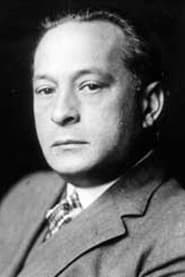
Lupu Pick
Actor & Director
- Born
- January 2, 1886, Istanbul, Ottoman Empire
- Died
- March 7, 1931
- Active
- 1916-1931
Films 2
About Lupu Pick
Lupu Pick was a German silent-era actor, director, producer, and screenwriter whose work helped define the artistic ambitions of early Weimar cinema. Born into a multicultural background, he began his film career as an actor before moving behind the camera, where he became especially important as a director associated with socially observant, psychologically serious dramas. Pick is best remembered as one of the key figures of German Kammerspielfilm, a movement that emphasized intimate settings, minimal spectacle, and emotional realism over melodrama. His direction of films such as "Sylvester" and "Scherben" ("Shattered") showed his interest in ordinary people under pressure, and he became admired for bringing a stark, carefully controlled visual style to the screen. He also continued acting in his own era, appearing in notable silent productions including "Tales of Hoffmann" and "Shattered." His career was cut short by his death in 1931, but his influence on German film aesthetics and on the development of psychologically grounded cinema remained significant. Today he is remembered as an important transitional artist of the silent period, bridging theatrical performance traditions and the more restrained, modern language of film acting and direction.
More about Lupu Pick
On screen
As a silent-era performer, Lupu Pick's acting style would have been shaped by the conventions of European cinema of the 1910s and 1920s, relying on expressive but disciplined gesture, facial nuance, and strong physical presence rather than theatrical excess. His screen work appears in productions that favored mood and emotional tension, so his performances likely suited restrained realism more than flamboyant star display. Because he was also a director, his acting was probably informed by a keen awareness of framing, rhythm, and the visual clarity needed for silent storytelling. In the films that survive in reference sources, he is associated with serious, psychologically serious material rather than comic or romantic bravura.
Behind the camera
Pick's directing style is strongly associated with Kammerspielfilm: intimate domestic settings, concentrated narratives, social pressure, and an emphasis on the inner life of ordinary characters. He often favored stark, controlled compositions and a severe emotional atmosphere, using film form to heighten psychological conflict rather than spectacle. His direction in works like "Scherben" is noted for its realism, visual economy, and moral seriousness, while "Sylvester" intensified domestic drama into a nearly claustrophobic emotional experience. He tended to avoid ornamental flourishes in favor of precise storytelling, careful pacing, and an emphasis on the consequences of human behavior. This made his films feel modern in their concern with lived experience and emotional authenticity.
In film history
Lupu Pick had a major impact on the artistic direction of German silent cinema by helping to legitimize a mode of filmmaking rooted in realism, psychological pressure, and everyday domestic conflict. His work contributed to the development of Kammerspielfilm, an important corrective to grand spectacle and expressionist exaggeration, and showed that silent cinema could achieve profound emotional intensity through restraint. By focusing on ordinary people and compact settings, he helped broaden the expressive range of cinema and influenced how later filmmakers thought about intimacy, social observation, and the dramatic power of small-scale stories. His films also fit into the broader Weimar movement that made German cinema internationally respected for formal innovation and seriousness of purpose. Even though his name is less widely known than some of his contemporaries, his role in shaping the aesthetics of chamber drama and emotionally disciplined screen realism remains highly significant.
Later reputation
Pick's legacy rests primarily on his role as one of the most important early practitioners of the German chamber-drama film. He remains a key figure for historians studying the transition from theatrical melodrama toward a more modern cinematic realism, especially in the silent era. "Scherben" and "Sylvester" are often cited as essential works for understanding the emotional and visual grammar of Weimar-era intimate drama. Because he died before the sound era fully matured, his influence is measured more through his existing films and his contribution to film style than through a long, post-transition career. In film history, he stands as an artist whose reputation has endured among scholars and classic-cinema enthusiasts as an innovator of quiet intensity and controlled visual storytelling.
Influence
Lupu Pick influenced filmmakers interested in psychological realism, restrained acting, and intimate domestic drama, particularly within German and European art cinema. His work helped establish a model for films that derive tension from ordinary spaces and human relationships rather than external action or spectacle. Directors and critics studying the roots of realistic screen drama often cite his chamber-style films as important precursors to later social realism and psychologically focused cinema. His combination of acting and directing also reflects the early silent-era tradition in which filmmakers learned to control performance from inside the production process, making him a useful historical model for artist-directors.
Off screen
Lupu Pick was born in Istanbul and later worked in Germany, where he became part of the silent film world during the Weimar period. He was married to actress Edith Posca, with whom he had at least one child; his family life is often referenced in biographical summaries, though detailed documentation is limited compared with later film figures. Like many filmmakers of his era, much of his private life is less extensively recorded than his professional output, and surviving accounts focus primarily on his artistic contributions. His career unfolded during a period of rapid change in German cinema, and he died relatively young in 1931 at the age of 45, before the full transition to sound film could reshape his career more completely.
Education
Formal educational details are not well documented in standard film references. He appears to have entered the film industry through practical theatrical and performance experience rather than through a widely recorded academic or conservatory background.
Credits
- Became one of the central directors associated with German Kammerspielfilm, a style focused on intimate, psychologically realistic drama.
- Directed the acclaimed silent film "Sylvester" (1924), widely regarded as one of his major artistic achievements.
- Directed "Scherben" ("Shattered") (1921), a landmark in early German realism and an important work in his filmography.
- Worked as both actor and director during the silent era, giving him a practical understanding of performance and film construction from both sides of the camera.
- Contributed to the artistic maturity of Weimar cinema through austere, emotionally intense storytelling and precise visual design.
- Participated in productions such as "Tales of Hoffmann" (1916), demonstrating his range as a screen performer.
- Helped establish the expressive but restrained dramatic tone that later influenced socially conscious and chamber-style filmmaking in Europe.
Roles
- Performer in "Tales of Hoffmann" (1916)
- Performer in "Shattered" (1921)
Films
- Scherben (Shattered) (1921)
- Sylvester (1924)
- Tales of Hoffmann (1916)
Collaborators
- Cinematic artists working in the German silent film industry
- Actors and technicians associated with Weimar chamber-drama production
- Writers and production personnel involved in Kammerspielfilm-style works
Studios
- German silent film industry
- Weimar-era production companies
- Decla-Bioscop
- UFA
Family
- Edith Posca
Notes
- He was born in Istanbul, which is often overlooked because he is usually identified as a German film artist.
- His first name is sometimes rendered as Lupu, an unusual spelling that helps distinguish him from other early cinema figures.
- He is strongly associated with Kammerspielfilm, one of the most important realist tendencies in German silent cinema.
- His film "Scherben" translates to "Shattered," the title under which it is often discussed in English-language sources.
- He worked in multiple capacities in film, including acting, directing, producing, and screenwriting.
- His films are admired for their emotional restraint and concentration on domestic or social pressure rather than grand spectacle.
- He died at only 45, leaving behind a comparatively small but highly influential body of work.
- His career belongs to the culturally fertile Weimar period, when German cinema was gaining international prestige.
- He is less famous to general audiences than some contemporaries, but highly valued by silent-film scholars.
- His name appears in film histories as part of the movement that moved cinema toward modern psychological realism.
Questions
Who was Lupu Pick?
Lupu Pick was a German silent-film actor, director, producer, and screenwriter who became especially important for his contributions to Weimar-era realism. He is best known for helping shape Kammerspielfilm, a style of intimate, psychologically focused drama.
What films is Lupu Pick best known for?
He is most closely associated with "Scherben" ("Shattered") and "Sylvester," both major examples of his chamber-drama style. He also appeared in "Tales of Hoffmann" and acted in "Shattered" while directing it.
When was Lupu Pick born and when did he die?
He was born on January 2, 1886, in Istanbul, then part of the Ottoman Empire. He died on March 7, 1931, in Germany.
What awards did Lupu Pick win?
No major surviving record of formal awards or competitive honors is commonly associated with Lupu Pick in standard references. His reputation is based primarily on his artistic influence and historical importance rather than on prize recognition.
What was Lupu Pick's directing style?
His directing style emphasized realism, emotional pressure, and intimate settings, often using minimal spectacle to intensify psychological conflict. He is especially remembered for the disciplined, austere quality of his chamber dramas.
What was Lupu Pick's acting style?
As a silent-era actor, he would have relied on expressive gestures, facial nuance, and clear physical presence, but in a restrained way that suited serious drama. His performances fit the mood of psychologically serious films rather than broad melodrama.
What is Lupu Pick's legacy in film history?
He is remembered as one of the key figures in the development of Kammerspielfilm and German silent realism. His work helped expand the possibilities of intimate, emotionally concentrated storytelling in cinema.